Learn what every symbol on the card means.Full credits and sources at beakbrain.com/symbols
 ForestDomed nestTiny · 14 g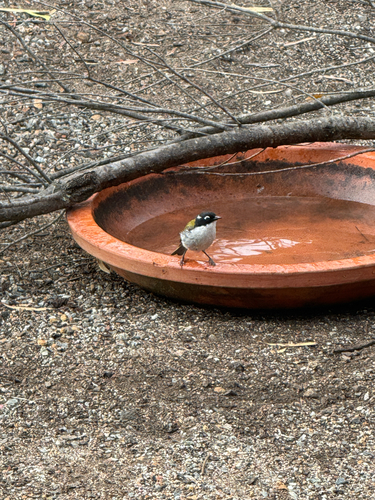
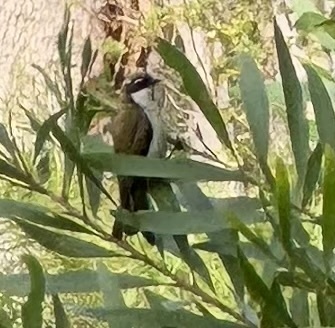


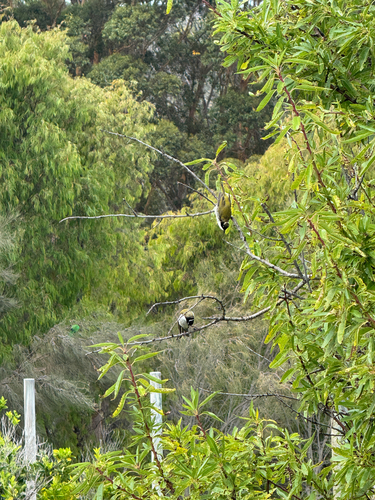
ID tip
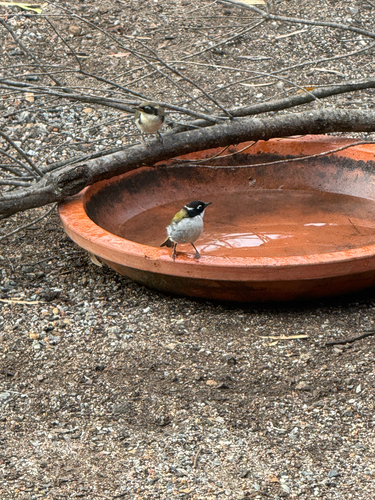
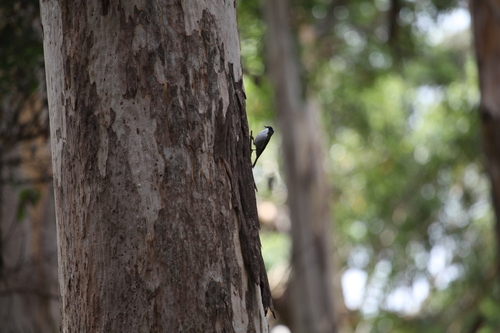
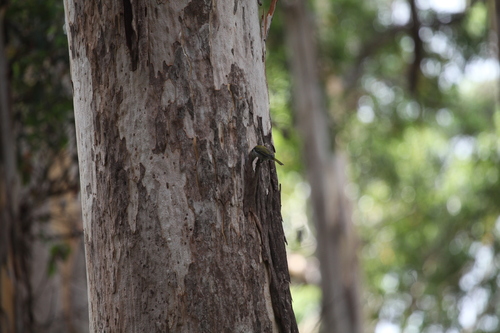
A mid-sized honeyeater, Gilbert's honeyeater has olive-green upperparts and white underparts to the undertail. Both olive and white feathers have grey bases, which can be seen if the plumage is ruffled. White feathers on the flanks have dusky tips. It has a black head, nape and throat, a white patch over the eye, and a white crescent-shaped patch on the nape, which is thinner than that of other species. The bill is brownish-black and the eyes a dull red. Voice: Gilbert's honeyeater has a harsh, grating call, as well as a continuously uttered, single-noted tsip.
Text from Wikipedia, licensed CC BY-SA 4.0.
When to see the Gilbert's Honeyeater
One bar for each month, and every month is filled: this bird is recorded here in all twelve. The wide bar is September, the month with the most records.
Where to see the Gilbert's Honeyeater
The map shades 1 country with regular records. Everything unshaded has no records. Countries are listed below the map.
About the Gilbert's Honeyeater
Gilbert's honeyeater, also known as the Swan River honeyeater or western white-naped honeyeater, is a passerine bird of the honeyeater family Meliphagidae native to southwestern Australia. A mid-sized honeyeater, it is olive-green above and white below, with a black head, nape and throat and a white patch over the eye and a white crescent-shaped patch on the nape. The bill is brownish-black and the eyes a dull red. The sexes have similar plumage.
Text adapted from Wikipedia, licensed CC BY-SA 4.0.
Easily confused with
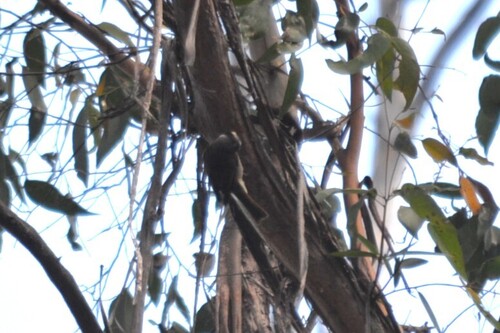 Strong-billed HoneyeaterMelithreptus validirostrisA mid-sized honeyeater at 16.5–17.5 cm (6.5–7 in) in length, it is olive-brown above and pale grey-brown below, with a black head, nape and throat, a pale blue to off-white patch over the eye, and a white crescent on the nape.
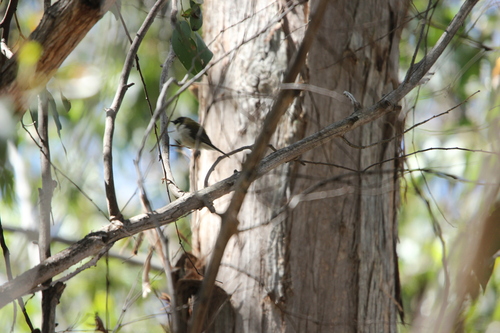 Black-headed HoneyeaterMelithreptus affinisA mid-sized honeyeater, it is olive-green above and white below, with a wholly black head that lacks the white nape of its relatives.
 Black-chinned HoneyeaterMelithreptus gularisA mid-sized honeyeater ranging from 14 to 16 cm (5.6–6.4 in) in length, it is olive-brown above and buff below, with a black head, nape and throat, with a bluish patch of bare skin over the eye and a white crescent-shaped patch on the nape.
Side by side: Black-chinned Honeyeater vs Gilbert's Honeyeater · Black-headed Honeyeater vs Gilbert's Honeyeater · Black Honeyeater vs Gilbert's Honeyeater · Gilbert's Honeyeater vs Strong-billed Honeyeater
Learn the Gilbert's Honeyeater in the BeakBrain App
Photo and call practice. Coming soon to iPhone and Android.
Play today's Daily BirdEvery photo and recording on this page is credited to its author under the licence shown. Spotted a problem with this page, or have a better photo? Contribute.