Learn what every symbol on the card means.Full credits and sources at beakbrain.com/symbols
 ForestSmall · 31 g

When to see the Giant White-eye
One bar for each month, and every month is filled: this bird is recorded here in all twelve. The wide bar is May, the month with the most records.
Where to see the Giant White-eye
The map shades 1 country with regular records. Everything unshaded has no records. Countries are listed below the map.
About the Giant White-eye
The giant white-eye, or Palau greater white-eye is a species of bird in the family Zosteropidae. It is monotypic within the genus Megazosterops. It is endemic to Palau, where its natural habitat is tropical moist lowland forest. The species is currently classified as Near Threatened by the IUCN due to likely habitat loss and the possibility of the establishment of the invasive Brown tree snake on the island.The Giant White-eye is 13-14cm large. It has a pale yellowish supercilium from the eye, widening backwards. Iris, greyish to dark brown. Narrow pale-yellow eye ring. Dark loral area leading to dark greying ear-coverts with pale yellow mottling.
Text adapted from Wikipedia, licensed CC BY-SA 4.0.
Easily confused with
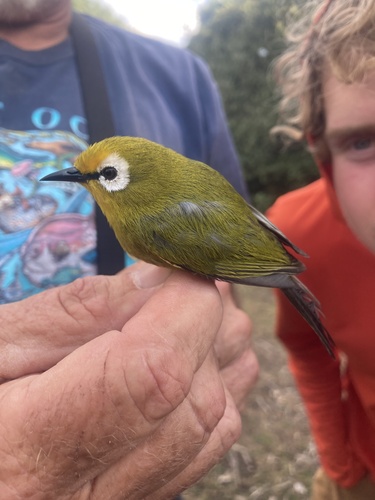 Mbulu White-eyeZosterops mbuluensisThe Mbulu white-eye is a bird species in the family Zosteropidae.
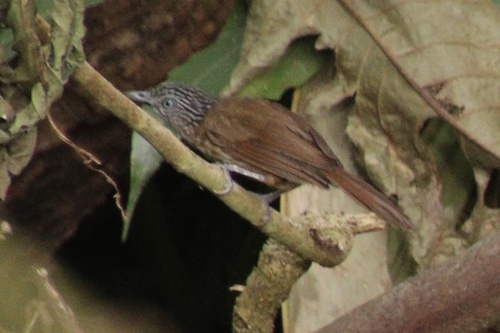 Mindanao Pygmy BabblerDasycrotapha plateniThe Mindanao pygmy babbler is a bird species endemic to the Philippines.
Thick-billed HeleiaHeleia crassirostrisThe thick-billed heleia, also known as the Flores white-eye, is a species of bird in the family Zosteropidae.
Mindanao Pygmy BabblerDasycrotapha plateniThe Mindanao pygmy babbler is a bird species endemic to the Philippines.
Thick-billed HeleiaHeleia crassirostrisThe thick-billed heleia, also known as the Flores white-eye, is a species of bird in the family Zosteropidae.
Learn the Giant White-eye in the BeakBrain App
Photo and call practice. Coming soon to iPhone and Android.
Play today's Daily BirdEvery photo and recording on this page is credited to its author under the licence shown. Spotted a problem with this page, or have a better photo? Contribute.