Learn what every symbol on the card means.Full credits and sources at beakbrain.com/symbols
 ForestCup nestMedium · 94 g

ID tip
The giant kingbird is the largest member of genus Tyrannus. It is 23 to 26 cm (9.1 to 10 in) long and weighs about 94 g (3.3 oz) with a maximum weight of about 108 g (3.8 oz). It is nearly as heavy as the largest tyrant flycatcher, the great shrike-tyrant (Agriornis lividus). The sexes have the same plumage. Adults have a mostly blackish to black head with white cheeks and a partially hidden deep orange or red patch in the center of the crown. Often they have some white on the lores that extends to the forehead. Their upperparts are medium dark gray to sooty gray. Voice: The giant kingbird's principal vocalization is "a loud, burry tooe-tooe-tooee-tooee-tooee chatter". It also makes a four-syllable call, and pairs sometimes sing in duet.
Text from Wikipedia, licensed CC BY-SA 4.0.
When to see the Giant Kingbird
One bar for each month. Filled bars are the 6 months with records; pale bars are months with none. The wide bar is February, the month with the most records.
Where to see the Giant Kingbird
The map shades 1 country with regular records. Everything unshaded has no records. Countries are listed below the map.
About the Giant Kingbird
The giant kingbird is an endangered species of bird in the tyrant flycatcher family Tyrannidae. It is endemic to Cuba.
Text adapted from Wikipedia, licensed CC BY-SA 4.0.
Easily confused with
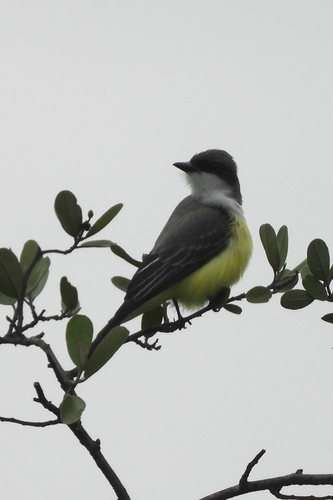 Snowy-throated KingbirdTyrannus niveigularisThe snowy-throated kingbird is 18.5 to 19 cm (7.3 to 7.5 in) long; one male weighed 34.4 g (1.2 oz).
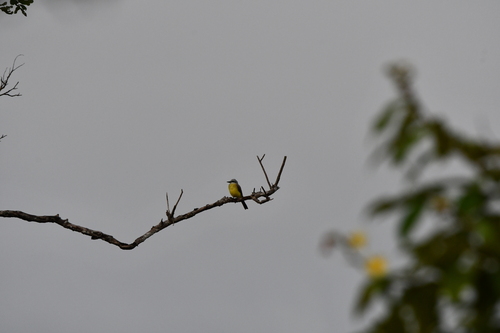 White-throated KingbirdTyrannus albogularisThe white-throated kingbird is 20 to 21 cm (7.9 to 8.3 in) long and weighs 35 to 38 g (1.2 to 1.3 oz).
 Thick-billed KingbirdTyrannus crassirostrisThe thick-billed kingbird is about 25 cm (9.8 in) long and weighs about 52 to 59 g (1.8 to 2.1 oz).
Learn the Giant Kingbird in the BeakBrain App
Photo and call practice. Coming soon to iPhone and Android.
Play today's Daily BirdEvery photo and recording on this page is credited to its author under the licence shown. Spotted a problem with this page, or have a better photo? Contribute.