Learn what every symbol on the card means.Full credits and sources at beakbrain.com/symbols
 ForestCup nestMedium · 236 g


What the Giant Antpitta sounds like


ID tip
G. gigantea is, as its name suggests, a huge antpitta. Length ranges from 24 to 28 centimetres (9.4 to 11.0 in), and weight is up to 300 grams (10.6 oz), which makes it easily the heaviest of all tracheophone suboscine birds – its nearest rival, the chestnut-throated huet-huet, is not known to exceed 185 grams (6.5 oz). Its back, wings, and the stubby tail are dusky olive-brown. The top of the head is pale to medium grey, running down to the neck. The remaining plumage is deep rufous-brown. The throat and breast feathers are black-edged, resulting in a dark barring in these regions.
Text from Wikipedia, licensed CC BY-SA 4.0.
When to see the Giant Antpitta
One bar for each month. Filled bars are the 10 months with records; pale bars are months with none. The wide bar is November, the month with the most records.
Where to see the Giant Antpitta
The map shades 1 country with regular records. Everything unshaded has no records. Countries are listed below the map.
About the Giant Antpitta
The giant antpitta is a perching bird species in the antpitta family (Grallariidae). Rare and somewhat enigmatic, it is known only from Colombia and Ecuador. It is presumably a close relative of the similar undulated antpitta, G. squamigera, which occurs to the south of G. gigantea. The giant antpitta has three subspecies, one of which might be extinct.
Text adapted from Wikipedia, licensed CC BY-SA 4.0.
Easily confused with
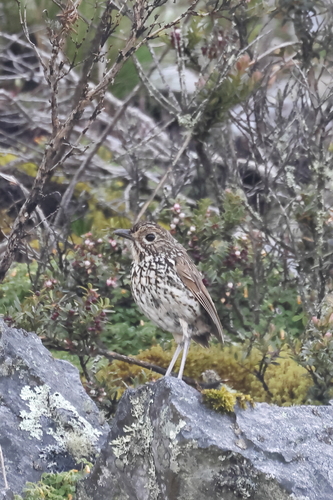 Stripe-headed AntpittaGrallaria andicolusGrallaria antpittas are a "wonderful group of plump and round antbirds whose feathers are often fluffed up...they have stout bills very short tails".
 Santa Marta AntpittaGrallaria bangsiGrallaria antpittas are a "wonderful group of plump and round antbirds whose feathers are often fluffed up...they have stout bills very short tails".
 Chami AntpittaGrallaria alvareziGrallaria antpittas are a "wonderful group of plump and round antbirds whose feathers are often fluffed up...they have stout bills very short tails".
Side by side: Giant Antpitta vs Santa Marta Antpitta · Giant Antpitta vs Stripe-headed Antpitta
Learn the Giant Antpitta in the BeakBrain App
Photo and call practice. Coming soon to iPhone and Android.
Play today's Daily BirdEvery photo and recording on this page is credited to its author under the licence shown. Spotted a problem with this page, or have a better photo? Contribute.