Learn what every symbol on the card means.Full credits and sources at beakbrain.com/symbols
 RockyCavity nestMedium · 274 g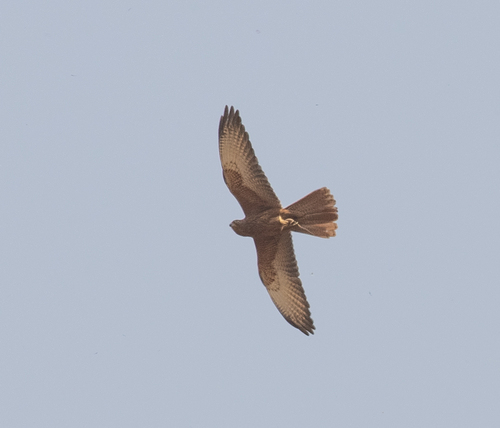
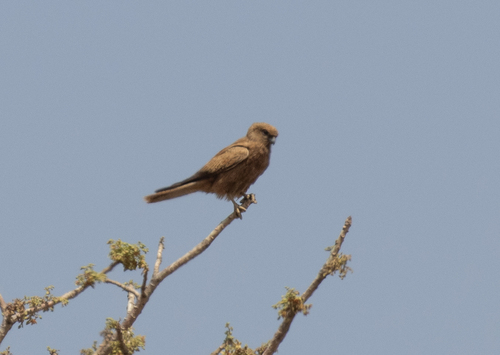
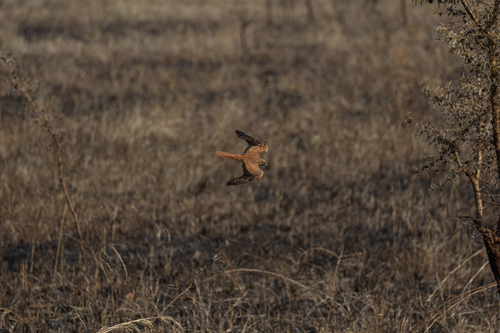
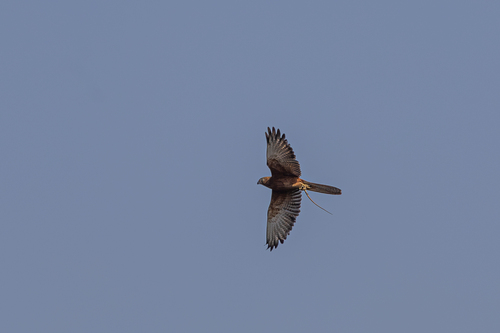

ID tip
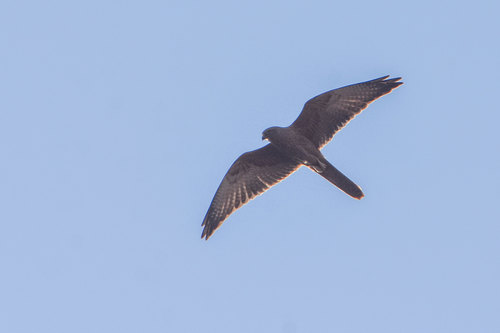
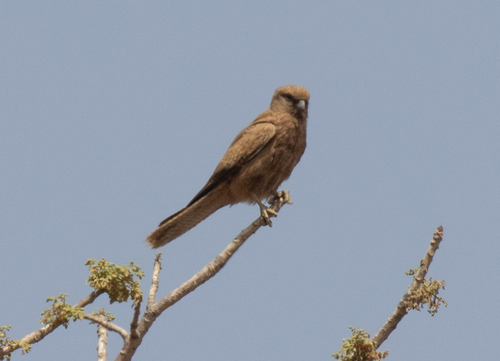
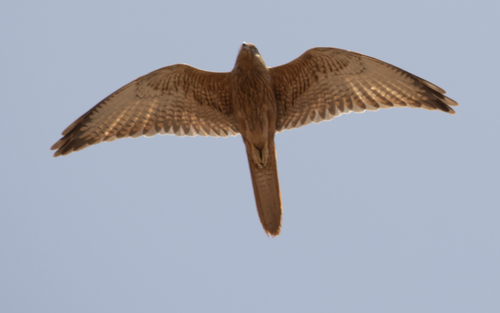
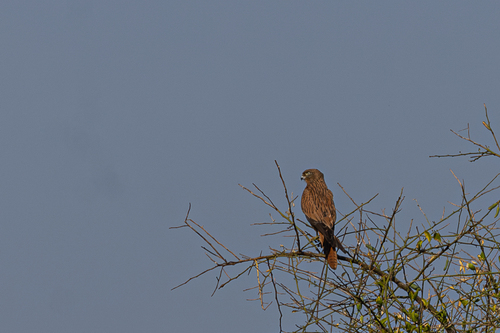
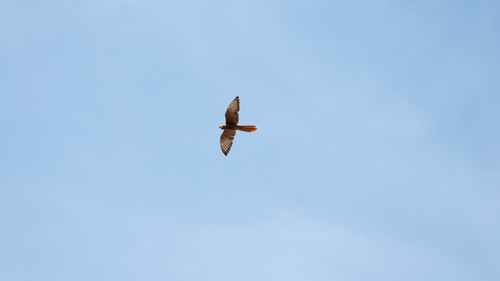
It is a large, slender kestrel with long, narrow wings and tail. It is 32–38 cm (13–15 in) long with a wingspan of 76–88 cm (30–35 in) and a weight of 250–300 g (8.8–10.6 oz). The female is 3% larger than the male. The plumage is dark rufous above and below with black streaks. The tail is narrowly barred with black while the flight feathers of the wing are dark and unbarred. The underwings are pale, contrasting with the darker body. The eye is yellow-brown unlike the similar greater kestrel which has whitish eyes as well as paler plumage, barred flight feathers and grey on the tail.
Text from Wikipedia, licensed CC BY-SA 4.0.
When to see the Fox Kestrel
One bar for each month, and every month is filled: this bird is recorded here in all twelve. The wide bar is December, the month with the most records.
Where to see the Fox Kestrel
The map shades 18 countries with regular records, and 1 more in a lighter tone where the bird turns up only as a stray. Everything unshaded has no records. Countries are listed below the map.
Recorded as a rare visitor in Sierra Leone.
About the Fox Kestrel
The fox kestrel is a bird of prey belonging to the falcon family Falconidae. It is found in arid, open country in the northern part of Sub-Saharan Africa.
Text adapted from Wikipedia, licensed CC BY-SA 4.0.
Easily confused with
 Sooty FalconFalco concolorThis is an elegant bird of prey, 32–37 cm long with a 78–90 cm wingspan.
 Grey FalconFalco hypoleucosThe species has mainly grey upperparts and white underparts, darker on the tips of the flight feathers and with a yellow cere.
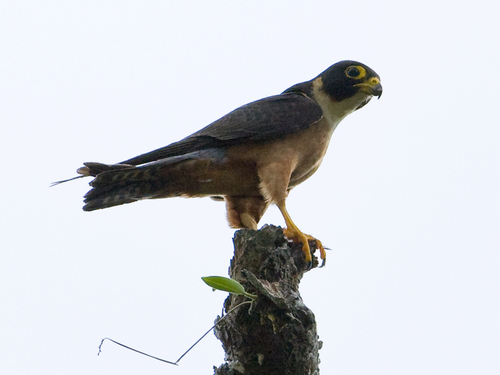 Oriental HobbyFalco severusAdults are rich orange-red below, bluish-grey above with a black hood and pale throat.
Learn the Fox Kestrel in the BeakBrain App
Photo and call practice. Coming soon to iPhone and Android.
Play today's Daily BirdEvery photo and recording on this page is credited to its author under the licence shown. Spotted a problem with this page, or have a better photo? Contribute.