Learn what every symbol on the card means.Full credits and sources at beakbrain.com/symbols
 ForestCavity nestTiny · 11 g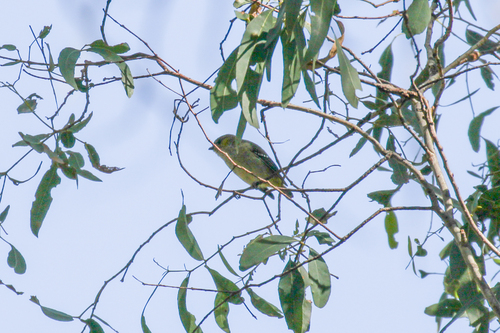


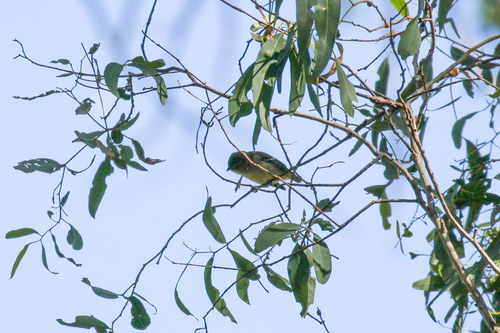
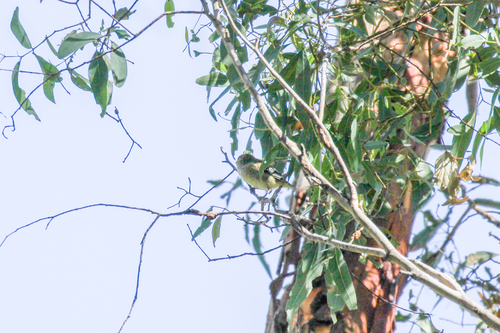
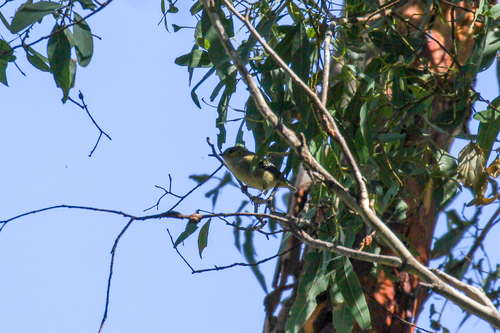
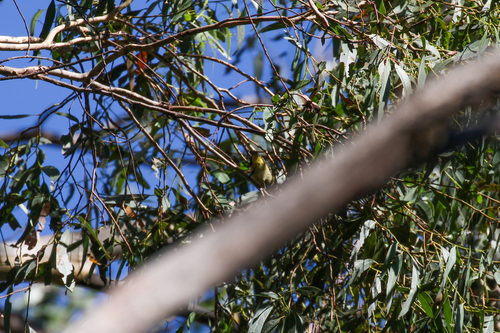
ID tip
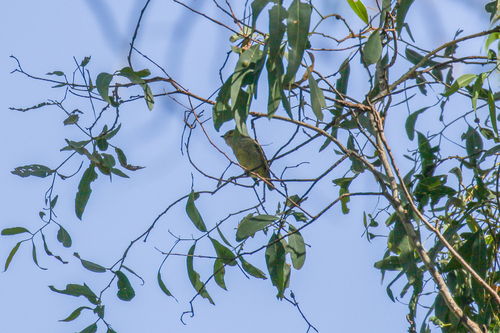
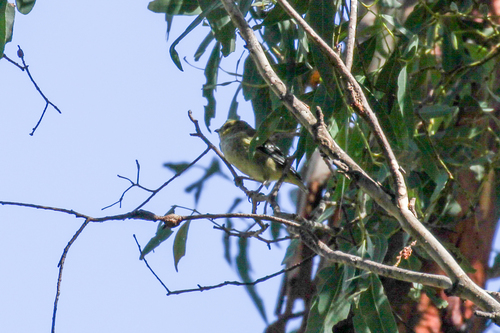
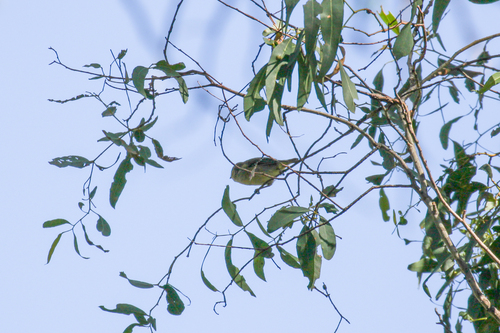
A small, energetic passerine about 9 to 10 cm (3.5 to 4 in) long, the forty-spot is similar to the much commoner spotted pardalote (Pardalotus punctatus), but has a dull greenish-brown back and head, compared to the more colourful plumage of the latter, with which it shares its range, and there is no brow line. The rump is olive, the under-tail dull yellow. The chest is white with light yellow tints. The wings are black with white tips, appearing as many (closer to 60 than 40) discrete dots when the wings are folded.
Text from Wikipedia, licensed CC BY-SA 4.0.
When to see the Forty-spotted Pardalote
One bar for each month. Filled bars are the 8 months with records; pale bars are months with none. The wide bar is November, the month with the most records.
Where to see the Forty-spotted Pardalote
The map shades 1 country with regular records. Everything unshaded has no records. Countries are listed below the map.
About the Forty-spotted Pardalote
The forty-spotted pardalote is one of Australia's rarest birds and by far the rarest pardalote, being confined to a few colonies in the south-east corner of Tasmania, mainly on Maria Island and Bruny Island.
Text adapted from Wikipedia, licensed CC BY-SA 4.0.
Easily confused with
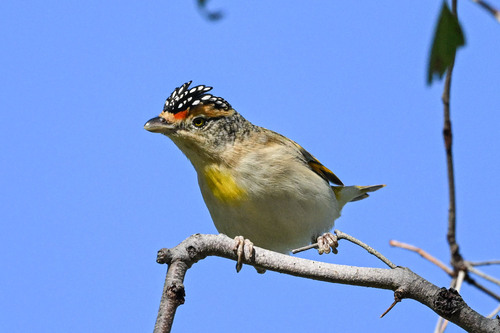 Red-browed PardalotePardalotus rubricatusAdult red–browed pardalotes are a large pardalote with an average length of 105 mm and wingspan of 60–66 mm.
 Spotted PardalotePardalotus punctatusWeighing around 6 grams (0.21 oz), the spotted pardalote is 8 to 10 cm (3.1 to 3.9 in) long.
 Striated PardalotePardalotus striatusThe striated pardalote's plumage varies considerably across its range.
Learn the Forty-spotted Pardalote in the BeakBrain App
Photo and call practice. Coming soon to iPhone and Android.
Play today's Daily BirdEvery photo and recording on this page is credited to its author under the licence shown. Spotted a problem with this page, or have a better photo? Contribute.