Learn what every symbol on the card means.Full credits and sources at beakbrain.com/symbols
 Forest17 g

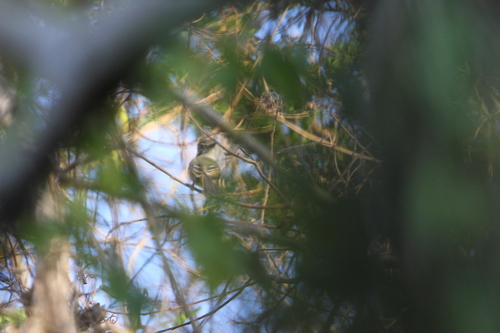
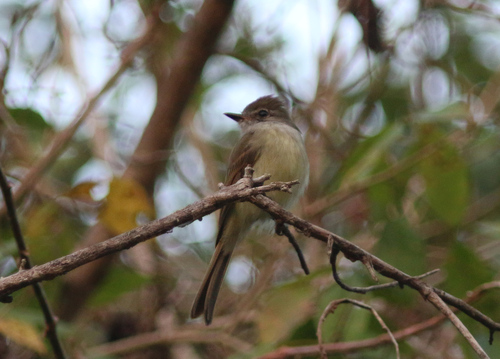
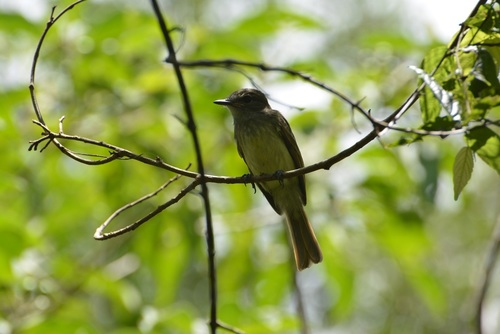
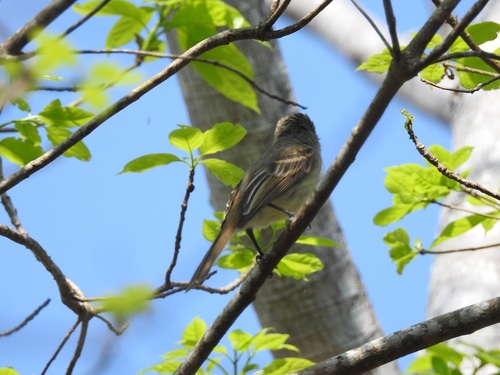
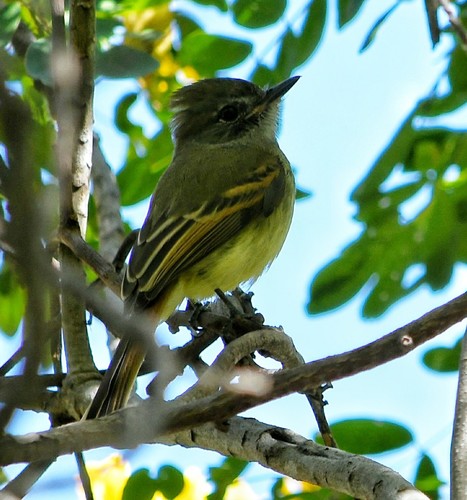
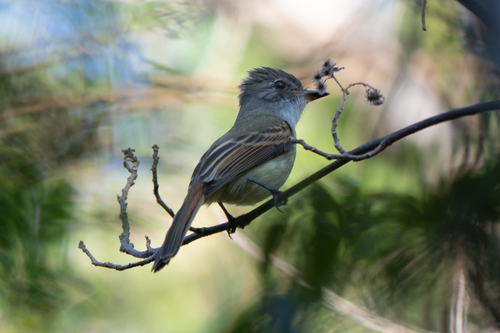
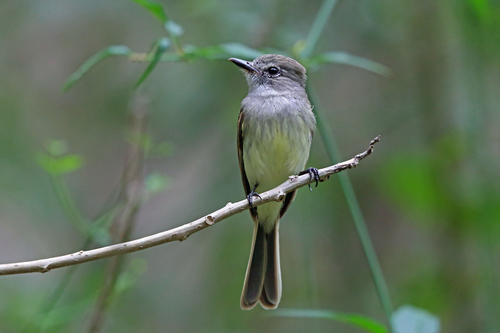
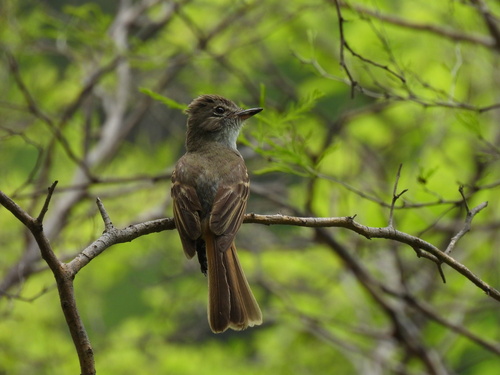
ID tip
The flammulated flycatcher is approximately 6 to 6.5 inches (15 to 17 centimetres) in length and has a chunky body. Adult males and females are similar in plumage, with each possessing olive to a worn gray-brown upperparts and head. A whitish supraloral stripe and crescent are behind the bird's eyes. It also has a dusky lore. The throat is whitish and the chest is a pale gray with inconspicuous dusky streaking, while the belly and undertail coverts are a pale yellow. Additionally, this species has dark brown, well-rounded wings with pale cinnamon-edged coverts and remiges. Voice: The flammulated flycatcher mostly sings from April to August, which includes its breeding season, and tends to remain hidden while singing. The song of the flycatcher is a plaintive whistle followed by a short but quick roll. It can also give a plaintive and slurred chew call, which is often sung three to five times in a descending series, as well as a squeaky chatter.
Text from Wikipedia, licensed CC BY-SA 4.0.
When to see the Flammulated Flycatcher
One bar for each month. Filled bars are the 10 months with records; pale bars are months with none. The wide bar is March, the month with the most records.
Where to see the Flammulated Flycatcher
The map shades 1 country with regular records. Everything unshaded has no records. Countries are listed below the map.
About the Flammulated Flycatcher
The flammulated flycatcher is a species of bird in the family Tyrannidae. It was formerly placed in the monotypic genus Deltarhynchus but was moved to the genus Ramphotrigon based on genetic analysis. It is endemic to the dry deciduous forest, arid thorn forest, and scrubby woodland of Mexico’s Pacific coast. The flycatcher is an olive to gray-brown bird with a streaked, pale gray chest, white throat, black bill, dark gray feet, and dark brown wings. It is a skulking bird that typically remains hidden in the underbrush. It feeds by gleaning insects off of leaves and twigs that it spots from an exposed perch. The female lays approximately three eggs in a nest made in a shallow tree cavity.
Text adapted from Wikipedia, licensed CC BY-SA 4.0.
Easily confused with
 Dusky-tailed FlatbillRamphotrigon fuscicaudaThe dusky-tailed flatbill is 15.5 to 16.5 cm (6.1 to 6.5 in) long and weighs about 16.5 to 20.5 g (0.58 to 0.72 oz).
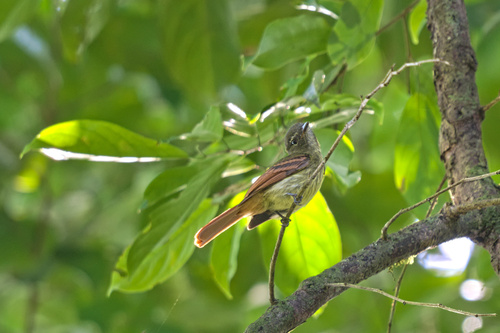 Rufous-tailed FlatbillRamphotrigon ruficaudaThe rufous-tailed flatbill is 15 to 16 cm (5.9 to 6.3 in) long and weighs about 17 to 26 g (0.60 to 0.92 oz).
 Large-headed FlatbillRamphotrigon megacephalumThe large-headed flatbill is 12.5 to 13.2 cm (4.9 to 5.2 in) long and weighs 13 to 15 g (0.46 to 0.53 oz).
Learn the Flammulated Flycatcher in the BeakBrain App
Photo and call practice. Coming soon to iPhone and Android.
Play today's Daily BirdEvery photo and recording on this page is credited to its author under the licence shown. Spotted a problem with this page, or have a better photo? Contribute.