Learn what every symbol on the card means.Full credits and sources at beakbrain.com/symbols
 ForestCavity nestTiny · 7 g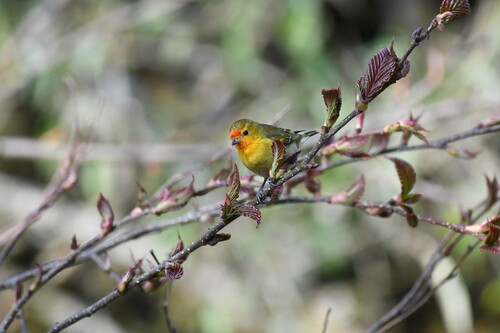
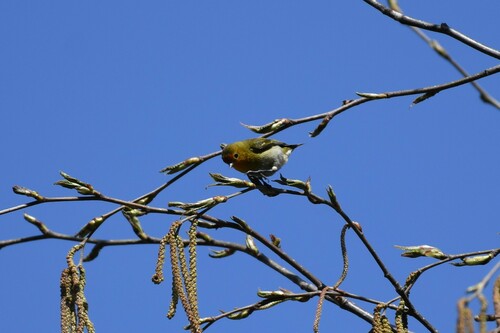
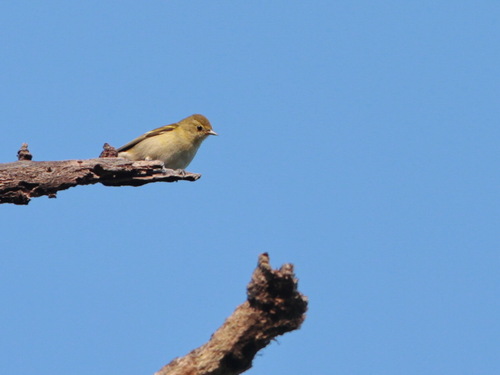
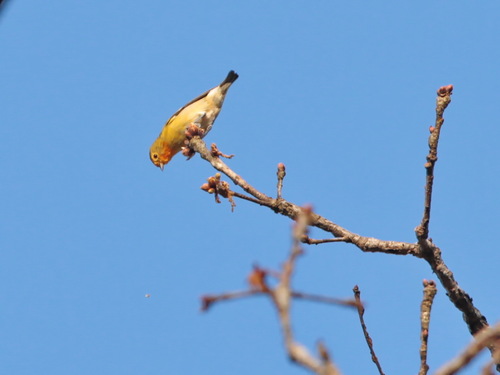

ID tip
Voice: Calls include a high-pitched but ample and jerky "tsit-tsit-tsit-tsit" at irregular intervals. Contact call is a soft and low "whitoo-whitoo". When singing, the male flies or sits on a high well-exposed spot like the top of a tree. The song lasts several minutes. It consists of a series of rapid, high notes, forming well-constructed sentences: "pit'su-pit'su-pit'su-pit'su".
Text from Wikipedia, licensed CC BY-SA 4.0.
When to see the Fire-capped Tit
One bar for each month. Filled bars are the 7 months with records; pale bars are months with none. The wide bar is March, the month with the most records.
Where to see the Fire-capped Tit
The map shades 7 countries with regular records, and 1 more in a lighter tone where the bird turns up only as a stray. Everything unshaded has no records. Countries are listed below the map.
Recorded as a rare visitor in Myanmar (Burma).
About the Fire-capped Tit
The fire-capped tit is a small, 10 cm (3.9 in) long, weighing about 7 g (0.25 oz) bird species assigned to the family Paridae, that breeds in the temperate forest bordering the Himalayas to the south, in the Hengduan Shan and Nujiang Shan on the Myanmar-China border, the Micah Shan and Daba Shan on the Northern Sichuan border. It winters down hill and further south. Further to the east, birds tend to be smaller and the plumage becomes gradually darker.
Text adapted from Wikipedia, licensed CC BY-SA 4.0.
Easily confused with
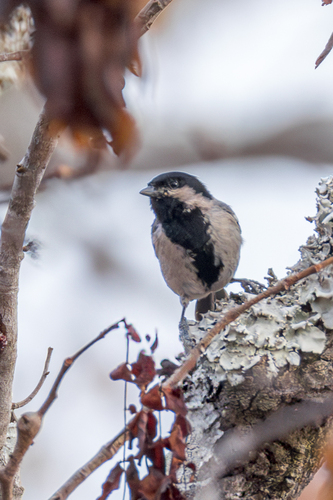 Miombo TitMelaniparus griseiventrisThe miombo tit is a species of bird in the family Paridae.
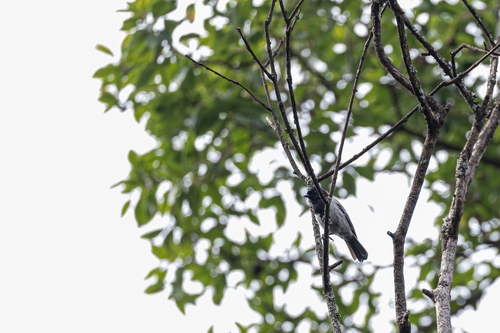 Stripe-breasted TitMelaniparus fasciiventerThe stripe-breasted tit is a species of bird in the family Paridae.
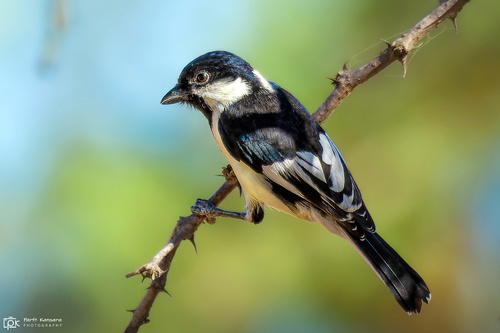 White-naped TitMachlolophus nuchalisThe only pied (black-and-white) tit in India, this species has the wing-coverts, crown, sides of head, chin, throat, a ventral band running down the breast and belly to the vent black.
Learn the Fire-capped Tit in the BeakBrain App
Photo and call practice. Coming soon to iPhone and Android.
Play today's Daily BirdEvery photo and recording on this page is credited to its author under the licence shown. Spotted a problem with this page, or have a better photo? Contribute.