Learn what every symbol on the card means.Full credits and sources at beakbrain.com/symbols
 ForestCup nestTiny · 12 g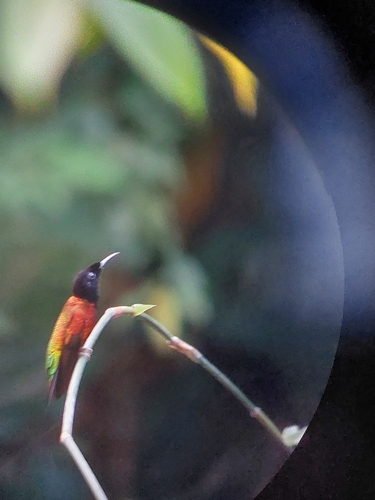
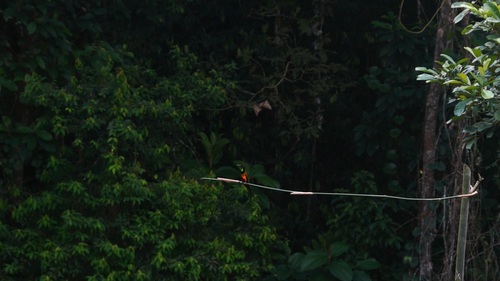
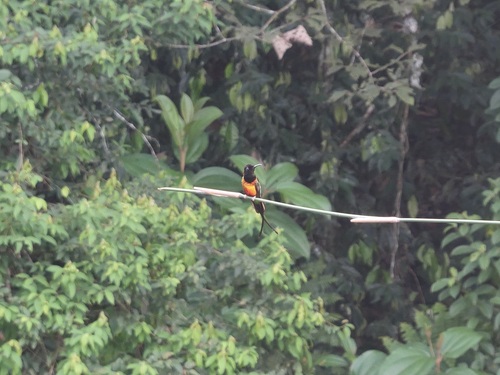
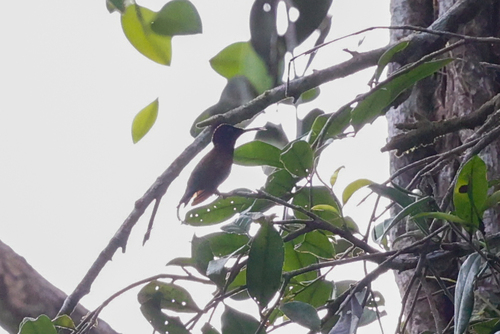
What the Fiery Topaz sounds like

ID tip
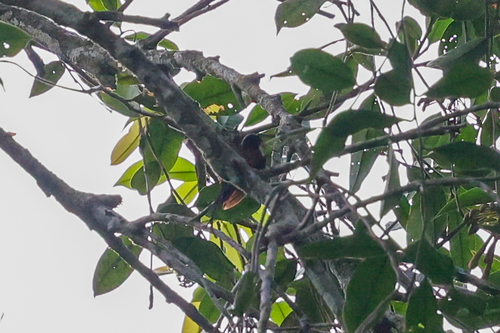
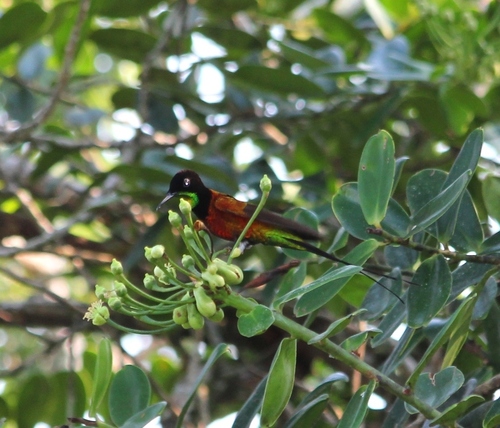
Topaza pyra can reach a body length of about 19 cm (7.5 in). There is strong sexual dimorphism between the males and females. Both have a dark brown iris, but males are larger on average than females. Males of these brilliantly marked hummingbirds have a back, lower breast, upperwing-coverts, and outer webs of the innermost two remiges that are shining orange-red, becoming more orange on the belly, shading over the rump into the yellow-green/green uppertail-coverts.
Text from Wikipedia, licensed CC BY-SA 4.0.
When to see the Fiery Topaz
One bar for each month. Filled bars are the 11 months with records; pale bars are months with none. The wide bar is January, the month with the most records.
Where to see the Fiery Topaz
The map shades 4 countries with regular records, and 1 more in a lighter tone where the bird turns up only as a stray. Everything unshaded has no records. Countries are listed below the map.
Recorded as a rare visitor in Venezuela.
About the Fiery Topaz
The fiery topaz is a species of hummingbird in the family Trochilidae. It has brilliant iridescent plumage and resides in northern South America, where it consumes nectar and insects.
Text adapted from Wikipedia, licensed CC BY-SA 4.0.
Easily confused with

Learn the Fiery Topaz in the BeakBrain App
Photo and call practice. Coming soon to iPhone and Android.
Play today's Daily BirdEvery photo and recording on this page is credited to its author under the licence shown. Spotted a problem with this page, or have a better photo? Contribute.