Learn what every symbol on the card means.Full credits and sources at beakbrain.com/symbols
 WoodlandCavity nestMedium · 135 g


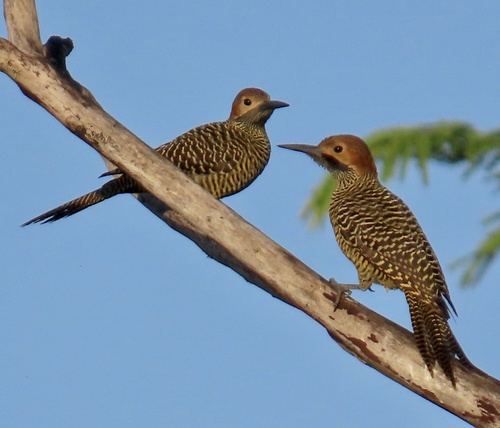
ID tip
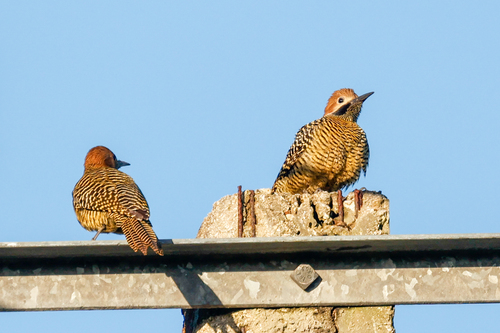
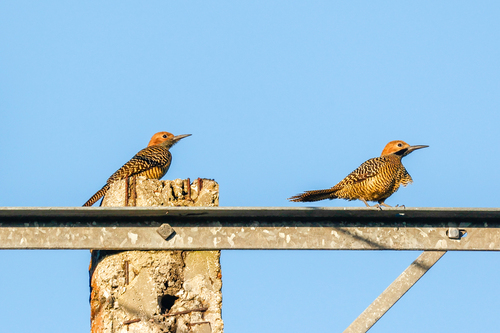
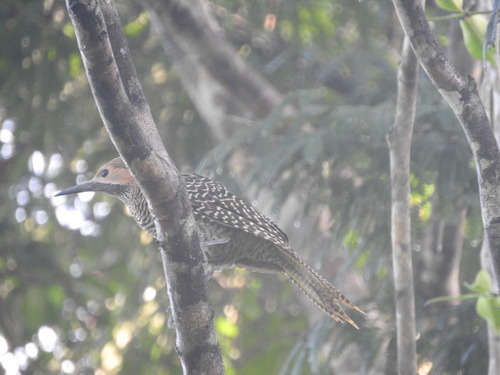
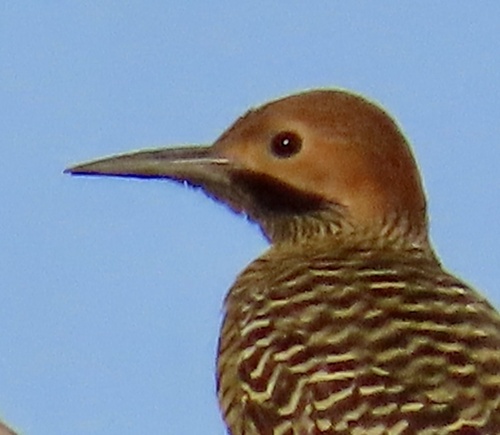
Fernandina's flicker is a medium-sized woodpecker, ranging in length from 14–15 in (36–38 cm). Birds of central Cuba are generally somewhat smaller than those from eastern and western Cuba. On males, the crown and nape are buffy cinnamon, with fine black streaking and occasional tinges of red. The ear-coverts are a buffish-yellow to cinnamon. The chin and throat are off-white with heavy black streaking; males have a distinctive black malar stripe, while in females the black malar is instead heavily streaked with white. Voice: It is not especially noisy outside of the breeding season. The Fernandina's flicker's calls include a repeated wicka (the onomatopoeic sound which gives the genus its common name), a loud pic-pic-pic-pic-pic-pic, which is slower lower-pitched than the similar calls of the northern flicker (Colaptes auratus), and a nasal ch-ch-ch during breeding.
Text from Wikipedia, licensed CC BY-SA 4.0.
When to see the Fernandina's Flicker
One bar for each month. Filled bars are the 6 months with records; pale bars are months with none. The wide bar is March, the month with the most records.
Where to see the Fernandina's Flicker
The map shades 1 country with regular records. Everything unshaded has no records. Countries are listed below the map.
About the Fernandina's Flicker
Fernandina's flicker, also known as the Cuban flicker, is a species of bird in the woodpecker family, Picidae. Endemic to Cuba, it is severely threatened by habitat loss and is one of the most endangered species of woodpecker in the world.
Text adapted from Wikipedia, licensed CC BY-SA 4.0.
Easily confused with
 Black-necked WoodpeckerColaptes atricollisThe black-necked woodpecker is 26 to 27 cm (10 to 11 in) long and weighs 73 to 90 g (2.6 to 3.2 oz).
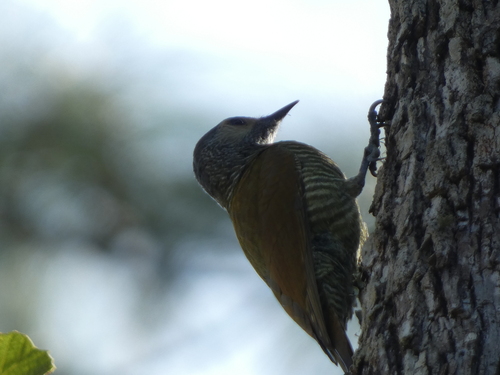 Grey-crowned WoodpeckerColaptes auricularisThe grey-crowned woodpecker is 19.5 to 21 cm (7.7 to 8.3 in) long and weighs about 65 g (2.3 oz).
 Andean FlickerColaptes rupicolaThe Andean flicker is about 32 cm (13 in) long.
Learn the Fernandina's Flicker in the BeakBrain App
Photo and call practice. Coming soon to iPhone and Android.
Play today's Daily BirdEvery photo and recording on this page is credited to its author under the licence shown. Spotted a problem with this page, or have a better photo? Contribute.