Learn what every symbol on the card means.Full credits and sources at beakbrain.com/symbols
 CoastalScrapeMedium · 72 g



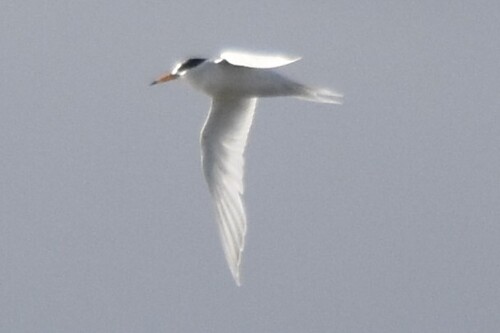
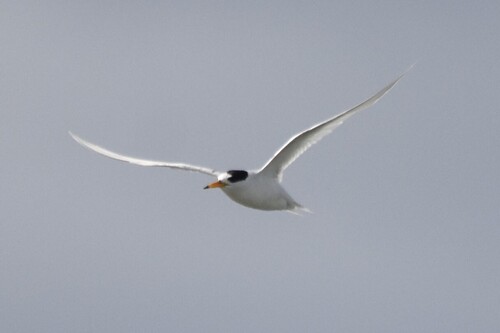


ID tip
The fairy tern is a small tern with a white body and light bluish-grey wings. A small black patch extends no further than the eye and not as far as the bill. In the breeding plumage both the beak and the legs are yellowish-orange. During the rest of the year the black crown is lost, being mostly replaced by white feathers, and the beak becomes black at the tip and the base. The sexes look alike and the plumage of immature birds is similar to the non-breeding plumage. The total length of the fairy tern is about 25 cm (10 in).
Text from Wikipedia, licensed CC BY-SA 4.0.
When to see the Fairy Tern
One bar for each month. Filled bars are the 8 months with records; pale bars are months with none. The wide bar is January, the month with the most records.
Where to see the Fairy Tern
The map shades 3 countries with regular records. Everything unshaded has no records. Countries are listed below the map.
About the Fairy Tern
The fairy tern is a small tern which is native to the southwestern Pacific. It is listed as vulnerable by the IUCN and the New Zealand subspecies is critically endangered. Fairy terns live in colonies along the coastlines and estuaries of Australia, New Zealand, and New Caledonia, feeding largely on small, epipelagic schooling fishes, breeding in areas close to their feeding sites. They have a monogamous mating system, forming breeding pairs in which they mate, nest, and care for offspring.
Text adapted from Wikipedia, licensed CC BY-SA 4.0.
Easily confused with
 Peruvian TernSternula lorataThe Peruvian tern is a very small species with a length of about 24 cm (9.4 in).
 Damara TernSternula balaenarumAt 23 centimetres or 9.1 inches in length the Damara tern is a small, rather pale tern.
 Saunders's TernSternula saundersiSaunders's tern shares many of the features of its close relative, the little tern, including a white body, a black-tipped yellow bill, and a black cap with a white forehead patch.
Side by side: Fairy Tern vs Little Tern · Fairy Tern vs Yellow-billed Tern · Fairy Tern vs Peruvian Tern · Damara Tern vs Fairy Tern
Learn the Fairy Tern in the BeakBrain App
Photo and call practice. Coming soon to iPhone and Android.
Play today's Daily BirdEvery photo and recording on this page is credited to its author under the licence shown. Spotted a problem with this page, or have a better photo? Contribute.