Learn what every symbol on the card means.Full credits and sources at beakbrain.com/symbols
 MarineCavity nestMedium · 137 g
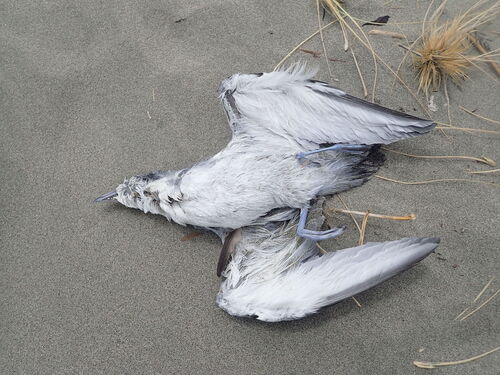
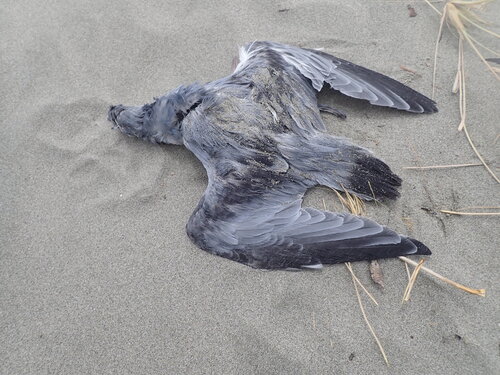


ID tip
The fairy prion is around 25 cm (9.8 in) in length, with a wingspan of 56 cm (22 in). The plumage is blue-grey on its upperparts with a dark "M" extending to the wingtips. The tail is wedge-shaped with a dark tip. The underparts are mostly white. It has a pale blue bill with blue legs and feet. The sexes are alike. In appearance, it is very similar to the fulmar prion (Pachyptila crassirostris), and the two species cannot be distinguished at sea.
Text from Wikipedia, licensed CC BY-SA 4.0.
When to see the Fairy Prion
One bar for each month, and every month is filled: this bird is recorded here in all twelve. The wide bar is November, the month with the most records.
Where to see the Fairy Prion
The map shades 5 countries with regular records. Everything unshaded has no records. Countries are listed below the map.
About the Fairy Prion
The fairy prion is a small seabird with the standard prion plumage of blue-grey upperparts with a prominent dark "M" marking and white underneath. The sexes are alike. It is a small prion which frequents the low subantarctic and subtropic seas.
Text adapted from Wikipedia, licensed CC BY-SA 4.0.
Easily confused with
 Slender-billed PrionPachyptila belcheriLike all prions, they are blue-grey above and white below with a dark "M" on their back to their wingtips.
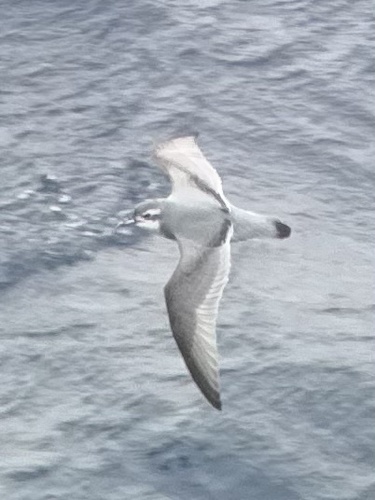 Antarctic PrionPachyptila desolataThe Antarctic prion has an overall length of 27 cm (11 in), a wingspan of 61–66 cm (24–26 in) and weighs 150–160 g (5.3–5.6 oz).
 Broad-billed PrionPachyptila vittataThe broad-billed prion has the usual prion colours: blue-grey upperparts, white underparts, and the ever present dark "M" across its back and wings.
Side by side: Fairy Prion vs Slender-billed Prion · Antarctic Prion vs Fairy Prion
Learn the Fairy Prion in the BeakBrain App
Photo and call practice. Coming soon to iPhone and Android.
Play today's Daily BirdEvery photo and recording on this page is credited to its author under the licence shown. Spotted a problem with this page, or have a better photo? Contribute.