Learn what every symbol on the card means.Full credits and sources at beakbrain.com/symbols
 MarineCavity nestSmall · 25 g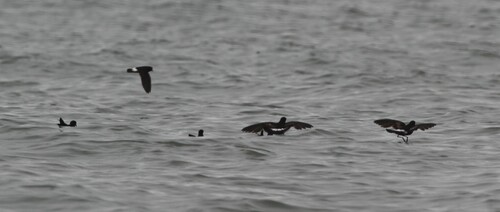


ID tip
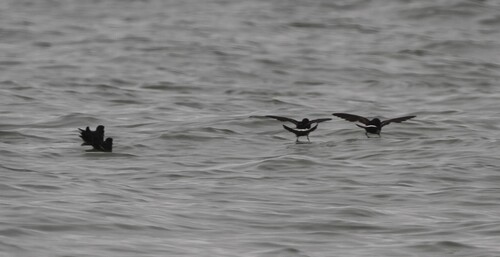
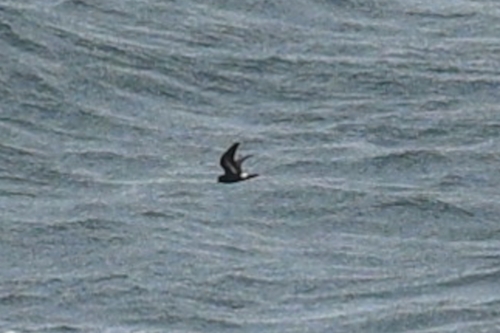
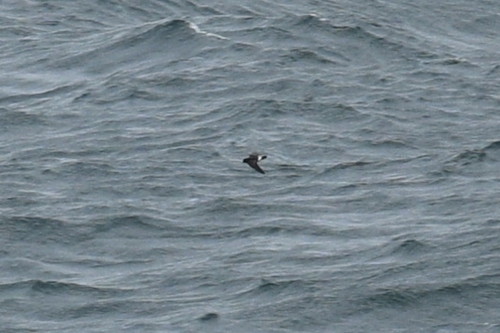
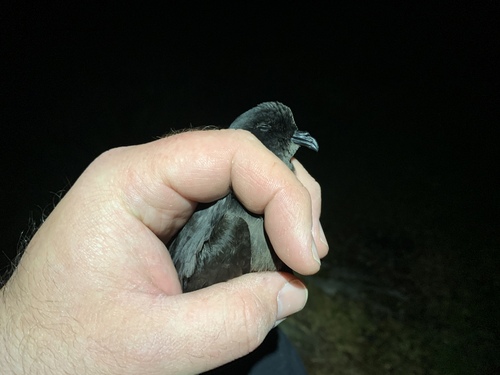
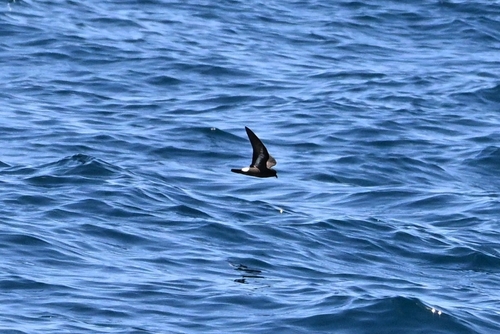
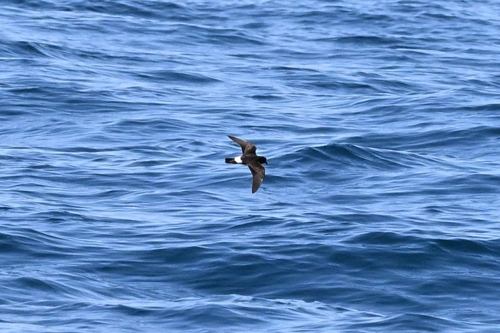
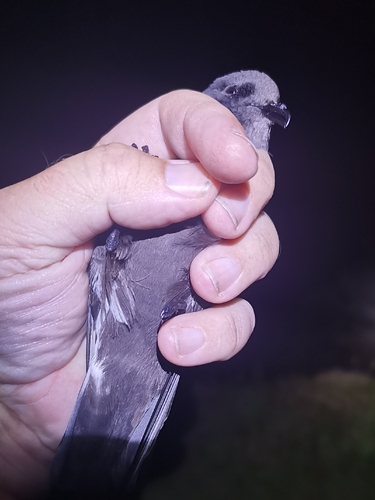
The storm petrel is a small bird, 14–18 cm (5.5–7.1 in) in length with a 36–39 cm (14–15 in) wingspan. It weighs 20–38 g (0.71–1.34 oz), with an average of 28 g (0.99 oz). It is square-tailed and has all-black plumage except for a snow-white rump that extends to the sides of the tail base and a broad white band on the under wings. Juveniles in fresh plumage can also show a narrow white bar on the upper wing. The plumage becomes dark brown rather than black as it becomes worn. Voice: In its display flight, the storm petrel gives a call consisting of eight or more repetitions of a fast ter-CHICK sounds ending in a trill (rapid alternation of notes). This chattering, staccato call is highly variable in pitch, stress, and length. Both sexes make the call, which is used as an advertisement for a mate, for pair recognition, and in the nuptial flight.
Text from Wikipedia, licensed CC BY-SA 4.0.
When to see the European Storm Petrel
One bar for each month. Filled bars are the 6 months with records; pale bars are months with none. The wide bar is August, the month with the most records.
Where to see the European Storm Petrel
The map shades 26 countries with regular records, and 10 more in a lighter tone where the bird turns up only as a stray. Everything unshaded has no records. Countries are listed below the map.
Recorded as a rare visitor in Belgium, United States, Netherlands, Germany, Israel, Algeria, Mozambique, Libya, Czechia, Croatia.
About the European Storm Petrel
The European storm petrel, also known as British storm petrel, or just storm petrel, is a species of seabird in the northern storm petrel family, Hydrobatidae. The small, square-tailed bird is entirely black except for a broad, white rump and a white band on the under wings, and it has a fluttering, bat-like flight. The large majority of the population breeds on islands off the northern coasts of Europe, with the greatest numbers in the Faroe Islands, United Kingdom, Ireland, and Iceland. The Mediterranean population is a separate subspecies whose strongholds are Filfla Island (Malta), Sicily, and the Balearic Islands. This subspecies is indiscernible at sea from its Atlantic relatives.
Text adapted from Wikipedia, licensed CC BY-SA 4.0.
Easily confused with
 Black Storm PetrelHydrobates melaniaThe black storm petrel is a small seabird of the storm petrel family Hydrobatidae.
 Ashy Storm PetrelHydrobates homochroaThe ashy storm petrel is a small, scarce seabird of the storm petrel family Hydrobatidae.
 Fork-tailed Storm PetrelHydrobates furcatusThe fork-tailed storm petrel is small seabird that is 20 cm in length with a wingspan of 46 cm.
Side by side: European Storm Petrel vs Fork-tailed Storm Petrel
Learn the European Storm Petrel in the BeakBrain App
Photo and call practice. Coming soon to iPhone and Android.
Play today's Daily BirdEvery photo and recording on this page is credited to its author under the licence shown. Spotted a problem with this page, or have a better photo? Contribute.