Learn what every symbol on the card means.Full credits and sources at beakbrain.com/symbols
 ForestCavity nestTiny · 11 g
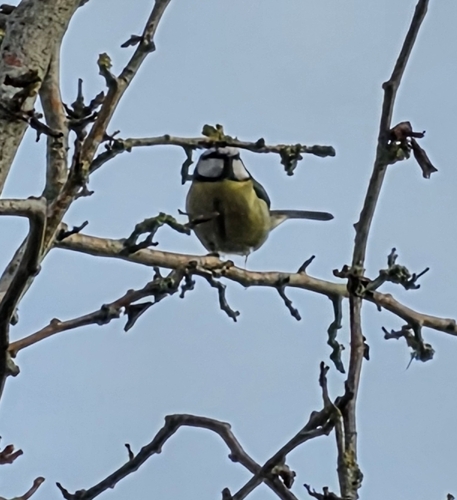
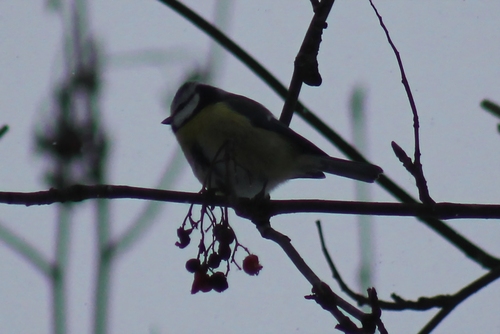

What the Eurasian Blue Tit sounds like


ID tip
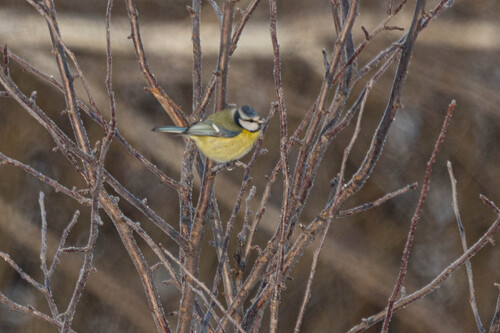
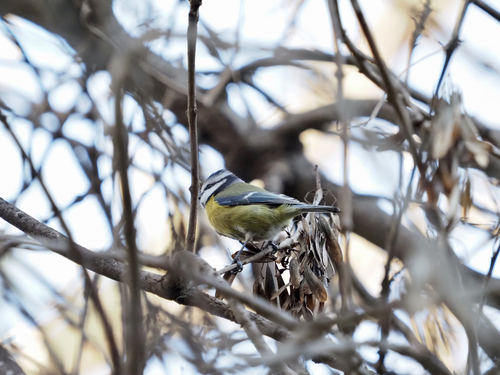
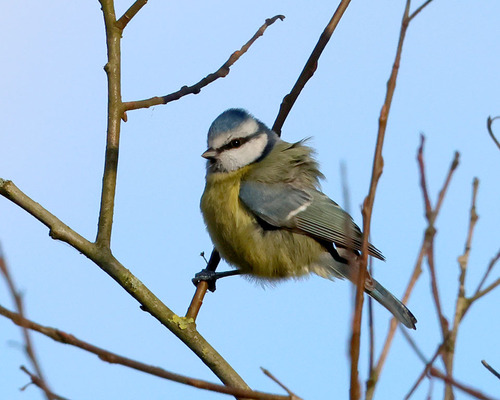
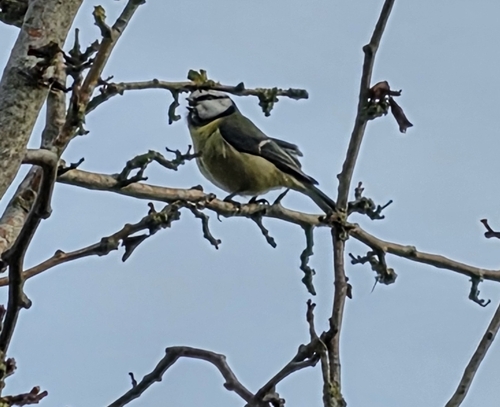
The Eurasian blue tit is usually 10.5–12 cm (4.1–4.7 in) long with a wingspan of 17.5–20 cm (6.9–7.9 in) for both sexes, and weighs about 11 g (0.39 oz). A typical blue tit has an intensely blue crown and a dark blue line passing through the eye and encircling the white cheeks and chin, giving the bird a very distinctive appearance. The forehead and a bar on the wing are white. The nape, wings and tail are blue, and the back is yellowish green. Voice: Eurasian blue tits use songs and calls throughout the year. Songs are mostly performed in late winter and spring to defend the territory or to attract mates. Calls are used for multiple reasons, the most important of which is communication with other Eurasian blue tits. They inform one another of their location in trees by means of contact calls.
Text from Wikipedia, licensed CC BY-SA 4.0.
When to see the Eurasian Blue Tit
One bar for each month. Filled bars are the 11 months with records; pale bars are months with none. The wide bar is January, the month with the most records.
Where to see the Eurasian Blue Tit
The map shades 57 countries with regular records, and 3 more in a lighter tone where the bird turns up only as a stray. Everything unshaded has no records. Countries are listed below the map.
Recorded as a rare visitor in Morocco, Canada, United States.
About the Eurasian Blue Tit
The Eurasian blue tit is a small passerine bird in the tit family, Paridae. It is easily recognised by its blue and yellow plumage and small size.
Text adapted from Wikipedia, licensed CC BY-SA 4.0.
Easily confused with
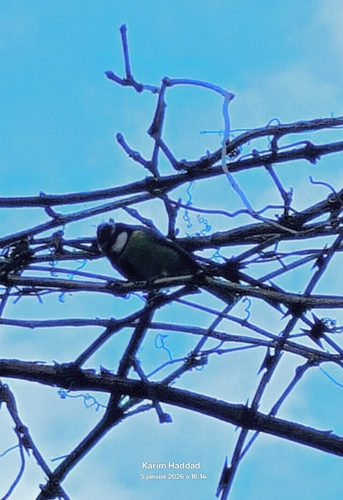 African Blue TitCyanistes teneriffaeThe African blue tit ranges from 11–12 cm (4.3–4.7 in) in size.
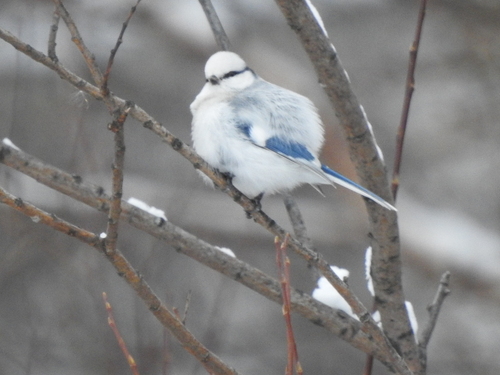 Azure TitCyanistes cyanusThe azure tit is a passerine bird in the tit family Paridae.
Side by side: African Blue Tit vs Eurasian Blue Tit
Learn the Eurasian Blue Tit in the BeakBrain App
Photo and call practice. Coming soon to iPhone and Android.
Play today's Daily BirdEvery photo and recording on this page is credited to its author under the licence shown. Spotted a problem with this page, or have a better photo? Contribute.