Learn what every symbol on the card means.Full credits and sources at beakbrain.com/symbols
 ShrublandDomed nestMedium · 108 g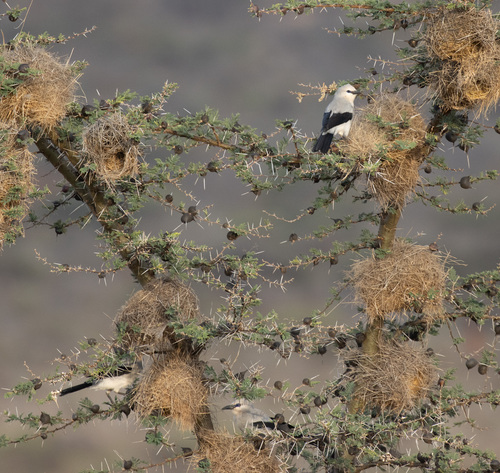


ID tip
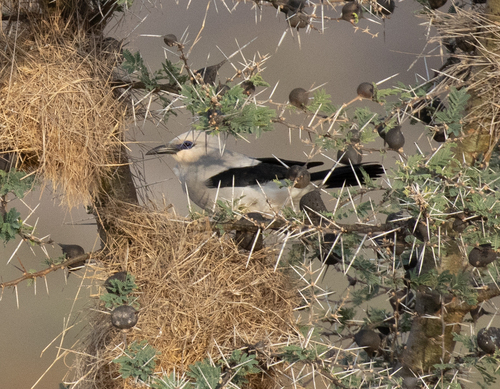
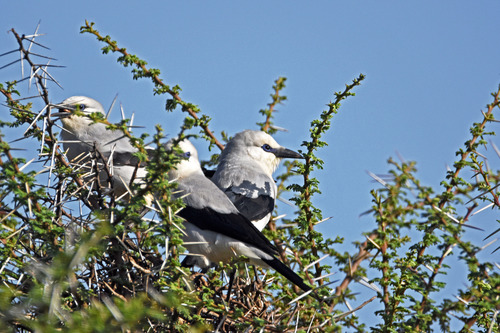
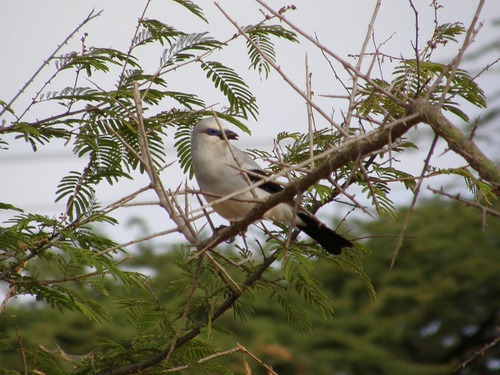
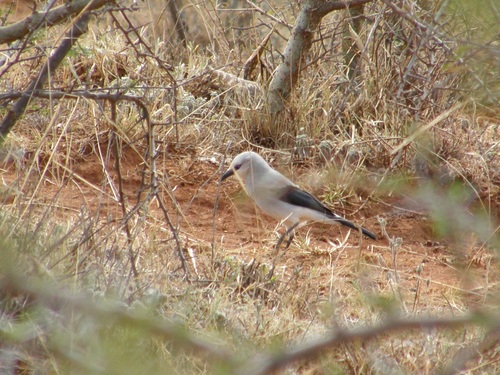
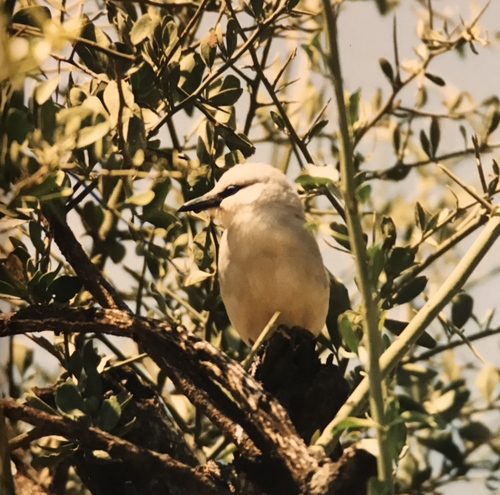
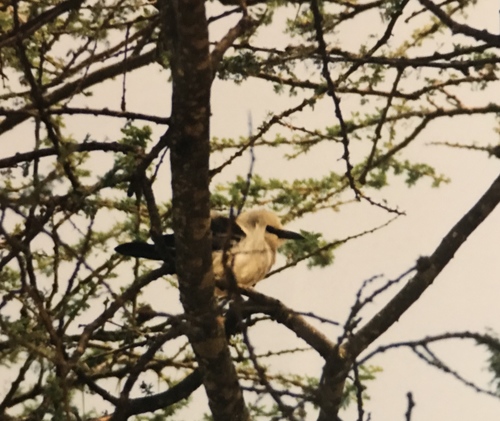
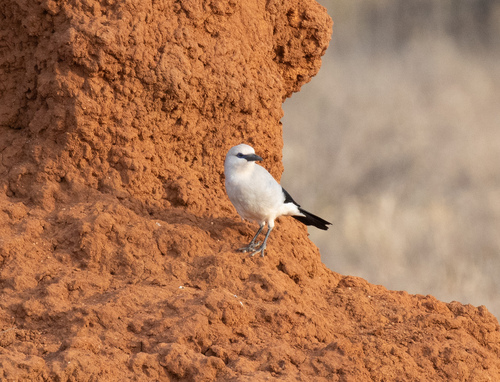
The Ethiopian bushcrow is about 28 centimetres (11 in) long and weighs 130 grams (4.6 oz). The sexes look similar and are not sexually dimorphic. Overall it is pale grey with a black tail and wings. The head, mantle, scapulars, back, rump, and uppertail coverts are all a pale grey. The feathers on the forehead, upper ear-coverts, and throat fade into white. The bright azure skin around the bushcrow's eye is featherless and can be inflated, narrowing the blackish-brown eye into a slit. The feathers behind the eye are capable of moving to reveal an oblong pink patch of skin.
Text from Wikipedia, licensed CC BY-SA 4.0.
When to see the Ethiopian Bushcrow
One bar for each month. Filled bars are the 7 months with records; pale bars are months with none. The wide bar is December, the month with the most records.
Where to see the Ethiopian Bushcrow
The map shades 1 country with regular records. Everything unshaded has no records. Countries are listed below the map.
About the Ethiopian Bushcrow
The Ethiopian bushcrow, also known as the Stresemann's bushcrow, Abyssinian pie, bush crow, or by its generic name Zavattariornis, is a rather starling-like bird, which is a member of the crow family, Corvidae. It is slightly larger than the North American blue jay and is a bluish-grey in overall colour which becomes almost white on the forehead. The throat and chest are creamy-white with the tail and wings a glossy black. The black feathers have a tendency to bleach to brown at their tips. The iris of the bird is brown and the eye is surrounded by a band of naked bright blue skin. The bill, legs, and feet are black.
Text adapted from Wikipedia, licensed CC BY-SA 4.0.
Easily confused with
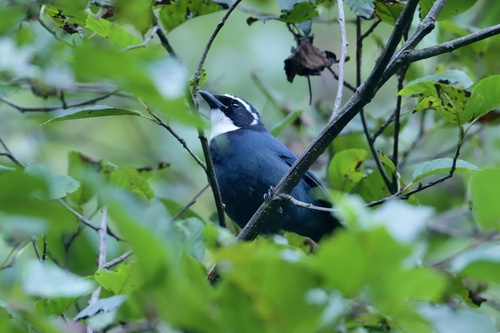 White-throated JayCyanolyca mirabilisThe white-throated jay is "the handsomest and most strikingly marked" member of genus Cyanolyca.
 Flores CrowCorvus florensisThe Flores crow is a species of bird in the family Corvidae.
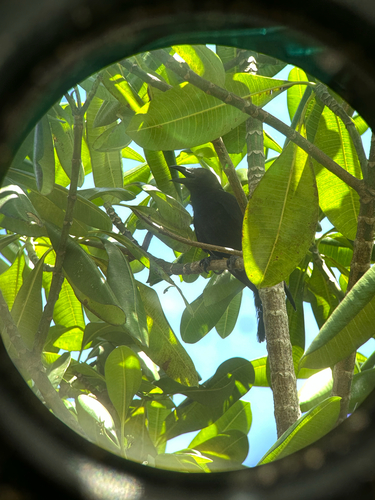 Mariana CrowCorvus kubaryiThe Mariana crow is a small black crow with a bluish-black gloss on its tail, and a greenish-black gloss on its back, underparts, head, and wings.
Learn the Ethiopian Bushcrow in the BeakBrain App
Photo and call practice. Coming soon to iPhone and Android.
Play today's Daily BirdEvery photo and recording on this page is credited to its author under the licence shown. Spotted a problem with this page, or have a better photo? Contribute.