Learn what every symbol on the card means.Full credits and sources at beakbrain.com/symbols
 WoodlandCup nestSmall · 28 g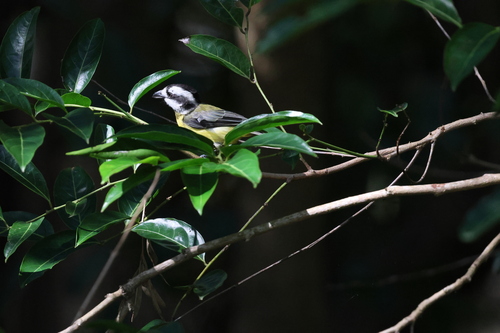


ID tip
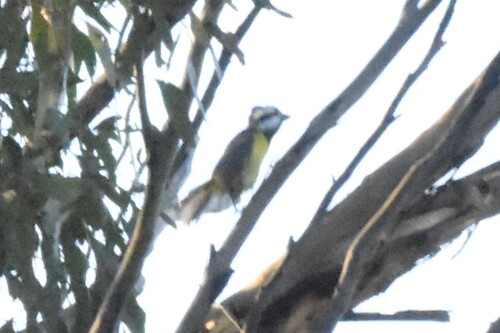
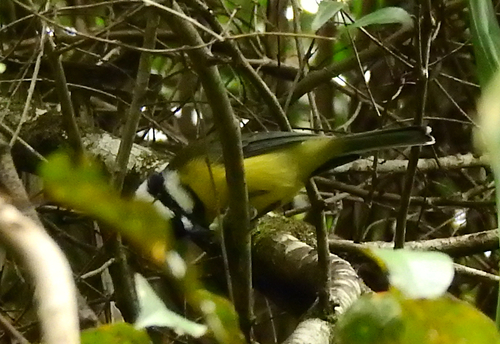
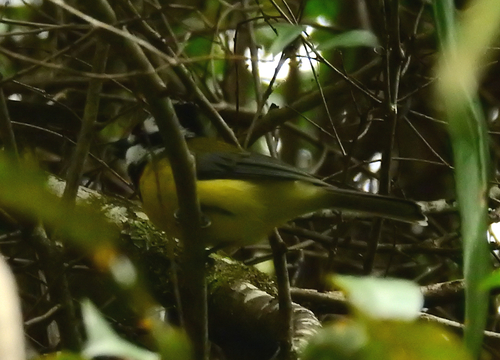
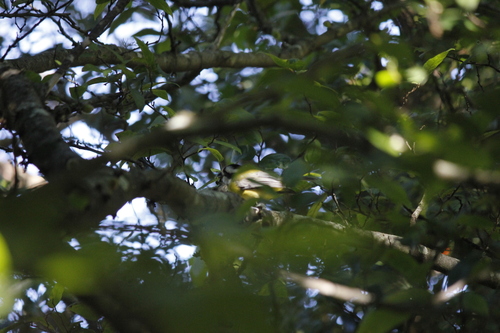
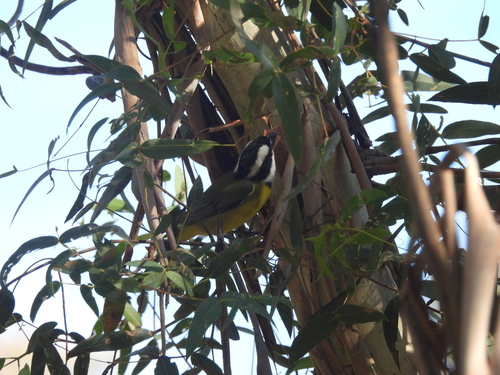
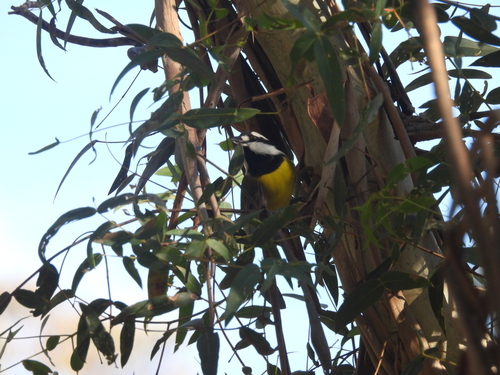
The eastern shriketit is 15–19 cm (5.9–7.5 in) in overall length, with a wingspan of 24–29 cm (9.4–11.4 in). The males weigh 26.5–40 g (0.9–1.4 oz) and the females 23–33 g (0.8–1.2 oz). The eastern shriketit has a mantle, back and rump that are olive-brown to olive-green. The underparts are yellow. The head features broad white patches separated by a thick black eyeline with another black band running over the crown from the bill to the nape. The male has an erectable crest. It has a large bill with which to lever and strip bark. Voice: The call of the eastern shriketit is a weak, mellow and mournful whistle, sounding like whiert, whit-whit, wheeir. It also makes repeated stuttering or chuckling calls described as "knock-at-the-door", and can perfectly mimic many species within its habitat.
Text from Wikipedia, licensed CC BY-SA 4.0.
When to see the Eastern Shriketit
One bar for each month, and every month is filled: this bird is recorded here in all twelve. The wide bar is October, the month with the most records.
Where to see the Eastern Shriketit
The map shades 1 country with regular records. Everything unshaded has no records. Countries are listed below the map.
About the Eastern Shriketit
The eastern shriketit is a species of passerine bird in the family Falcunculidae. It is also known as bark tit, crested tit or yellow-bellied tit.
Text adapted from Wikipedia, licensed CC BY-SA 4.0.
Easily confused with


Learn the Eastern Shriketit in the BeakBrain App
Photo and call practice. Coming soon to iPhone and Android.
Play today's Daily BirdEvery photo and recording on this page is credited to its author under the licence shown. Spotted a problem with this page, or have a better photo? Contribute.