Learn what every symbol on the card means.Full credits and sources at beakbrain.com/symbols
 ForestCup nestSmall · 41 g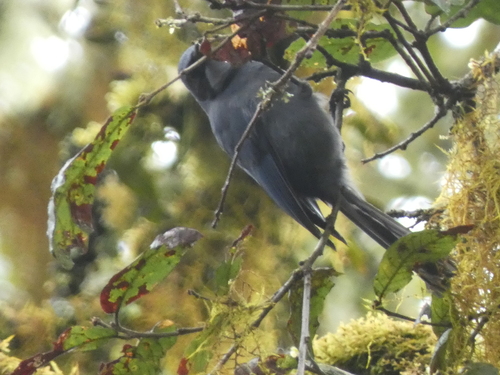


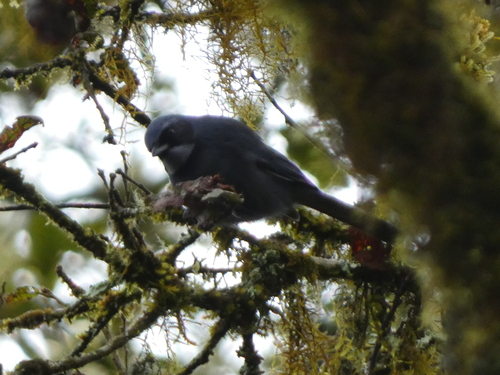
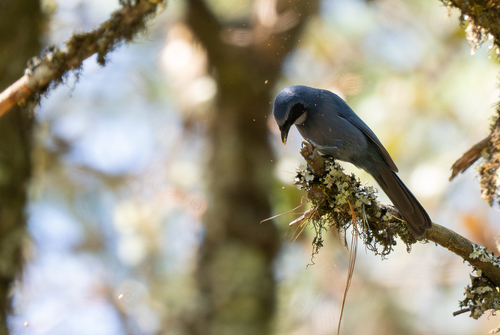
ID tip
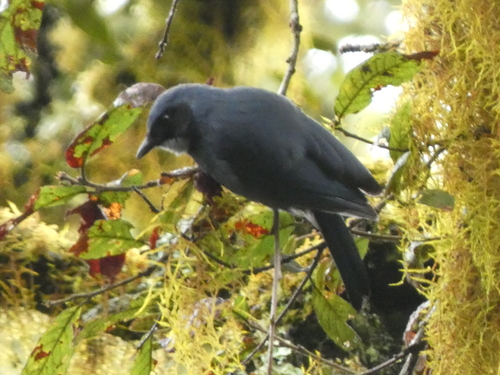
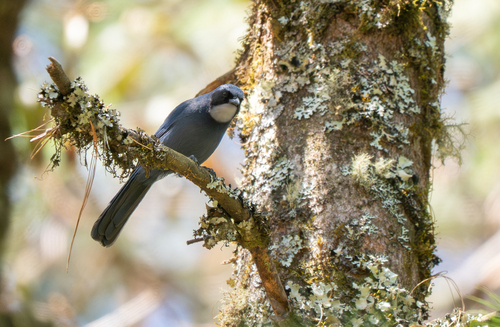
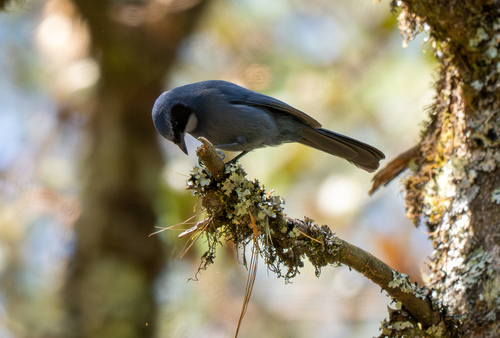
The dwarf jay is the smallest jay in the Americas at 20 to 23 cm (7.9 to 9.1 in) long. Four individuals weighed 39 to 41.4 g (1.4 to 1.5 oz). The sexes have the same plumage though females tend to be duller than males. Adults have a black mask from the lores and chin to the cheeks and ear coverts. They have blue crown with a thin paler blue stripe separating it from the mask. Their upperparts are grayish or violet-blue that is brighter on the wings and tail. Their throat is pale purplish or whitish blue and the rest of their underparts grayish blue. Voice: The dwarf jay has a limited number of vocalizations compared to other jays. Its typical call is "a nasal shree’up, uttered in units of two or three or a nasal shiev'a shiev'a".
Text from Wikipedia, licensed CC BY-SA 4.0.
When to see the Dwarf Jay
One bar for each month. Filled bars are the 8 months with records; pale bars are months with none. The wide bar is March, the month with the most records.
Where to see the Dwarf Jay
The map shades 1 country with regular records. Everything unshaded has no records. Countries are listed below the map.
About the Dwarf Jay
The dwarf jay is the smallest bird in the family Corvidae, the crows and jays. It is endemic to Mexico, and is classified as Near Threatened by the IUCN Red List.
Text adapted from Wikipedia, licensed CC BY-SA 4.0.
Easily confused with
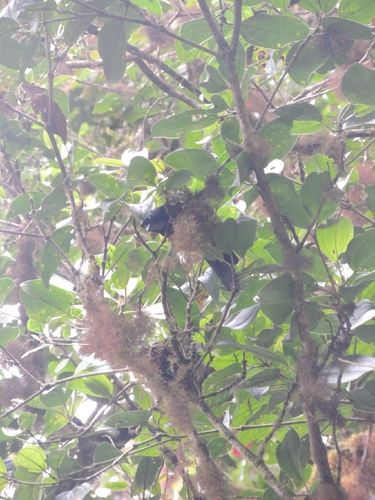 Silvery-throated JayCyanolyca argentigulaThe silvery-throated jay is 25 to 27 cm (9.8 to 11 in) long and weighs an average of 65 g (2.3 oz).
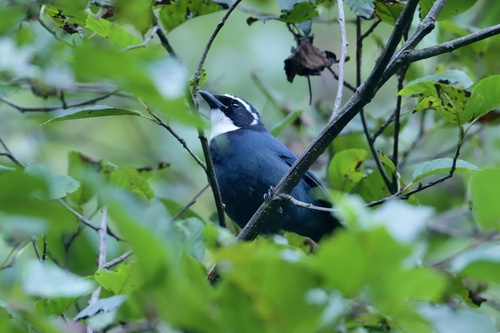 White-throated JayCyanolyca mirabilisThe white-throated jay is "the handsomest and most strikingly marked" member of genus Cyanolyca.
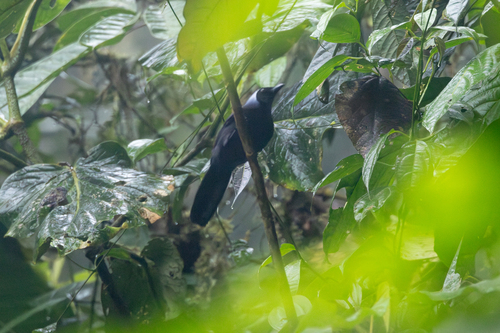 Beautiful JayCyanolyca pulchraThe beautiful jay is a species of bird in the crow and jay family Corvidae.
Learn the Dwarf Jay in the BeakBrain App
Photo and call practice. Coming soon to iPhone and Android.
Play today's Daily BirdEvery photo and recording on this page is credited to its author under the licence shown. Spotted a problem with this page, or have a better photo? Contribute.