Learn what every symbol on the card means.Full credits and sources at beakbrain.com/symbols
 GrasslandCavity nestTiny · 10 g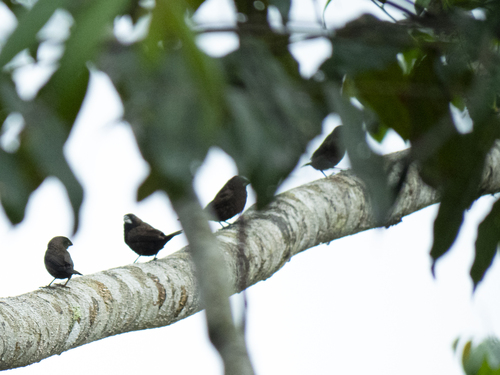


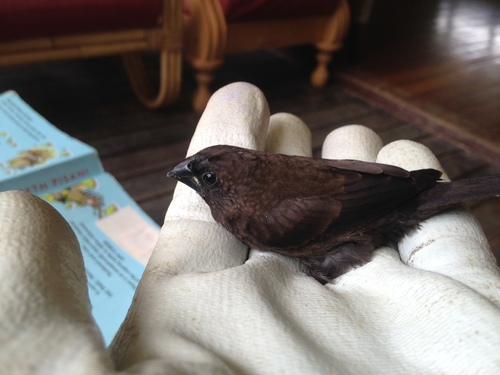
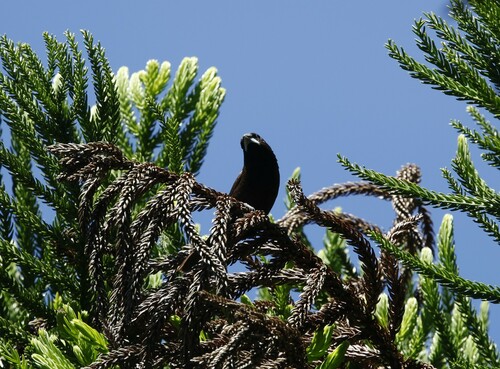
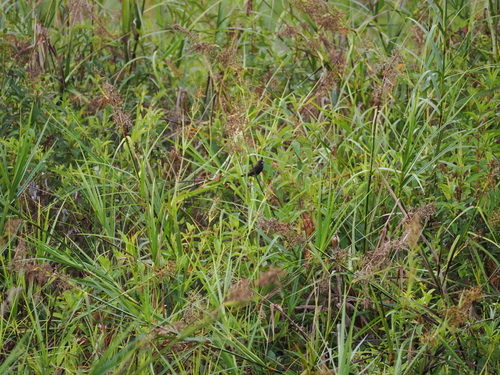
ID tip
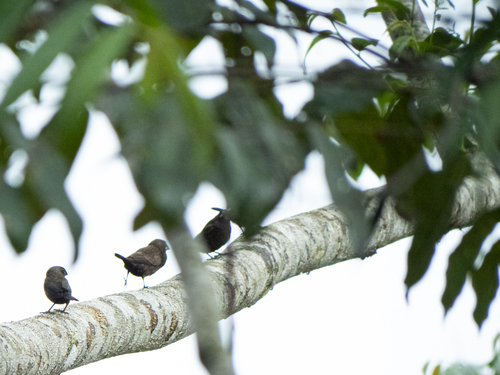
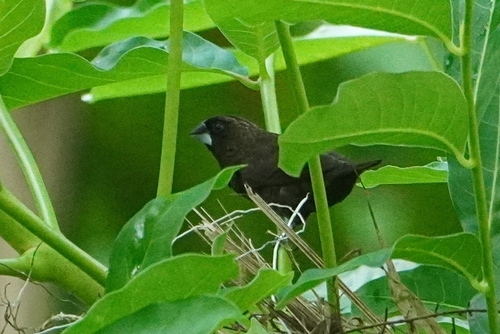
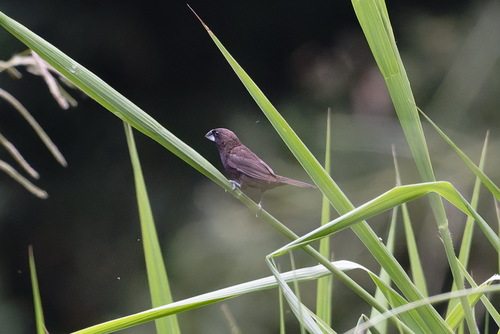
The dusky munia is a smaller perching bird, with adults growing to reach a body length of 10 to 11 centimeters long, and weighing in at 9.5 grams. Their plumage is a rich dark brown, with feathers of its crown streaked pale brown, and blue-gray legs. It has a gray ring around its eye, and is dark around the face, with a bill that has a black upper mandible, and a blue-gray lower mandible. There is no distinction in feather pattern between male or female.
Text from Wikipedia, licensed CC BY-SA 4.0.
When to see the Dusky Munia
One bar for each month. Filled bars are the 10 months with records; pale bars are months with none. The wide bar is July, the month with the most records.
Where to see the Dusky Munia
The map shades 3 countries with regular records. Everything unshaded has no records. Countries are listed below the map.
About the Dusky Munia
The dusky munia is a species in the estrildid finch Family and is endemic to Borneo. It is also commonly referred to as the Dusky mannikin and the Bornean munia. It is in the genus Lonchura and is a monotypic species, so there are no subspecies.
Text adapted from Wikipedia, licensed CC BY-SA 4.0.
Easily confused with
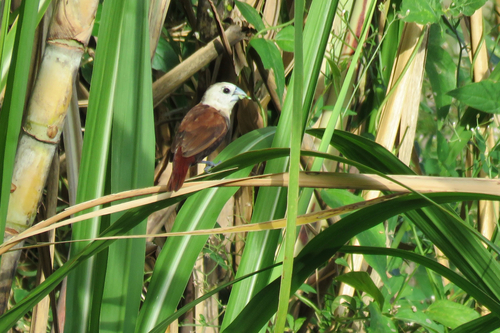 White-headed MuniaLonchura majaThe white-headed munia (Lonchura maja) is a small passerine bird belonging to the estrildid finch family.
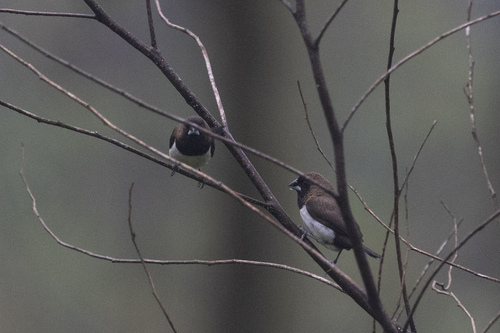 Javan MuniaLonchura leucogastroidesThe Javan munia is a species of estrildid finch native to southern Sumatra, Java, Bali and Lombok islands in Indonesia.
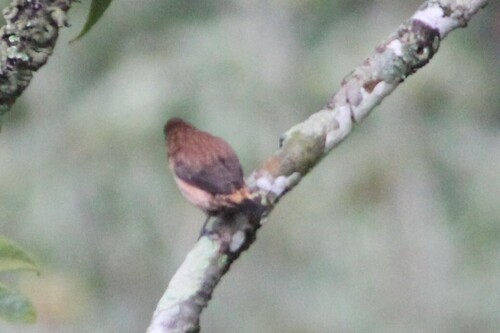 Black-throated MuniaLonchura kelaartiThe black-throated munia or Jerdon's mannikin is a small passerine bird.
Learn the Dusky Munia in the BeakBrain App
Photo and call practice. Coming soon to iPhone and Android.
Play today's Daily BirdEvery photo and recording on this page is credited to its author under the licence shown. Spotted a problem with this page, or have a better photo? Contribute.