Learn what every symbol on the card means.Full credits and sources at beakbrain.com/symbols
 ShrublandDomed nestSmall · 21 g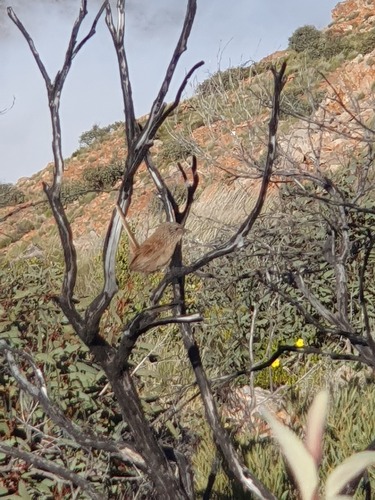





ID tip
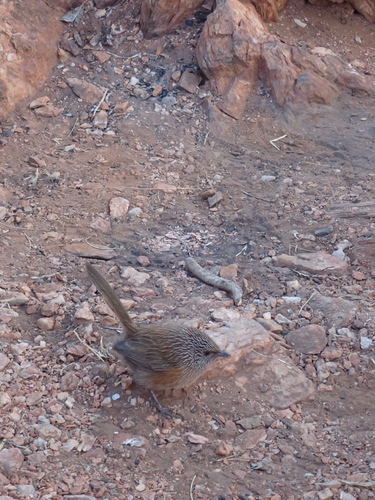
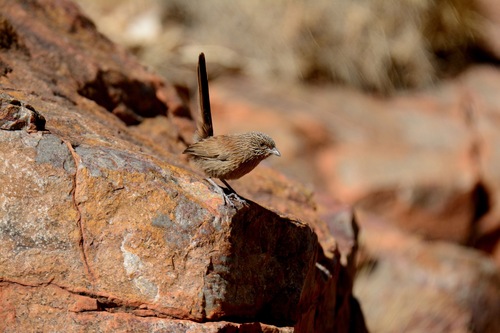
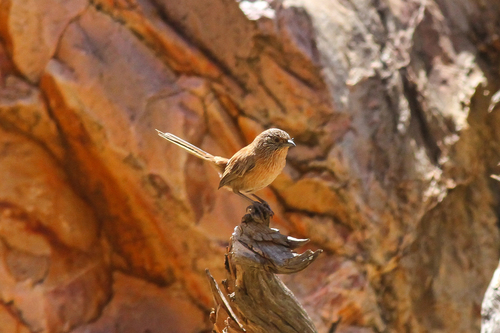
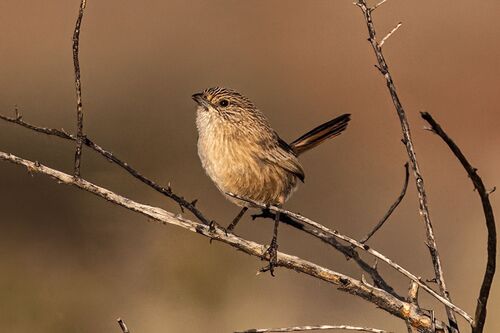
The dusky grasswren is superficially similar in appearance to a number of the other grasswrens in the genus Amytornis, but is the only member of this genus to exclusively inhabit rocky ranges across Central Australia. It has a predominantly brown base colour to its plumage with fine pale streaking over the head breast and mantle. The brown of the plumage is a richer chestnut on the back and pale to almost buff on the belly and vent. Voice: This species most often reveals itself initially with a sharp, metallic tutting in alarm or a drawn-out seeeep contact call. The vocal repertoire of the dusky grasswren is varied and includes trills, high-pitched whistles, rapid twittering, and high-speed warbling. Much of the richness in the calls is difficult for humans to detect due to the extreme speed with which they are performed.
Text from Wikipedia, licensed CC BY-SA 4.0.
When to see the Dusky Grasswren
One bar for each month. Filled bars are the 9 months with records; pale bars are months with none. The wide bar is October, the month with the most records.
Where to see the Dusky Grasswren
The map shades 1 country with regular records. Everything unshaded has no records. Countries are listed below the map.
About the Dusky Grasswren
The dusky grasswren is a species of small passerine bird in the family Maluridae. The species is endemic to Australia but is limited to inland areas of the Northern Territory, Western Australia and South Australia.
Text adapted from Wikipedia, licensed CC BY-SA 4.0.
Easily confused with
 Western GrasswrenAmytornis textilisA species of Amytornis, the western grasswren is a small, shy, mainly terrestrial bird.
 Eyrean GrasswrenAmytornis goyderiAt 14–16.5 cm in length, Amytornis goyderi is the smallest grasswren.
 Striated GrasswrenAmytornis striatusThe striated grasswren is one of 14 species in the genus Amytornis, commonly known as the grasswrens, found only in arid and semi-arid areas of Australia.
Learn the Dusky Grasswren in the BeakBrain App
Photo and call practice. Coming soon to iPhone and Android.
Play today's Daily BirdEvery photo and recording on this page is credited to its author under the licence shown. Spotted a problem with this page, or have a better photo? Contribute.