Learn what every symbol on the card means.Full credits and sources at beakbrain.com/symbols
 ForestCup nestMedium · 71 g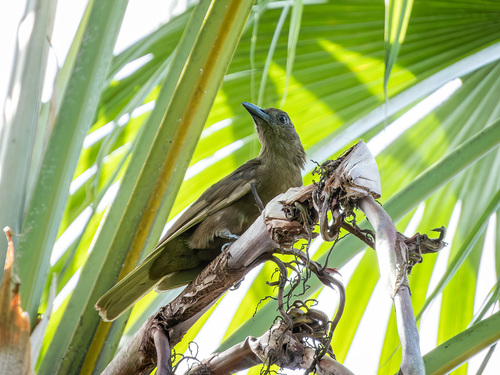
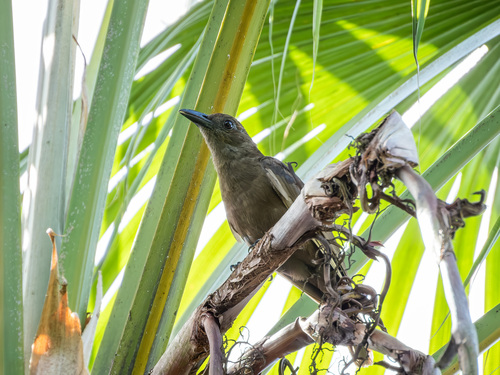


ID tip
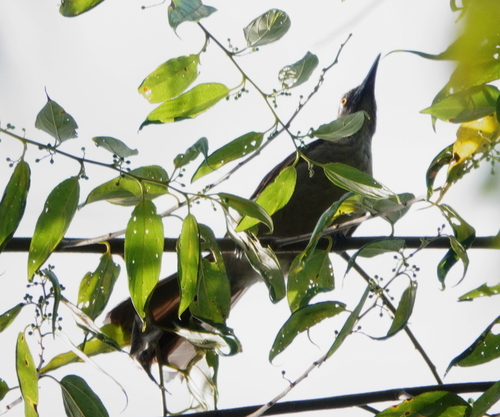
This species typically inhabits the upper canopy of forests, forest edges, mangrove areas, and adjacent cultivated regions, primarily in lowland and foothill elevations. It is usually observed alone or in pairs, although it occasionally joins mixed-species foraging flocks. The Dusky-brown Oriole can be distinguished from similar species, such as the White-streaked Friarbird (Philemon albitorques), by its lack of streaking or pale markings on the head and its consistently even brown coloration.
Text from Wikipedia, licensed CC BY-SA 4.0.
When to see the Dusky-brown Oriole
One bar for each month. Filled bars are the 5 months with records; pale bars are months with none. The wide bar is September, the month with the most records.
Where to see the Dusky-brown Oriole
The map shades 1 country with regular records. Everything unshaded has no records. Countries are listed below the map.
About the Dusky-brown Oriole
The dusky-brown oriole is a species of bird in the family Oriolidae.It is endemic to North Maluku.
Text adapted from Wikipedia, licensed CC BY-SA 4.0.
Easily confused with
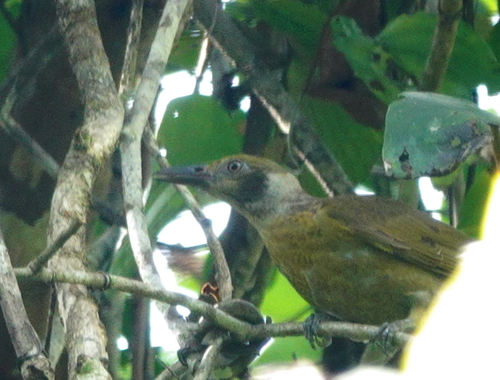 Grey-collared OrioleOriolus forsteniThe grey-collared oriole, or Seram oriole, is a species of bird in the family Oriolidae.
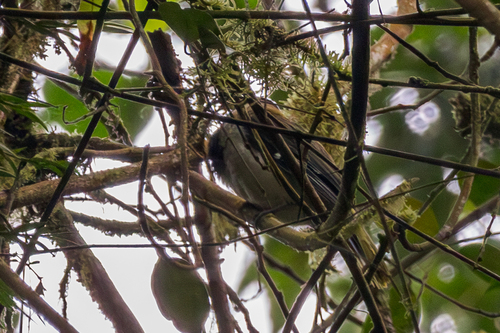 Sao Tome OrioleOriolus crassirostrisThe São Tomé oriole, or great-billed oriole, is a species of bird in the family Oriolidae.
 Black-eared OrioleOriolus bouroensisThe black-eared oriole, or Buru oriole, is a species of bird in the family Oriolidae.
Learn the Dusky-brown Oriole in the BeakBrain App
Photo and call practice. Coming soon to iPhone and Android.
Play today's Daily BirdEvery photo and recording on this page is credited to its author under the licence shown. Spotted a problem with this page, or have a better photo? Contribute.