Learn what every symbol on the card means.Full credits and sources at beakbrain.com/symbols
 GrasslandCup nestSmall · 39 g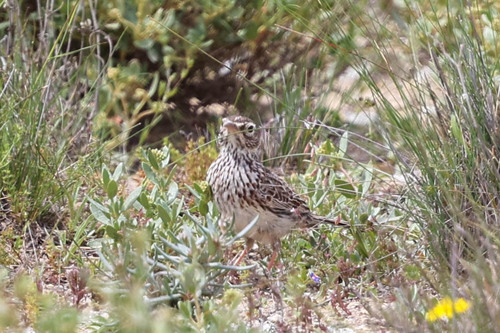


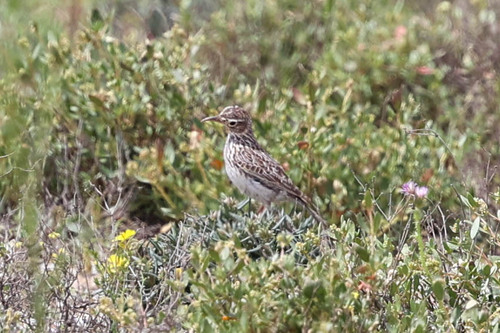
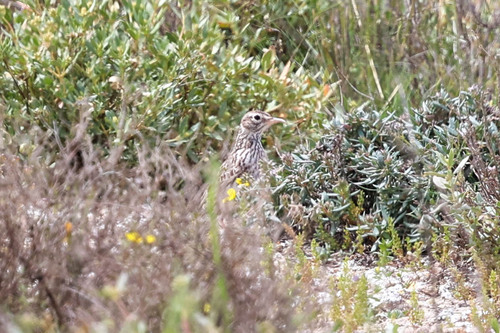
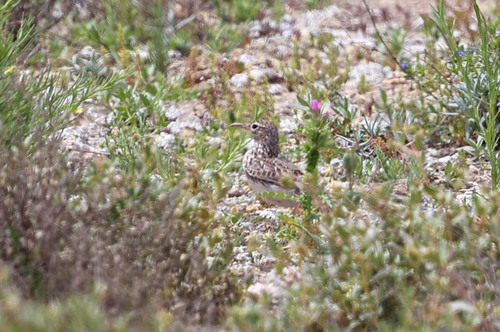
ID tip
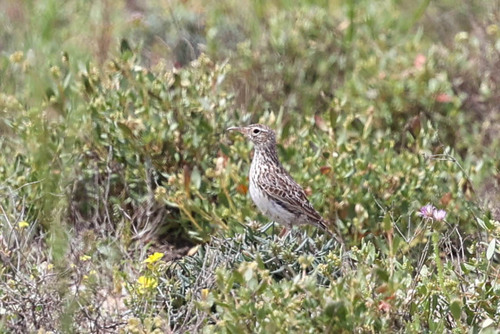
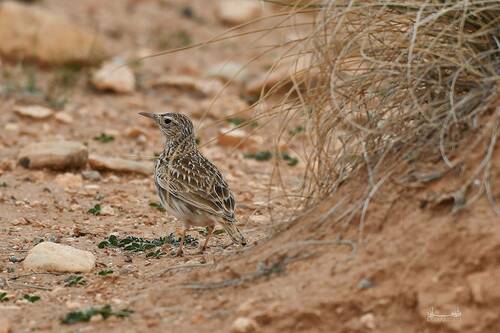
Like most other larks, Dupont's lark is an undistinguished looking species on the ground. It is 17–18 cm long, slim, with a long neck, long legs and a fine slightly curved bill. It has a thin pale crown stripe and a dark-streaked breast. The north-western Dupont's lark of Europe and north-west Africa is mainly brown-grey above and pale below. The south-eastern Dupont's lark, which occupies most of the rest of the African range, has rufous upperparts. Voice: Its song is a repeated thin, melancholic whistling phrase, very ventriloquial (difficult to locate) and a nasal whistle given mainly at dawn and dusk or at night.
Text from Wikipedia, licensed CC BY-SA 4.0.
When to see the Dupont's Lark
One bar for each month. Filled bars are the 6 months with records; pale bars are months with none. The wide bar is May, the month with the most records.
Where to see the Dupont's Lark
The map shades 4 countries with regular records, and 2 more in a lighter tone where the bird turns up only as a stray. Everything unshaded has no records. Countries are listed below the map.
About the Dupont's Lark
Dupont's lark is a species of lark in the family Alaudidae of the monotypic genus Chersophilus. It is found in northern Africa and Spain.
Text adapted from Wikipedia, licensed CC BY-SA 4.0.
Easily confused with
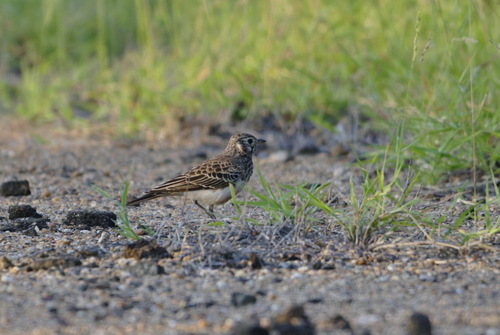 Dusky LarkPinarocorys nigricansThe dusky lark, also known as the dusky bush lark or rufous-rumped bush lark, is a species of migratory lark in the family Alaudidae.
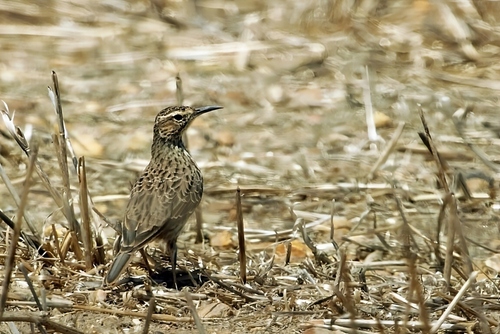 Cape Long-billed LarkCerthilauda curvirostrisThe Cape long-billed lark, also known as the Cape lark, Cape longbill or long-billed lark is a species of lark in the family Alaudidae.
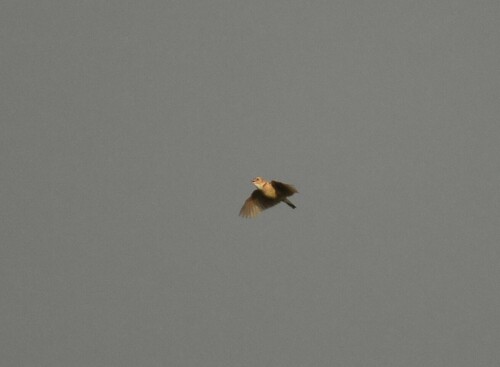 Melodious LarkMirafra chenianaThe melodious lark is a species of lark in the family Alaudidae found in southern Africa.
Learn the Dupont's Lark in the BeakBrain App
Photo and call practice. Coming soon to iPhone and Android.
Play today's Daily BirdEvery photo and recording on this page is credited to its author under the licence shown. Spotted a problem with this page, or have a better photo? Contribute.