Learn what every symbol on the card means.Full credits and sources at beakbrain.com/symbols
 ForestCup nestSmall · 37 g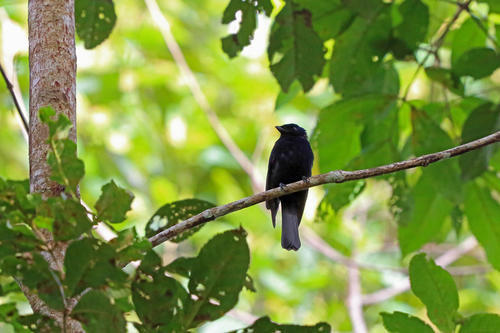


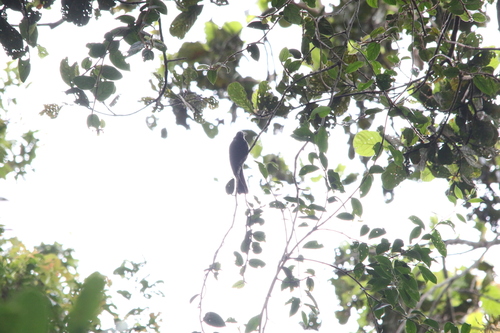
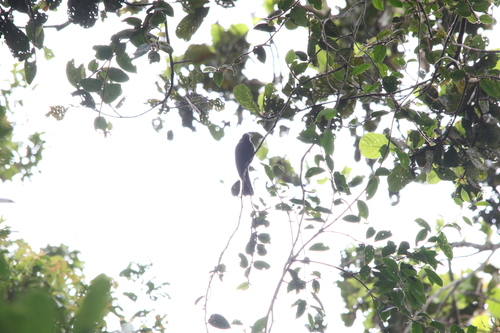
When to see the Drongo Fantail
One bar for each month. Filled bars are the 8 months with records; pale bars are months with none. The wide bar is July, the month with the most records.
Where to see the Drongo Fantail
The map shades 2 countries with regular records. Everything unshaded has no records. Countries are listed below the map.
About the Drongo Fantail
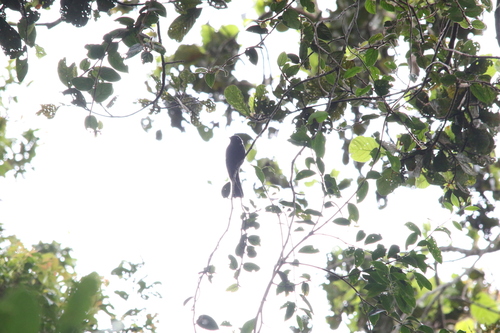
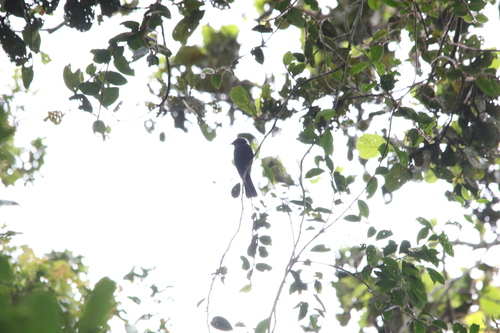
The drongo fantail, also known as the pygmy drongo, is a species of passerine bird endemic to the island of New Guinea. It is the only species in the genus Chaetorhynchus. The species was long placed within the drongo family Dicruridae, but it differs from others in that family in having twelve rectrices instead of ten. Molecular analysis also supports moving the species out from the drongo family, instead placing it as a sister species to the silktail of Fiji, and both those species in the fantail family Rhipiduridae.
Text adapted from Wikipedia, licensed CC BY-SA 4.0.
Easily confused with
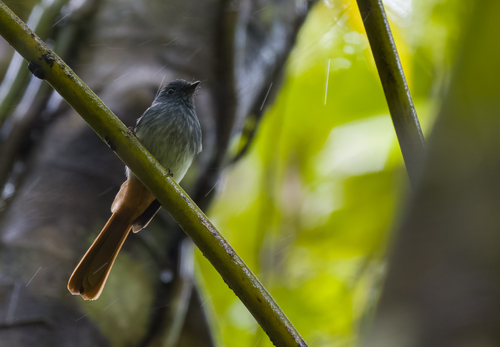 Visayan FantailRhipidura albiventrisThe Visayan fantail is a fantail endemic to the Philippines on the islands of Negros, Panay, Guimaras, Masbate and Ticao.
Rufous-backed FantailRhipidura rufidorsaThe rufous-backed fantail is a species of bird in the family Rhipiduridae.
Visayan FantailRhipidura albiventrisThe Visayan fantail is a fantail endemic to the Philippines on the islands of Negros, Panay, Guimaras, Masbate and Ticao.
Rufous-backed FantailRhipidura rufidorsaThe rufous-backed fantail is a species of bird in the family Rhipiduridae.
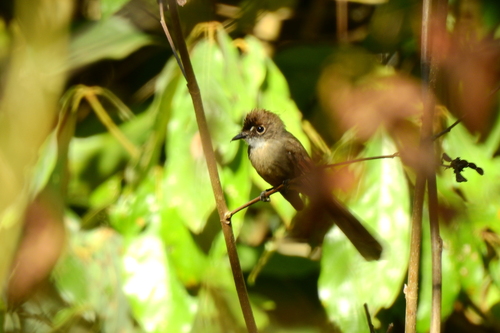 Brown-capped FantailRhipidura dilutaThe brown-capped fantail is a species of bird in the family Rhipiduridae.
Learn the Drongo Fantail in the BeakBrain App
Photo and call practice. Coming soon to iPhone and Android.
Play today's Daily BirdEvery photo and recording on this page is credited to its author under the licence shown. Spotted a problem with this page, or have a better photo? Contribute.