Learn what every symbol on the card means.Full credits and sources at beakbrain.com/symbols
 WoodlandCavity nestMedium · 209 g


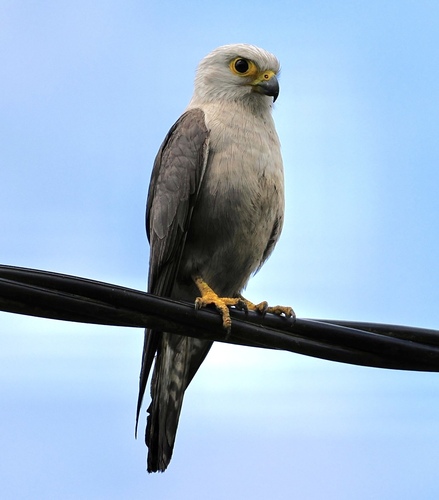
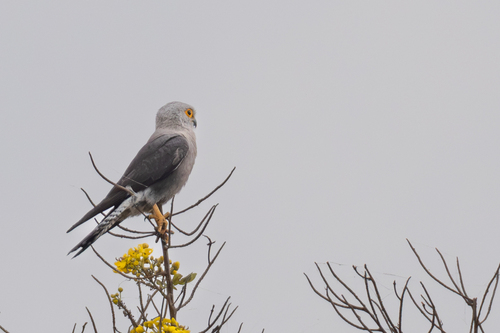
ID tip
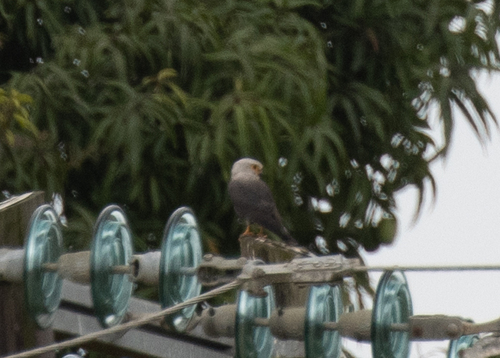
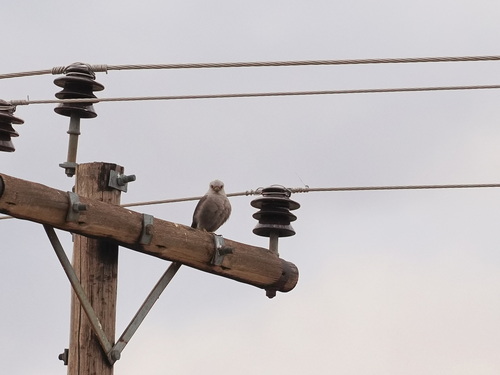
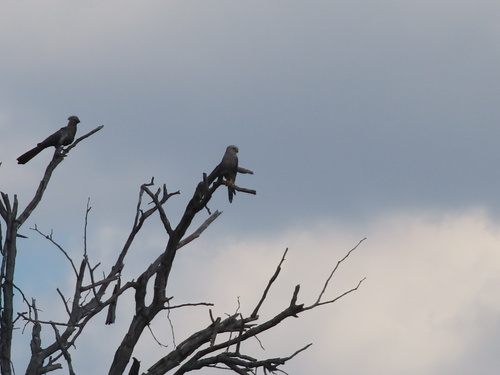
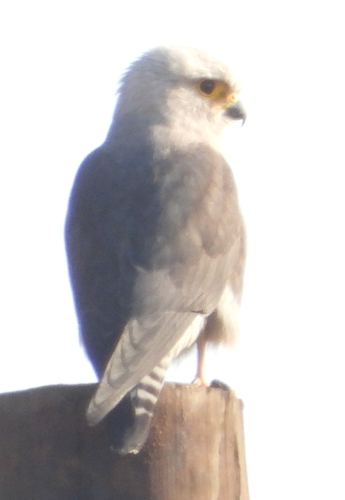
It is a fairly small, stocky kestrel with a large, square head. It is 27–30 cm (11–12 in) long with a wingspan of 61–68 cm (24–27 in) and a weight of 167–246 g (5.9–8.7 oz). The female is about 4% larger and 10-20% heavier than the male. The plumage is mostly dark grey with a pale head and rump. The tail is grey with narrow black bars and a broad subterminal band. The underside of the flight feathers are also barred. The cere and feet are yellow and there is bare yellow skin around the eye. The bill is dark grey and the eyes are brown.
Text from Wikipedia, licensed CC BY-SA 4.0.
When to see the Dickinson's Kestrel
One bar for each month, and every month is filled: this bird is recorded here in all twelve. The wide bar is November, the month with the most records.
Where to see the Dickinson's Kestrel
The map shades 11 countries with regular records. Everything unshaded has no records. Countries are listed below the map.
About the Dickinson's Kestrel
Dickinson's kestrel is a bird of prey of southern and eastern Africa belonging to the falcon family Falconidae. It is named after John Dickinson, an English physician and missionary who collected the type specimen. It is also known as the white-rumped kestrel. Its closest relatives are the grey kestrel and banded kestrel and the three are sometimes placed in the subgenus Dissodectes.
Text adapted from Wikipedia, licensed CC BY-SA 4.0.
Easily confused with
 Spotted KestrelFalco moluccensisSpotted kestrels measure 26–32 cm (10–12.5 in) from head to tail, with a wingspan of 59–71 cm (23–28 in).
 Laggar FalconFalco juggerThe laggar falcon, also known as the lugger falcon or jugger, is a mid-sized bird of prey which occurs in the Indian subcontinent from extreme southeastern Iran, southeastern Afghanistan, Pakistan, through India, Nepal, Bhutan, Bangladesh and northwestern Myanmar.
 African HobbyFalco cuvieriiA small, slim falcon with blackish upperparts and deep rufous underparts with rufous cheek, nape and throat.
Learn the Dickinson's Kestrel in the BeakBrain App
Photo and call practice. Coming soon to iPhone and Android.
Play today's Daily BirdEvery photo and recording on this page is credited to its author under the licence shown. Spotted a problem with this page, or have a better photo? Contribute.