Learn what every symbol on the card means.Full credits and sources at beakbrain.com/symbols
 Forest16 g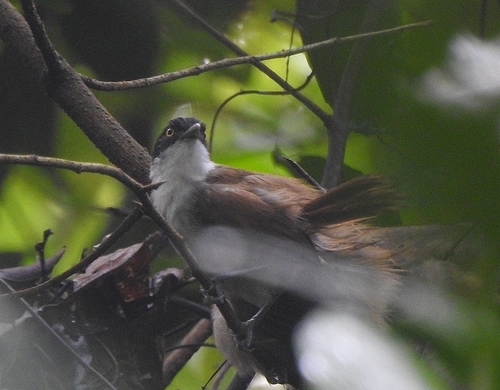
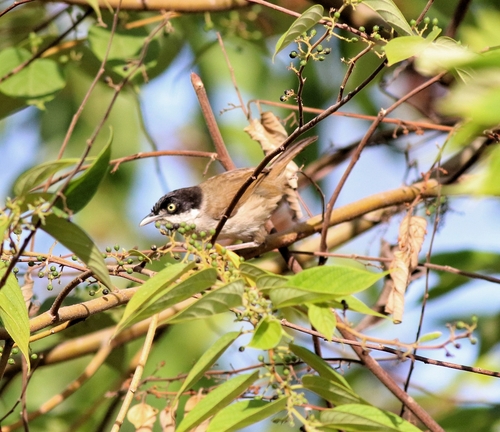
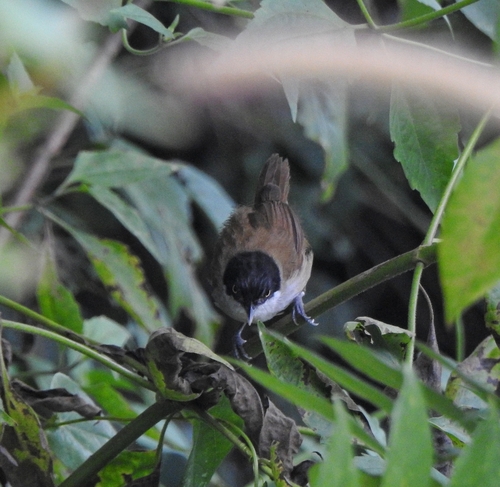
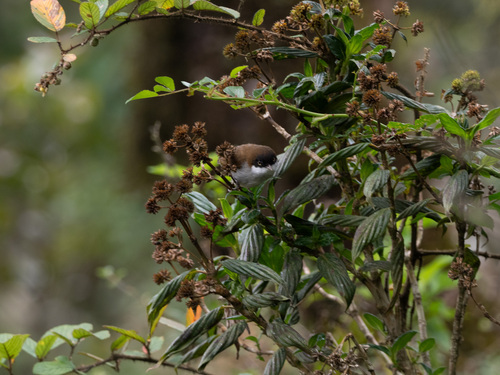
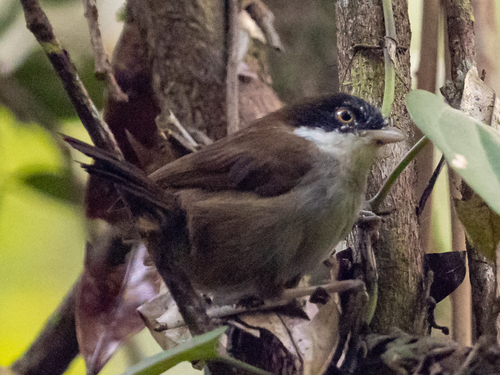
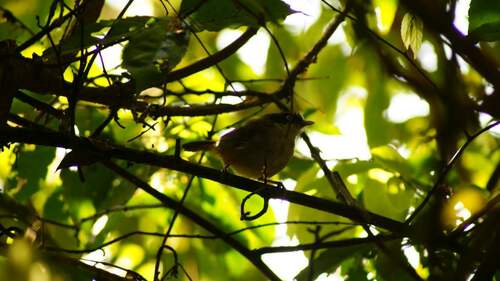
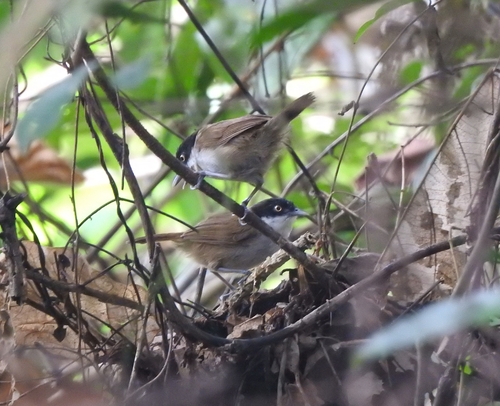
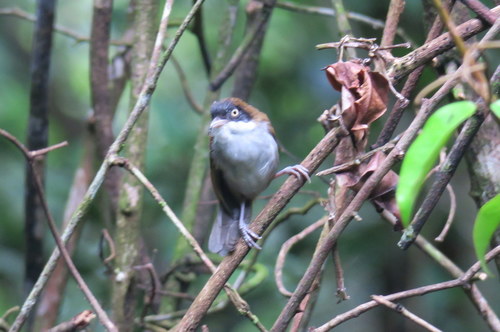
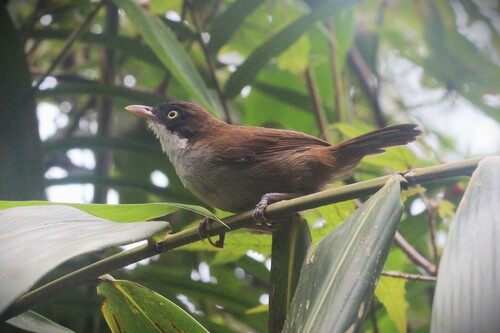
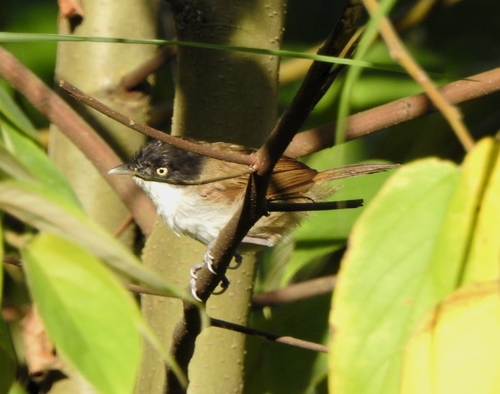
ID tip
The dark-fronted babbler measures 13 cm including its square-tipped tail. It is brown above and white below. The two subspecies in the Western Ghats have black hoods, but the two Sri Lankan races have this reduced to a dark bandit mask. The pale yellow iris stands in contrast. The subspecies in the southern Western Ghats bourdilloni has a duller sooty-black hood, browner underside and the upper parts are more olive. The nominate form found north of the Palghat Gap has the hood dark black.
Text from Wikipedia, licensed CC BY-SA 4.0.
When to see the Dark-fronted Babbler
One bar for each month. Filled bars are the 10 months with records; pale bars are months with none. The wide bar is January, the month with the most records.
Where to see the Dark-fronted Babbler
The map shades 2 countries with regular records. Everything unshaded has no records. Countries are listed below the map.
About the Dark-fronted Babbler
The dark-fronted babbler is an Old World babbler found in the Western Ghats of India and the forests of Sri Lanka. They are small chestnut brown birds with a dark black cap, a whitish underside and pale yellow iris. They forage in flocks in the undergrowth of forests constantly making calls and uttering alarm calls when disturbed.
Text adapted from Wikipedia, licensed CC BY-SA 4.0.
Easily confused with
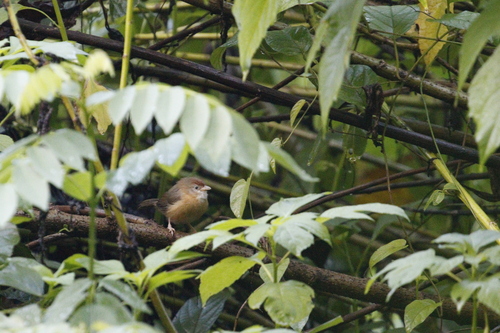
Side by side: Dark-fronted Babbler vs Tawny-bellied Babbler
Learn the Dark-fronted Babbler in the BeakBrain App
Photo and call practice. Coming soon to iPhone and Android.
Play today's Daily BirdEvery photo and recording on this page is credited to its author under the licence shown. Spotted a problem with this page, or have a better photo? Contribute.