Learn what every symbol on the card means.Full credits and sources at beakbrain.com/symbols
 ForestCavity nestSmall · 20 g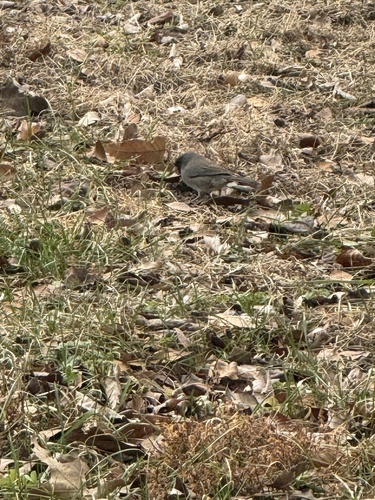
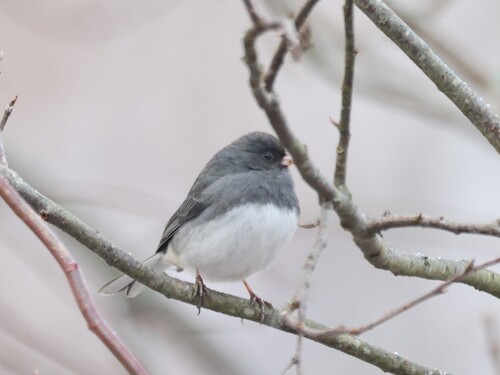
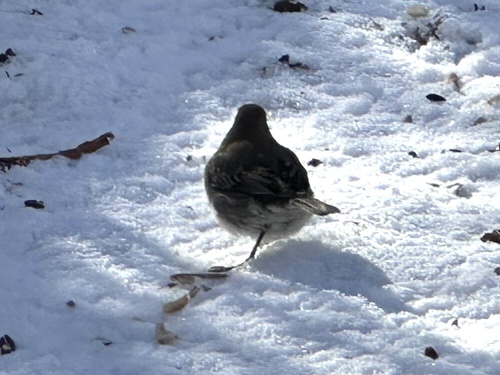
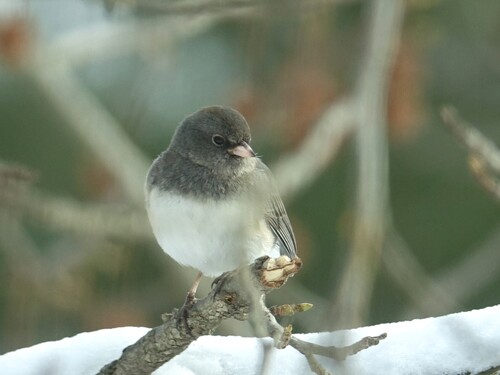


What the Dark-eyed Junco sounds like


ID tip
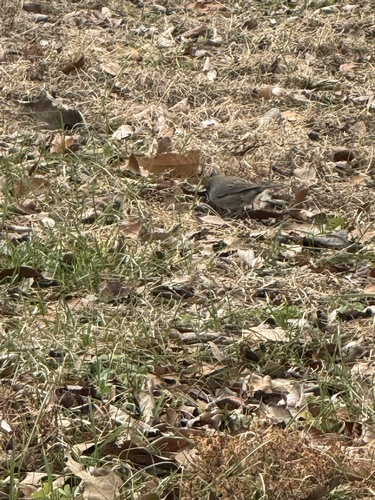
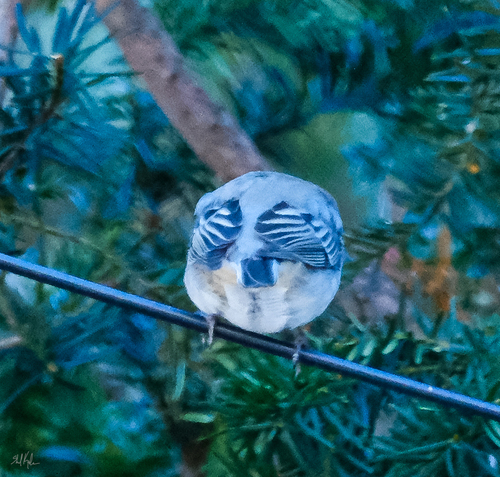
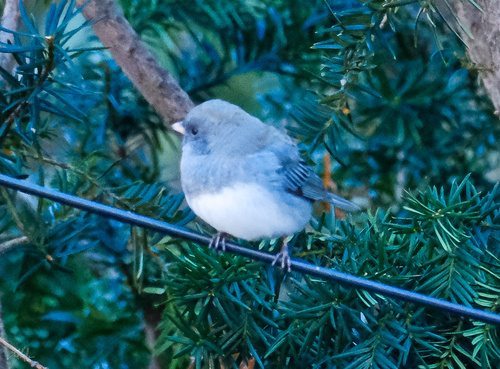
Adult dark-eyed juncos generally have gray heads, necks, and breasts, gray or brown backs and wings, and a white belly, but show a confusing amount of variation in plumage details. The white outer tail feathers flash distinctively in flight and while hopping on the ground. The bill is usually pale pinkish. Males tend to have darker, more conspicuous markings than females. The dark-eyed junco is 13 to 17.5 cm (5.1 to 6.9 in) long and has a wingspan of 18 to 25 cm (7.1 to 9.8 in). Body mass can vary from 18 to 30 g (0.63 to 1.06 oz). Among standard measurements, the wing chord is 6.6 to 9.
Text from Wikipedia, licensed CC BY-SA 4.0.
When to see the Dark-eyed Junco
One bar for each month. Filled bars are the 9 months with records; pale bars are months with none. The wide bar is January, the month with the most records.
Where to see the Dark-eyed Junco
The map shades 8 countries with regular records, and 7 more in a lighter tone where the bird turns up only as a stray. Everything unshaded has no records. Countries are listed below the map.
Recorded as a rare visitor in Norway, Sweden, Netherlands, Finland, Russia, Cuba, Cayman Islands.
About the Dark-eyed Junco
The dark-eyed junco is a species of junco, a group of small, grayish New World sparrows. The species is common across much of temperate North America and in summer it ranges far into the Arctic. It is a variable species, much like the related fox sparrow, and its systematics are still not completely resolved.
Text adapted from Wikipedia, licensed CC BY-SA 4.0.
Easily confused with
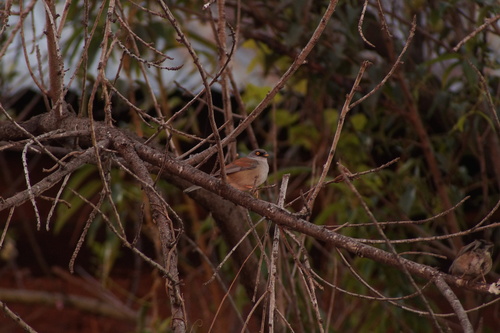 Yellow-eyed JuncoJunco phaeonotusThe yellow-eyed junco is about 16 cm (6.3 in) long.
 Volcano JuncoJunco vulcaniThe volcano junco is about 16 cm (6.3 in) long and weighs about 28 g (0.99 oz).
 Guadalupe JuncoJunco insularisThe Guadalupe junco is a small bird in the New World sparrow family that is endemic to Guadalupe Island off the western coast of Baja California, Mexico.
Side by side: Dark-eyed Junco vs Yellow-eyed Junco · Dark-eyed Junco vs Volcano Junco
Learn the Dark-eyed Junco in the BeakBrain App
Photo and call practice. Coming soon to iPhone and Android.
Play today's Daily BirdEvery photo and recording on this page is credited to its author under the licence shown. Spotted a problem with this page, or have a better photo? Contribute.