Learn what every symbol on the card means.Full credits and sources at beakbrain.com/symbols
 ForestCavity nestMedium · 255 g


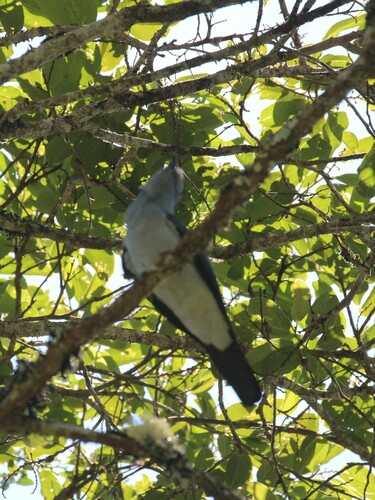
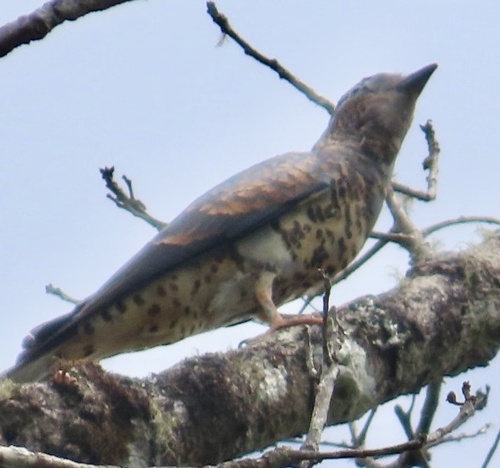
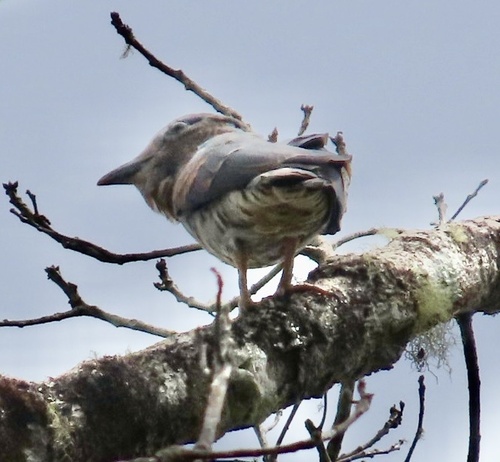

ID tip
The cuckoo-roller has a total length of 40–50 cm (16–20 in); the nominate subspecies is the largest, and L. d. gracilis the smallest. Unlike the true rollers and ground rollers, where the sexes have identical appearance, the cuckoo-roller is sexually dichromatic. Males have a mostly velvety grey chest and head, changing gradually to white on the remaining underparts (the demarcation between grey and white is stronger in L. d. gracilis). The back, tail, and wing-coverts are dark iridescent green with a purplish tinge (especially on the wing-coverts), and the crown and eye-stripe are black.
Text from Wikipedia, licensed CC BY-SA 4.0.
When to see the Cuckoo-roller
One bar for each month. Filled bars are the 5 months with records; pale bars are months with none. The wide bar is November, the month with the most records.
Where to see the Cuckoo-roller
The map shades 3 countries with regular records. Everything unshaded has no records. Countries are listed below the map.
About the Cuckoo-roller
The cuckoo-roller or courol is the only bird in the family Leptosomidae, which was previously often placed in the order Coraciiformes but is now placed in its own order Leptosomiformes. The cuckoo-roller is at the root of a group that contains the Trogoniformes, Bucerotiformes, Piciformes, and Coraciiformes. Despite its name, the cuckoo-roller does not share close evolutionary origins with cuckoos or rollers.
Text adapted from Wikipedia, licensed CC BY-SA 4.0.
Learn the Cuckoo-roller in the BeakBrain App
Photo and call practice. Coming soon to iPhone and Android.
Play today's Daily BirdEvery photo and recording on this page is credited to its author under the licence shown. Spotted a problem with this page, or have a better photo? Contribute.