Learn what every symbol on the card means.Full credits and sources at beakbrain.com/symbols
 ShrublandCup nestTiny · 5 g


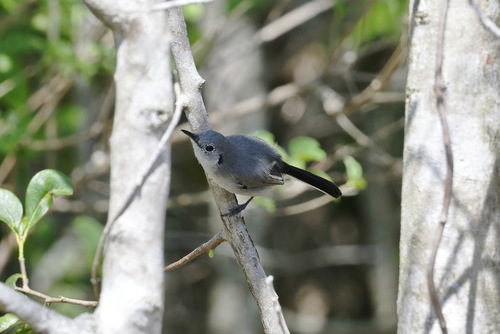
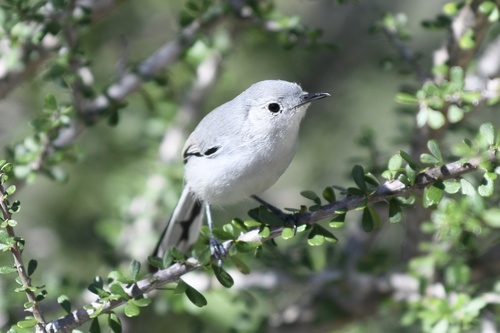
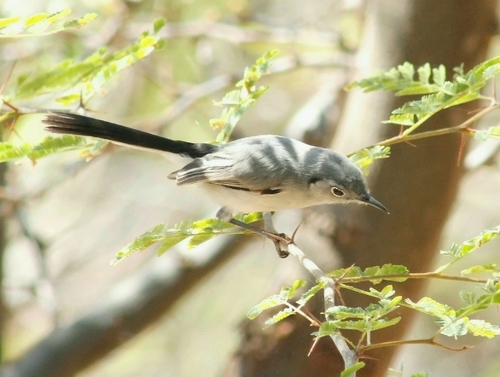
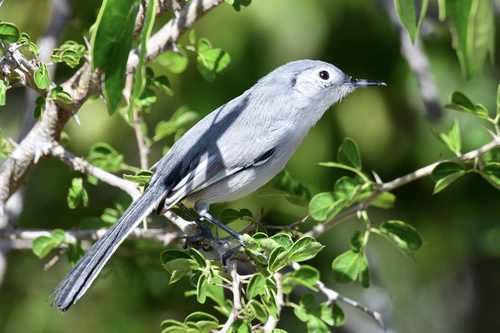
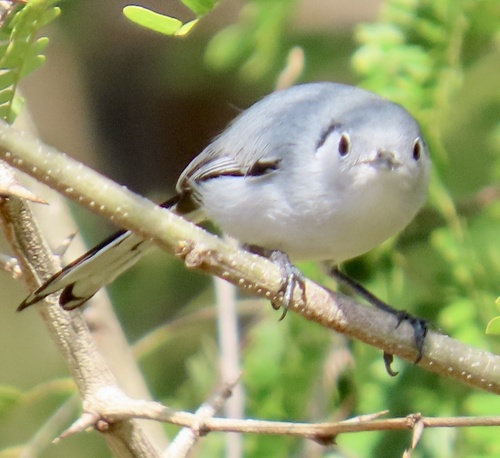
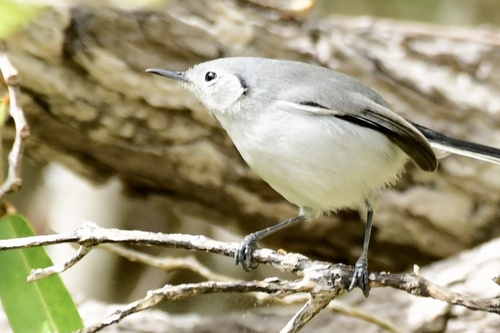
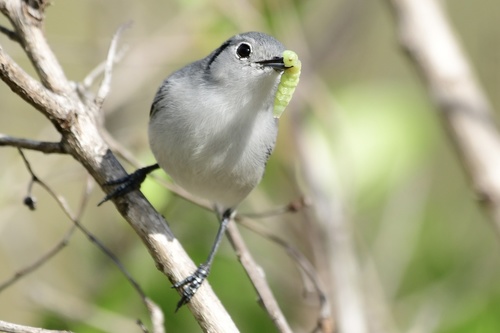
ID tip
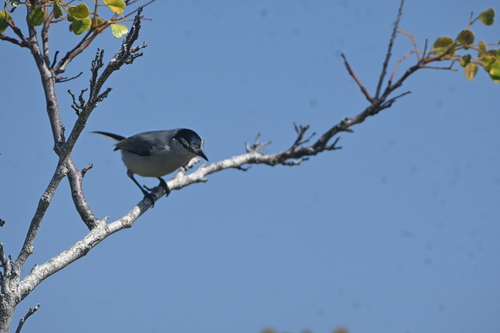
The Cuban gnatcatcher is 10 to 11 cm (3.9 to 4.3 in) long and weighs 4.5 to 5 g (0.16 to 0.18 oz) and is among the smallest members of genus Polioptila. Like most members of the genus, the male is blue-gray above and white below. It has a unique black crescent behind the eye and ear coverts and a long black tail with white outer feathers. The female is similar but paler, and its facial crescent is thinner. The juvenile is olive-gray above and has buffy flanks, a creamy belly, and only a faint facial crescent. Voice: The Cuban gnatcatcher's song is "a sustained rambling, disorganized series of warbles, whistles and chattering notes" .
Text from Wikipedia, licensed CC BY-SA 4.0.
When to see the Cuban Gnatcatcher
One bar for each month. Filled bars are the 8 months with records; pale bars are months with none. The wide bar is March, the month with the most records.
Where to see the Cuban Gnatcatcher
The map shades 1 country with regular records. Everything unshaded has no records. Countries are listed below the map.
About the Cuban Gnatcatcher
The Cuban gnatcatcher is a species of bird in the family Polioptilidae, the gnatcatchers. It is endemic to Cuba.
Text adapted from Wikipedia, licensed CC BY-SA 4.0.
Easily confused with
 Creamy-bellied GnatcatcherPolioptila lacteaThe creamy-bellied gnatcatcher is 10 to 12 cm (3.9 to 4.7 in) long and weighs approximately 7 g (0.25 oz).
 Yucatan GnatcatcherPolioptila albiventrisThe Yucatan gnatcatcher is 10 to 12 cm (3.9 to 4.7 in) long.
Learn the Cuban Gnatcatcher in the BeakBrain App
Photo and call practice. Coming soon to iPhone and Android.
Play today's Daily BirdEvery photo and recording on this page is credited to its author under the licence shown. Spotted a problem with this page, or have a better photo? Contribute.