Learn what every symbol on the card means.Full credits and sources at beakbrain.com/symbols
 ForestCup nestMedium · 195 g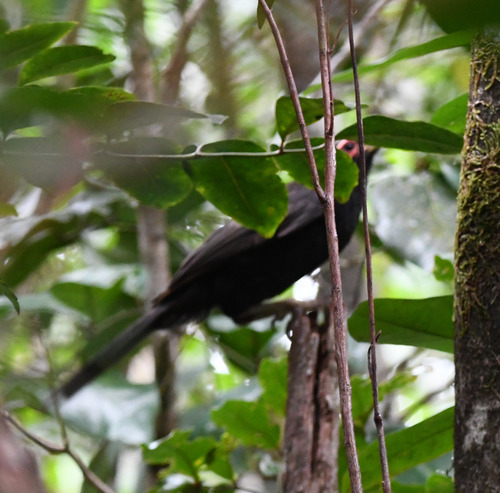
ID tip
The species measures 35 to 42.5 cm (13.8–16.7 in). It has orange facial wattles. It superficially resembles a crow with its glossy black plumage and a curved beak. Crow honeyeaters have long rounded wings and a long tail and neck. Their bill is long and bicolored – yellow below, black above. It has a loud, ringing call, which is predominantly heard in the early mornings. Crow honeyeaters are monogamous.
Text from Wikipedia, licensed CC BY-SA 4.0.
When to see the Crow Honeyeater
One bar for each month. Filled bars are the 9 months with records; pale bars are months with none. The wide bar is October, the month with the most records.
Where to see the Crow Honeyeater
The map shades 1 country with regular records. Everything unshaded has no records. Countries are listed below the map.
About the Crow Honeyeater
The crow honeyeater is a very large honeyeater endemic to humid forests in New Caledonia in the South Pacific.
Text adapted from Wikipedia, licensed CC BY-SA 4.0.
Easily confused with
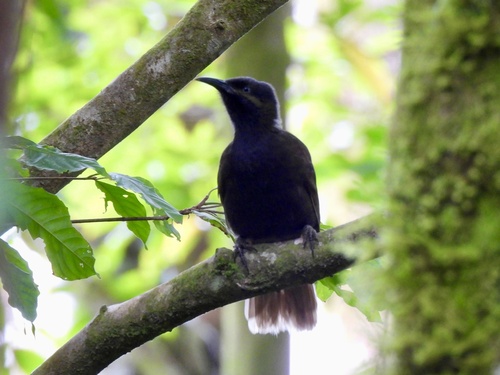 MaoGymnomyza samoensisThe mao or maʻomaʻo is a passerine bird belonging to the genus Gymnomyza in the honeyeater family Meliphagidae.
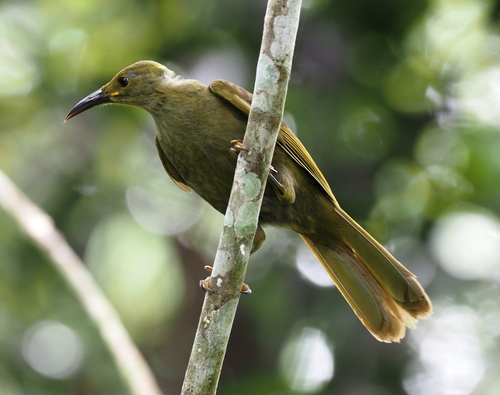 Duetting Giant HoneyeaterGymnomyza brunneirostrisThe duetting giant honeyeater, formerly known as the giant honeyeater, is a species of bird in the family Meliphagidae.
Learn the Crow Honeyeater in the BeakBrain App
Photo and call practice. Coming soon to iPhone and Android.
Play today's Daily BirdEvery photo and recording on this page is credited to its author under the licence shown. Spotted a problem with this page, or have a better photo? Contribute.