Learn what every symbol on the card means.Full credits and sources at beakbrain.com/symbols
 ForestDomed nestTiny · 7 g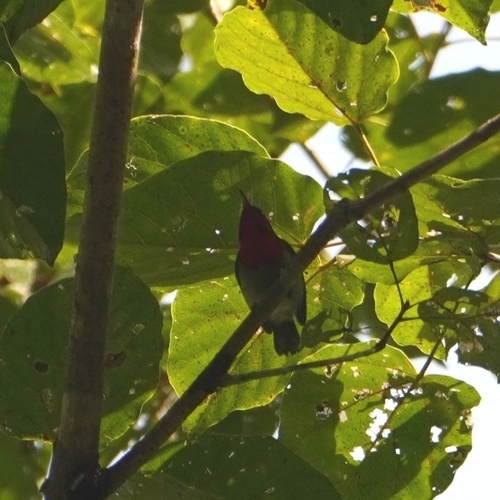
What the Crimson Sunbird sounds like

ID tip
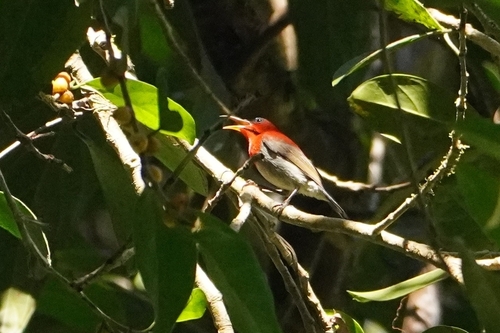
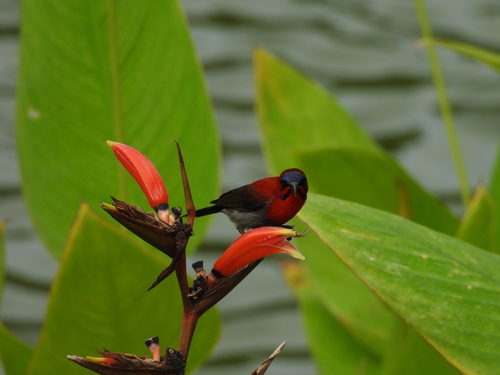
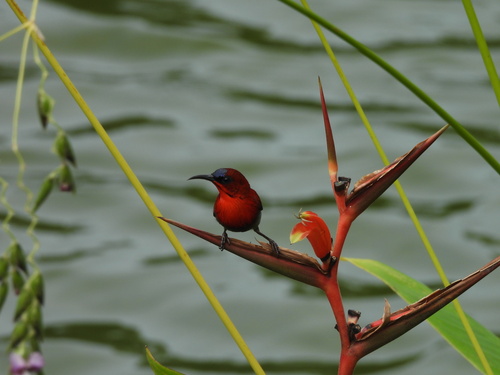
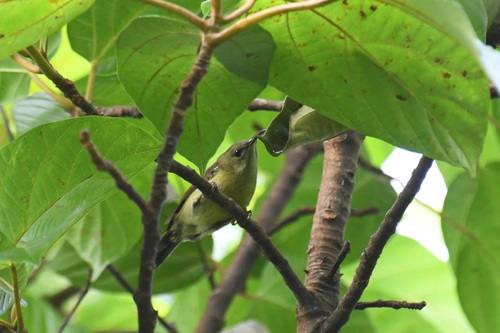
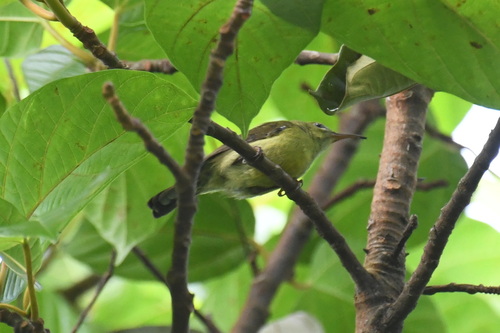
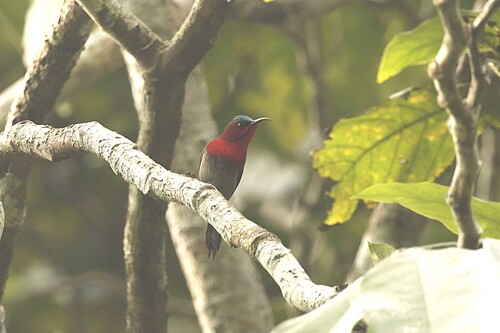
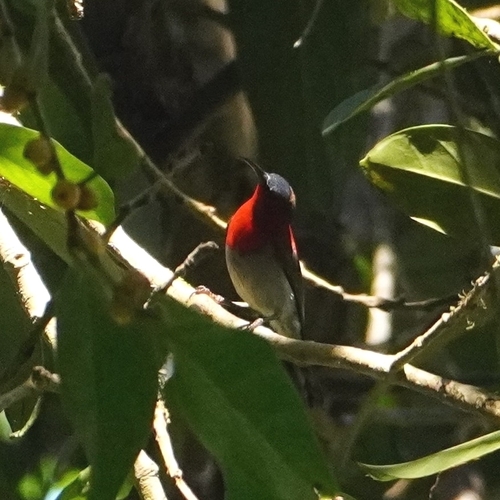
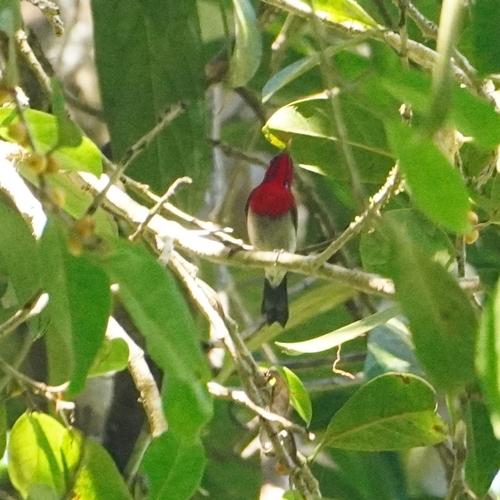
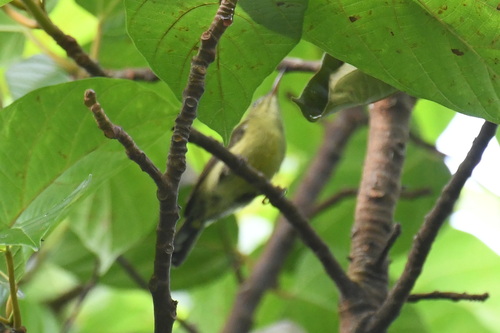
Crimson sunbirds are tiny, only 11 cm long. They have medium-length thin down-curved bills and brush-tipped tubular tongues, both adaptations to their nectar feeding. The adult male has a crimson breast and maroon back, with black malar stripes. The rump is yellow and the belly is olive. The female has an olive-green back, yellowish breast and white tips to the outer tail feathers. In most of the range, males have a long green-blue tail, but A.s. nicobarica of the Nicobar Islands and the former subspecies A.
Text from Wikipedia, licensed CC BY-SA 4.0.
When to see the Crimson Sunbird
One bar for each month, and every month is filled: this bird is recorded here in all twelve. The wide bar is February, the month with the most records.
Where to see the Crimson Sunbird
The map shades 16 countries with regular records. Everything unshaded has no records. Countries are listed below the map.
About the Crimson Sunbird
The crimson sunbird is a species of bird in the sunbird family which feed largely on nectar. They may also take insects, especially when feeding their young. Flight is fast and direct on their short wings. Most species can take nectar by hovering like a hummingbird, but usually perch to feed. It is the unofficial national bird of Singapore, as declared by the Nature Society Singapore.
Text adapted from Wikipedia, licensed CC BY-SA 4.0.
Easily confused with
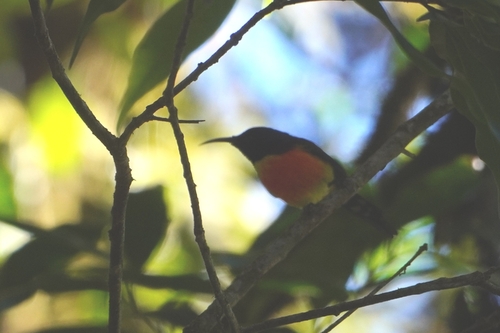 Green-tailed SunbirdAethopyga nipalensisThe green-tailed sunbird or Nepal yellow-backed sunbird is a species of bird in the family Nectariniidae.
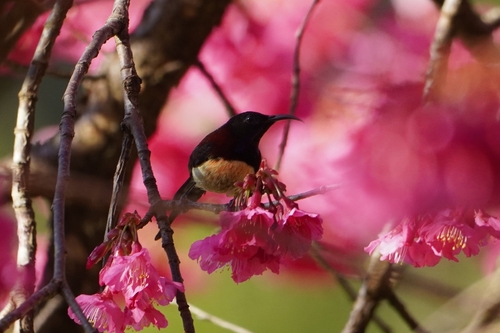 Black-throated SunbirdAethopyga saturataThe black-throated sunbird is a species of bird in the family Nectariniidae.
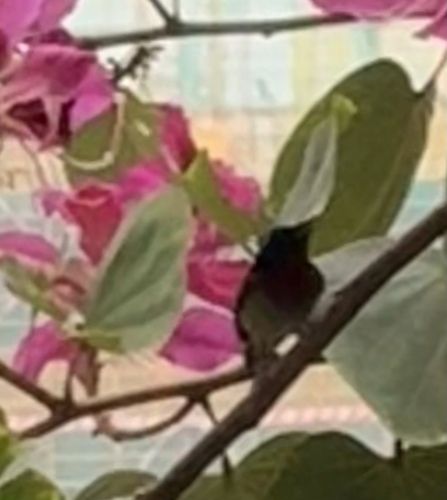 Fork-tailed SunbirdAethopyga christinaeThe fork-tailed sunbird is a bird in the family Nectariniidae.
Learn the Crimson Sunbird in the BeakBrain App
Photo and call practice. Coming soon to iPhone and Android.
Play today's Daily BirdEvery photo and recording on this page is credited to its author under the licence shown. Spotted a problem with this page, or have a better photo? Contribute.