Learn what every symbol on the card means.Full credits and sources at beakbrain.com/symbols
 ForestDomed nestMedium · 98 g


ID tip
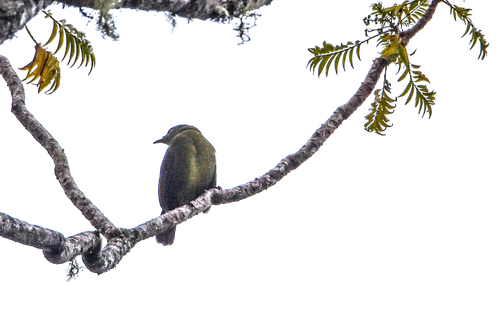
The crested satinbird is around 24 cm (9.4 in) in overall length and weighs 79–125 g (2.8–4.4 oz). The male of the nominate subspecies has bright yellow upperparts with a small erectile crest of 4 to 6 sickle-shaped dark-buff feathers that are usually concealed. The lores and underparts are a brownish black. The female is plain olive brownish above and light brownish below. The adult male of subspecies sanguineus differs from the nominate in having red dorsal plumage. These birds make harsh rasping calls and a low hissing.
Text from Wikipedia, licensed CC BY-SA 4.0.
When to see the Crested Satinbird
One bar for each month. Filled bars are the 6 months with records; pale bars are months with none. The wide bar is July, the month with the most records.
Where to see the Crested Satinbird
The map shades 2 countries with regular records. Everything unshaded has no records. Countries are listed below the map.
About the Crested Satinbird
The crested satinbird, formerly known as the crested bird-of-paradise, is a species of bird in the satinbird family Cnemophilidae. It is found in the mountains of Papua New Guinea.
Text adapted from Wikipedia, licensed CC BY-SA 4.0.
Easily confused with
Learn the Crested Satinbird in the BeakBrain App
Photo and call practice. Coming soon to iPhone and Android.
Play today's Daily BirdEvery photo and recording on this page is credited to its author under the licence shown. Spotted a problem with this page, or have a better photo? Contribute.