Learn what every symbol on the card means.Full credits and sources at beakbrain.com/symbols
 ShrublandCup nestMedium · 63 g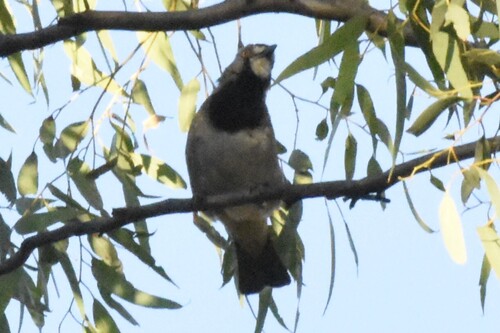
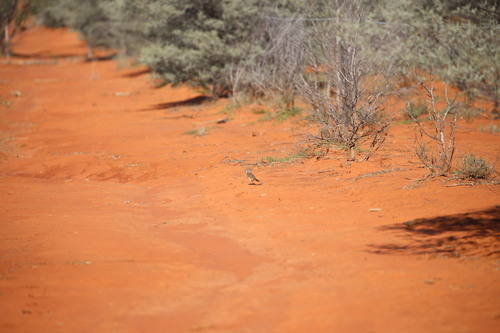
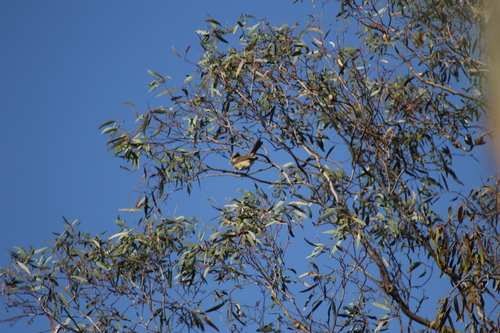
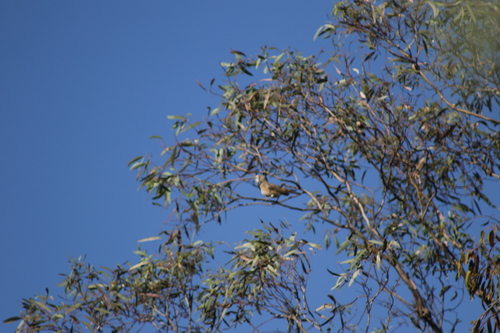


ID tip
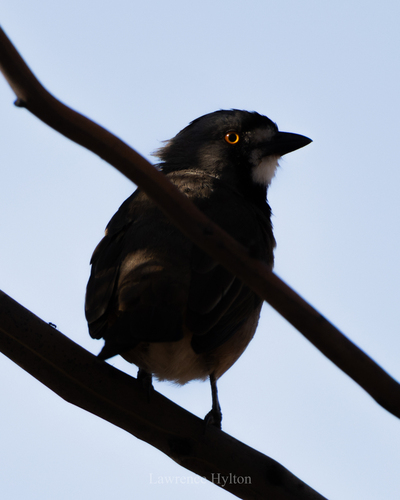
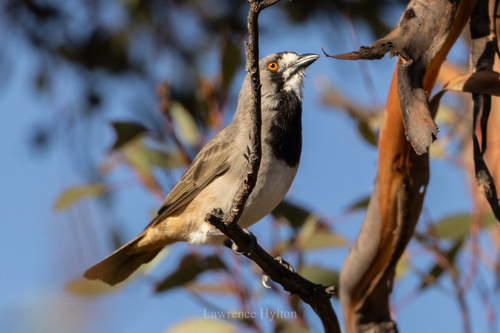
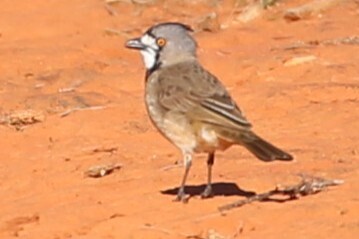
Adults range in size from 19 cm to 23 cm in length. Adult males have grey heads with a raised black crest, a white forehead and throat, and a prominent black breast, while the rest of the body is grey or brown. Females and immature birds are less prominently coloured than the males, lacking the black breast and having a smaller, unraised black crest. Both males and females have orange-red eyes. Similar species include wedgebills and the Western whipbird, which female and juvenile bellbirds resemble. Voice: The crested bellbird has a distinctive call. It has a high pitched bell-like call, with two slow notes then three fast notes, sounding like did-did-did-dit. The call can also sound like water drops – dee-dee-dee-ook or plonk-plon-plonka. Male birds sing from an exposed perch such as a dead branch or the top of a tree.
Text from Wikipedia, licensed CC BY-SA 4.0.
When to see the Crested Bellbird
One bar for each month. Filled bars are the 10 months with records; pale bars are months with none. The wide bar is October, the month with the most records.
Where to see the Crested Bellbird
The map shades 1 country with regular records. Everything unshaded has no records. Countries are listed below the map.
About the Crested Bellbird
The crested bellbird is a medium-sized passerine bird in the family Oreoicidae. It is native to drier parts of Australia where its typical habitats are acacia scrublands, eucalypt woodlands, spinifex and saltbush plains, and dunes. The male is about 20 cm (8 in) long and has a grey head, a black crest and breast, and a grey or olive brown body. The female and juvenile are similar but the colours are more muted and the black breast is lacking. The distinctive call is a high pitched bell-like sound, audible at some distance. Sometimes a pair of birds duet.
Text adapted from Wikipedia, licensed CC BY-SA 4.0.
Easily confused with
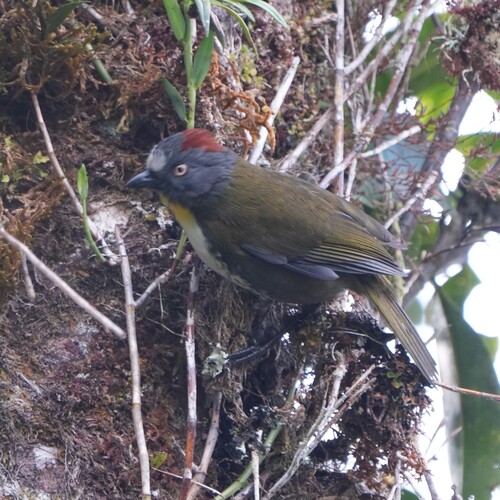
Learn the Crested Bellbird in the BeakBrain App
Photo and call practice. Coming soon to iPhone and Android.
Play today's Daily BirdEvery photo and recording on this page is credited to its author under the licence shown. Spotted a problem with this page, or have a better photo? Contribute.