Learn what every symbol on the card means.Full credits and sources at beakbrain.com/symbols
 ForestCup nestMedium · 160 g
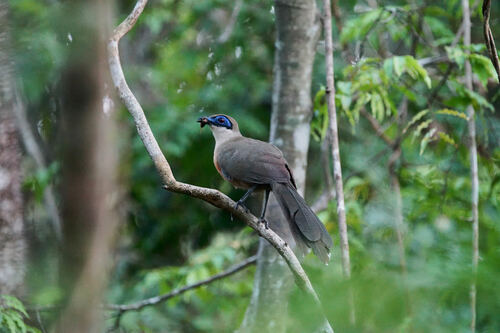
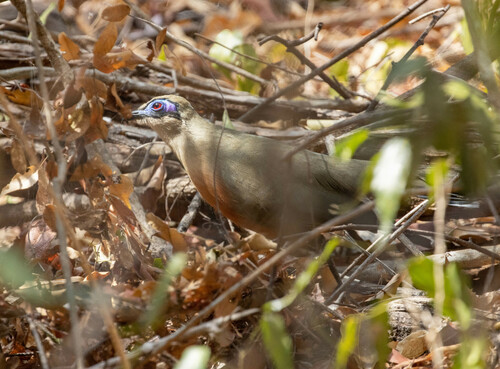
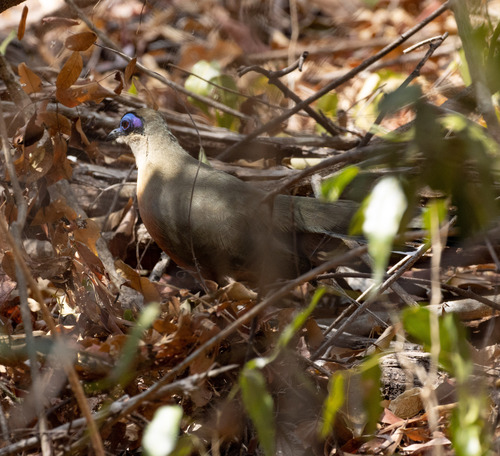
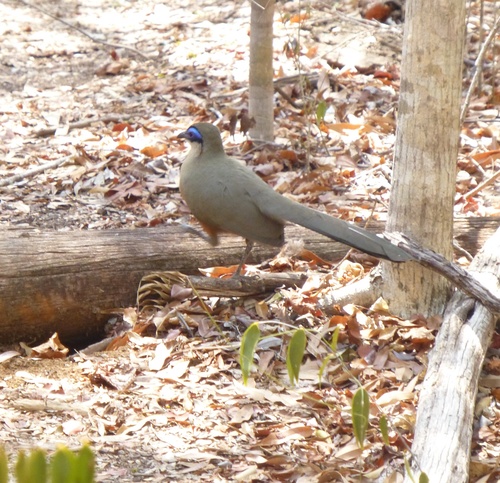
ID tip
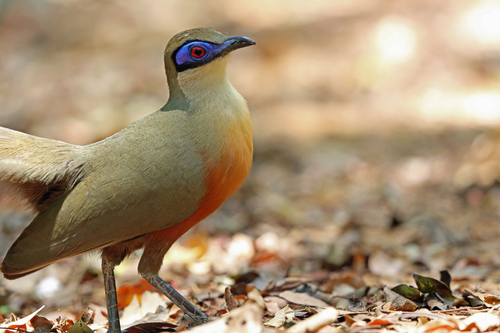
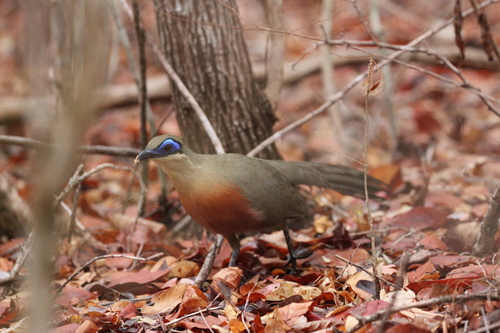
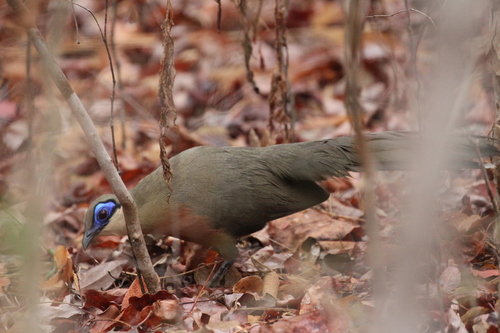
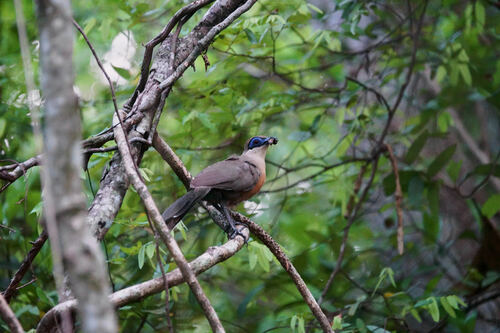
Coquerel's coua is approximately 40 cm (16 in) in length and has a large blue patch of bare skin around the eye, a characteristic of the Coua genus that is similar to African turacos. The plumage is silky, the crown is black, the upper parts and tail are light brown or greyish-brown, and the lower breast and belly is suffused with red. The iris is red and the beak and legs are slaty grey. As a member of the cuckoo family, it has a reversible third toe and resembles the coucal in its method of scrambling through tangled bushes and lianas while searching for food.
Text from Wikipedia, licensed CC BY-SA 4.0.
When to see the Coquerel's Coua
One bar for each month. Filled bars are the 5 months with records; pale bars are months with none. The wide bar is November, the month with the most records.
Where to see the Coquerel's Coua
The map shades 1 country with regular records. Everything unshaded has no records. Countries are listed below the map.
About the Coquerel's Coua
Coquerel's coua is a species of cuckoo in the family Cuculidae. It is endemic to Madagascar. Its habitat is subtropical or tropical dry forests. It was named in 1867 by the French naturalist Alfred Grandidier in honor of the French navy surgeon and naturalist Charles Coquerel.
Text adapted from Wikipedia, licensed CC BY-SA 4.0.
Easily confused with
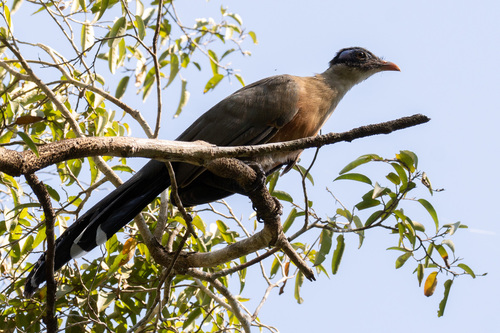 Giant CouaCoua gigasGiant couas are about 62 cm (24 in) in length (nearly double the size of Coua coquereli) and have a blue patch around their eyes, characteristic of the genus and similar to African turacos.
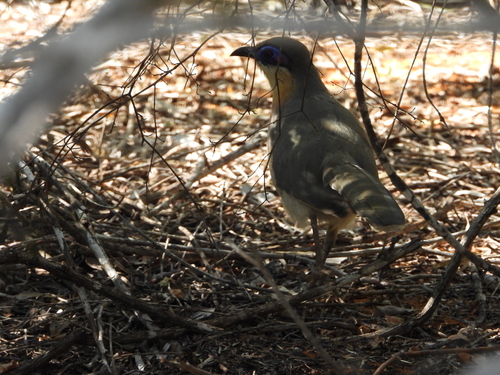 Running CouaCoua cursorAdult running coua are approximately 34–40 centimetres (13–16 in) in length.
 Red-breasted CouaCoua serrianaThe red-breasted coua is a species of cuckoo in the family Cuculidae.
Learn the Coquerel's Coua in the BeakBrain App
Photo and call practice. Coming soon to iPhone and Android.
Play today's Daily BirdEvery photo and recording on this page is credited to its author under the licence shown. Spotted a problem with this page, or have a better photo? Contribute.