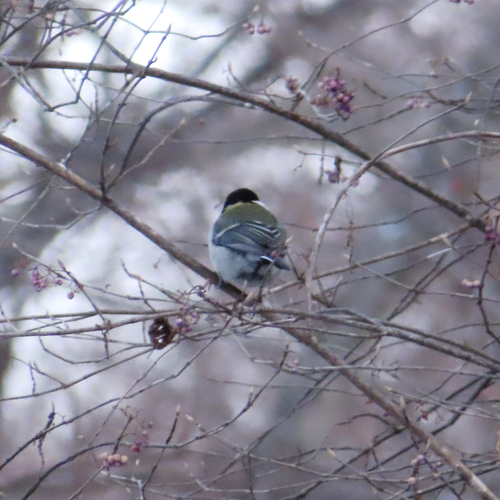
Cinereous Tit
Parus cinereus
Like others in the genus, it has a broad black ventral line and has no crest. This tit is part of a confusing group of species but is distinct in having a grey-back, black hood, white cheek patch and a white wing-bar. The underparts are white with the black central stripe running along the length. The female has a narrower ventral line and is slightly duller. The upper tail coverts are ashy while the tail is black with the central 4 pairs of feathers ashy on the outer webs and all but the central pair are tipped white.
ID text from Wikipedia, CC BY-SA 4.0

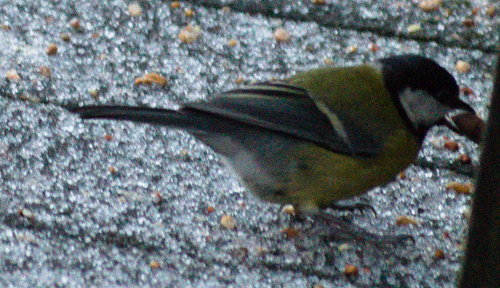
Great Tit
Parus major
The great tit is large for a tit at 12.5 to 14 cm (4+7⁄8–5+1⁄2 in) in length, and has a distinctive appearance that makes it easy to recognise. The nominate race P. major major has a bluish-black crown, black neck, throat, bib and head, and white cheeks and ear coverts. The breast is bright lemon-yellow and there is a broad black mid-line stripe running from the bib to vent. There is a dull white spot on the neck turning to greenish yellow on the upper nape. The rest of the nape and back are green tinged with olive. Voice: The great tit is, like other tits, a vocal bird, and has up to 40 types of calls and songs. The calls are generally the same between the sexes, but the male is much more vocal and the female rarely calls. Soft single notes such as "pit", "spick", or "chit" are used as contact calls. A loud "tink" is used by adult males as an alarm or in territorial disputes.
ID text from Wikipedia, CC BY-SA 4.0

Where you might meet both
Learn this pair in the BeakBrain App
Photo and call practice. Coming soon to iPhone and Android.
Play today's Daily BirdPhotos and recordings are credited to their authors under the licence shown. Full profiles: Cinereous Tit and Great Tit.