
Chestnut-eared Bunting
Emberiza fucata
It is 15 to 16 cm in length. The plumage is mostly brown with dark streaks. The male has a grey crown and nape with dark streaks, chestnut ear-coverts and bands of black and chestnut across the breast. There is a rufous patch on the shoulders and the rump is also rufous. Females are similar to the males but duller with a less distinct head and breast pattern. First-winter birds are plainer but show warm brown ear-coverts and have an obvious ring around the eye. Its voice is similar to the rustic bunting but quieter.
ID text from Wikipedia, CC BY-SA 4.0
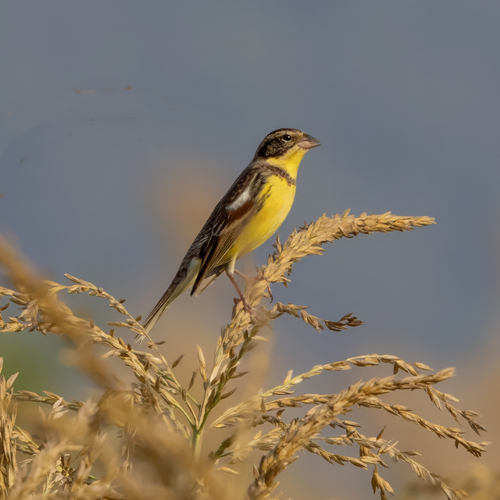
Yellow-breasted Bunting
Emberiza aureola
The yellow-breasted bunting is a small passerine, ranging from 14 to 16 cm (5.5 to 6.3 in) in length, and weighing 17 to 26 g (0.6 to 0.9 oz). For a bunting, it is large and rather stocky. The breeding male has bright white underparts with black flank streaks, brown upperparts, black face and throat bar, and a pink lower mandible. The female has a heavily streaked grey-brown back, and less intensely yellow underparts. She has a whitish face with dark crown, eye and cheek stripes. The juvenile is similar, but the background colour of the underparts and face is buff.
ID text from Wikipedia, CC BY-SA 4.0
Where you might meet both
Learn this pair in the BeakBrain App
Photo and call practice. Coming soon to iPhone and Android.
Play today's Daily BirdPhotos and recordings are credited to their authors under the licence shown. Full profiles: Chestnut-eared Bunting and Yellow-breasted Bunting.