Learn what every symbol on the card means.Full credits and sources at beakbrain.com/symbols
 MarineCavity nestMedium · 152 g


ID tip
The common diving petrel is a small, plump petrel, 200 to 250 mm (7.9–9.8 in) in length and weighing around 86 to 186 g (3.0–6.6 oz). The plumage is black above and dull white below and it has a relatively short black bill. The wings have thin white strips. The face and neck can be more brown than black. The legs and feet are blue with blackish-brown webbing in between the toes. Unless seen very close, it is almost indistinguishable from the South Georgian diving petrel, P. georgicus.
Text from Wikipedia, licensed CC BY-SA 4.0.
When to see the Common Diving Petrel
One bar for each month, and every month is filled: this bird is recorded here in all twelve. The wide bar is November, the month with the most records.
Where to see the Common Diving Petrel
The map shades 6 countries with regular records. Everything unshaded has no records. Countries are listed below the map.
About the Common Diving Petrel
The common diving petrel , also known as the smaller diving petrel or simply the diving petrel, is a diving petrel, one of four very similar auk-like small petrels of the southern oceans. It is native to South Atlantic islands and islands of the subantarctic southern Indian Ocean, islands and islets off New Zealand and south-eastern Australian islands.
Text adapted from Wikipedia, licensed CC BY-SA 4.0.
Easily confused with
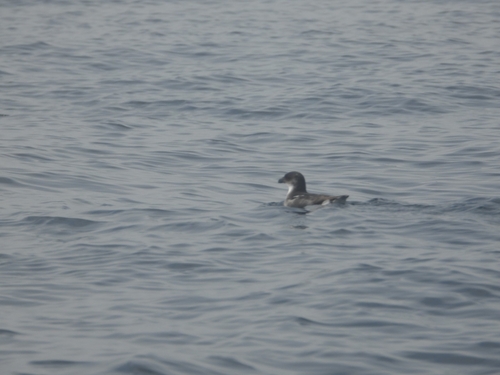 Peruvian Diving PetrelPelecanoides garnotiiPeruvian diving petrel is 20–24 cm (7.9–9.4 in) in overall length.
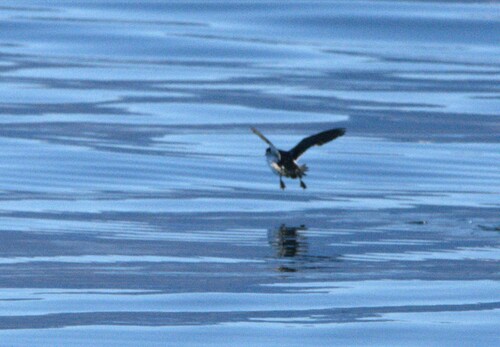 Magellanic Diving PetrelPelecanoides magellaniThis short, compact petrel ranges from 19 to 22 cm (7.5 to 8.7 in) in length, and weighs anywhere between 5 and 6 oz (males are typically heavier than females).
 South Georgia Diving PetrelPelecanoides georgicusThe South Georgia diving petrel is a small, plump petrel, 180 to 220 mm (7.1–8.7 in) in length and weighing around 90 to 150 g (3.2–5.3 oz).
Side by side: Common Diving Petrel vs Peruvian Diving Petrel
Learn the Common Diving Petrel in the BeakBrain App
Photo and call practice. Coming soon to iPhone and Android.
Play today's Daily BirdEvery photo and recording on this page is credited to its author under the licence shown. Spotted a problem with this page, or have a better photo? Contribute.