Learn what every symbol on the card means.Full credits and sources at beakbrain.com/symbols
 GrasslandDomed nestSmall · 19 g
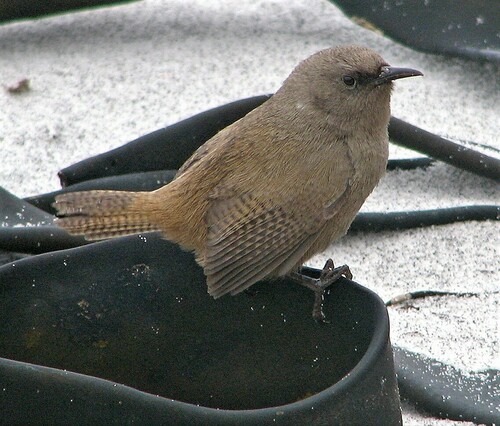
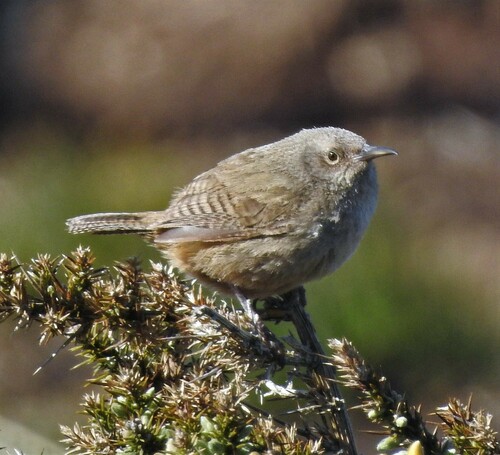
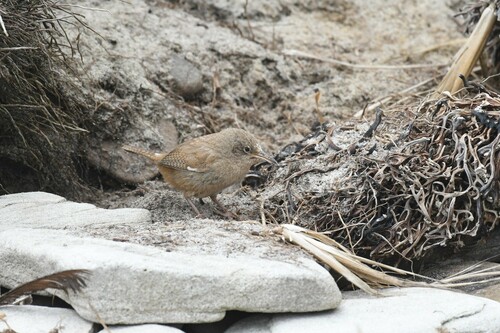
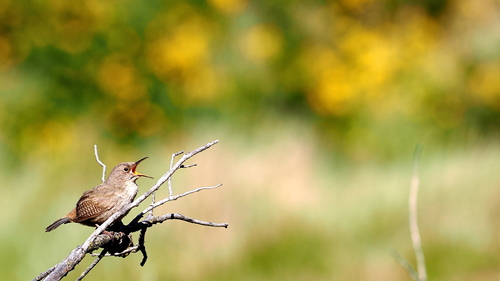
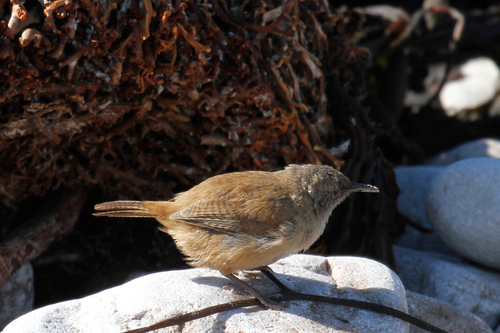
ID tip
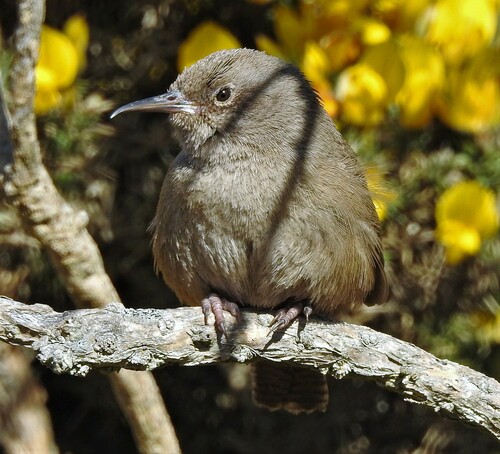
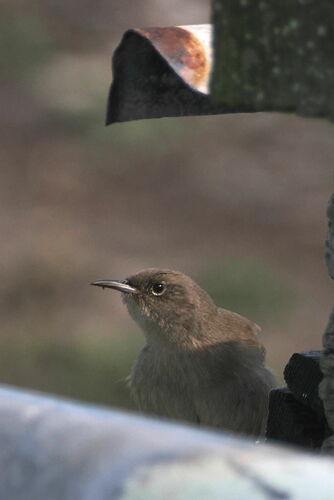
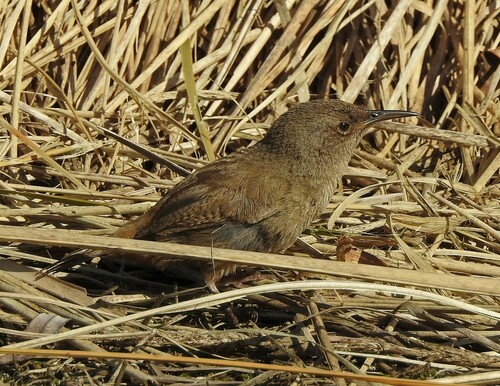
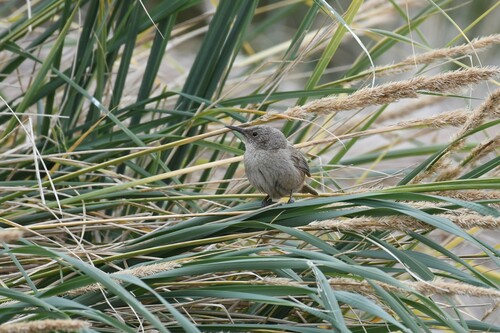
The plumage is brown, greyer on the head and breast and more rufous on the tail. There are dark bars on the flight feathers and tail. The bill is long, blackish and slightly curved. The main confusion species is the grass wren which is smaller with a shorter bill, buff eyestripe and dark streaks on the back and head. Cobb's wrens have a number of buzzing calls, and their song is a series of jumbled trills and whistles. The song can be heard from August to February and varies between individuals, with different males having different song patterns.
Text from Wikipedia, licensed CC BY-SA 4.0.
When to see the Cobb's Wren
One bar for each month. Filled bars are the 8 months with records; pale bars are months with none. The wide bar is November, the month with the most records.
Where to see the Cobb's Wren
The map shades 1 country with regular records. Everything unshaded has no records. Countries are listed below the map.
About the Cobb's Wren
Cobb's wren is a fairly small (12-13.5 cm) wren which is endemic to the Falkland Islands. It was formerly classified as a subspecies of the southern house wren but is now commonly considered to be a separate species due to differences in plumage, voice, ecology and morphology.
Text adapted from Wikipedia, licensed CC BY-SA 4.0.
Easily confused with
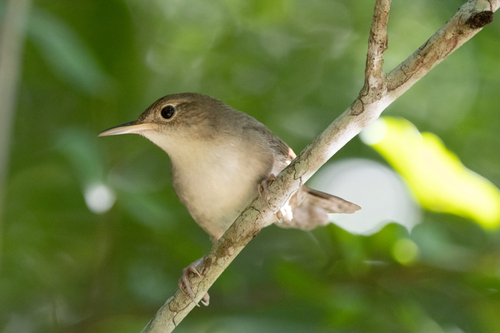 Cozumel WrenTroglodytes beaniThe Cozumel wren is a very small passerine bird in the wren family Troglodytidae that is endemic to the small island of Cozumel off the eastern coast of Mexico.
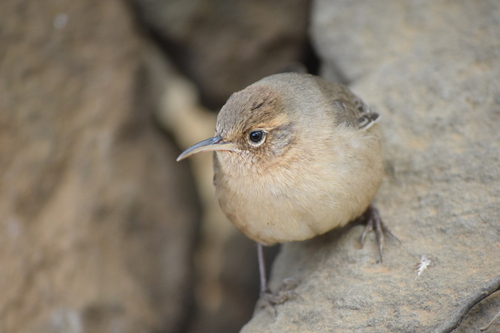 Socorro WrenTroglodytes sissoniiThe Socorro wren is a species of bird in the family Troglodytidae.
Tepui WrenTroglodytes rufulusThe nominate subspecies of tepui wren is 11.5 to 12 cm (4.5 to 4.7 in) long and weighs 13 to 18 g (0.46 to 0.63 oz).
Socorro WrenTroglodytes sissoniiThe Socorro wren is a species of bird in the family Troglodytidae.
Tepui WrenTroglodytes rufulusThe nominate subspecies of tepui wren is 11.5 to 12 cm (4.5 to 4.7 in) long and weighs 13 to 18 g (0.46 to 0.63 oz).
Learn the Cobb's Wren in the BeakBrain App
Photo and call practice. Coming soon to iPhone and Android.
Play today's Daily BirdEvery photo and recording on this page is credited to its author under the licence shown. Spotted a problem with this page, or have a better photo? Contribute.