Learn what every symbol on the card means.Full credits and sources at beakbrain.com/symbols
 ForestTiny · 8 g
ID tip
The cinnamon neopipo is 9.1 to 9.5 cm (3.6 to 3.7 in) long and weighs about 7 g (0.25 oz). The sexes have almost the same plumage though females are duller than males, and the two subspecies have the same plumage. Adult males have a dull gray crown with a partially hidden yellow patch in the center; females have a smaller yellow patch. Both sexes have an otherwise dull gray face, nape, and back. Their lower back and rump are rufous. Their wings are dusky with wide rufous edges on the feathers. Their rather short tail is rufous. Voice: The cinnamon neopipo's song is a "long series of extr. high 'fee' notes, 1st few notes slightly rising in pitch and strength, then gradually descending", and lasts five to seven seconds. Its call is a "very high, thin, gliding-down 'seeeu' ".
Text from Wikipedia, licensed CC BY-SA 4.0.
When to see the Cinnamon Neopipo
One bar for each month, and every month is filled: this bird is recorded here in all twelve. The wide bar is August, the month with the most records.
Where to see the Cinnamon Neopipo
The map shades 7 countries with regular records. Everything unshaded has no records. Countries are listed below the map.
About the Cinnamon Neopipo
The cinnamon neopipo or cinnamon manakin-tyrant is a species of bird in the family Tyrannidae, the tyrant flycatchers. It is found in Bolivia, Brazil, Colombia, Ecuador, French Guiana, Guyana, Peru, Suriname, and Venezuela.
Text adapted from Wikipedia, licensed CC BY-SA 4.0.
Easily confused with
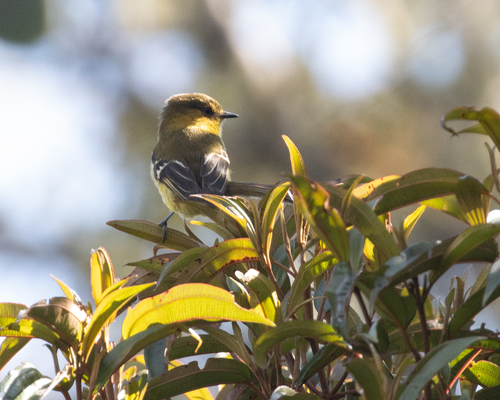 Ochraceous-breasted FlycatcherNephelomyias ochraceiventrisThe ochraceous-breasted flycatcher is 12 to 14 cm (4.7 to 5.5 in) long and weighs 8.2 to 13 g (0.29 to 0.46 oz).
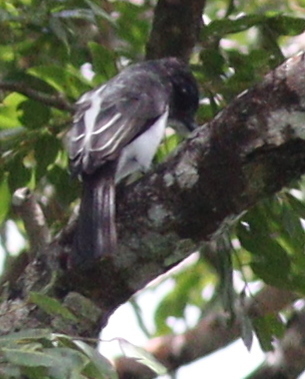 Todd's SirystesSirystes subcanescensTodd's sirystes is 18 to 18.5 cm (7.1 to 7.3 in) long and weighs 34 to 36.5 g (1.2 to 1.3 oz).
 Orange-banded FlycatcherNephelomyias lintoniThe orange-banded flycatcher is 12.5 to 13 cm (4.9 to 5.1 in) long; two males weighed 9.5 and 10 g (0.34 and 0.35 oz).
Learn the Cinnamon Neopipo in the BeakBrain App
Photo and call practice. Coming soon to iPhone and Android.
Play today's Daily BirdEvery photo and recording on this page is credited to its author under the licence shown. Spotted a problem with this page, or have a better photo? Contribute.