Learn what every symbol on the card means.Full credits and sources at beakbrain.com/symbols
 ForestCup nestSmall · 51 g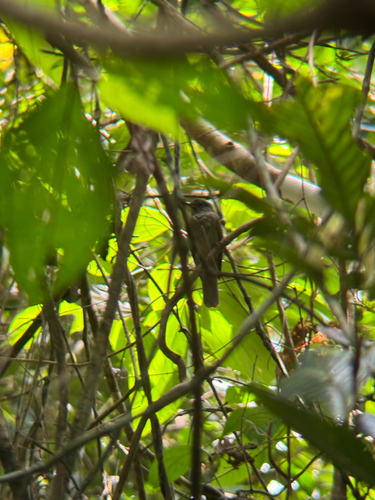
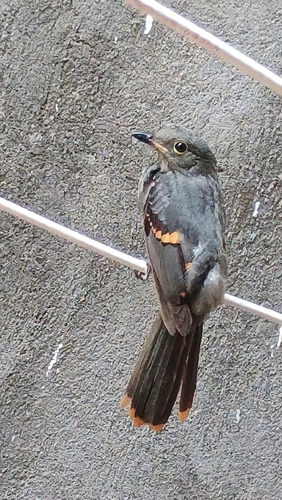
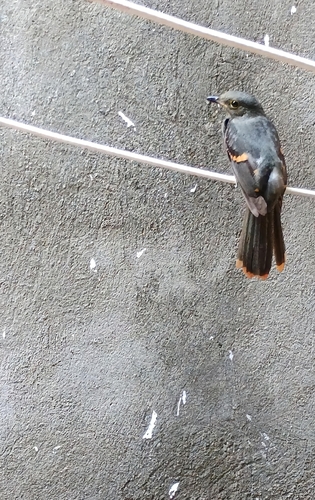
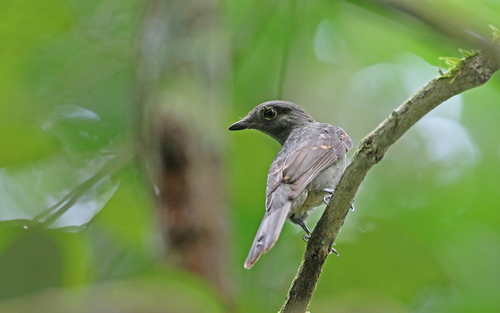
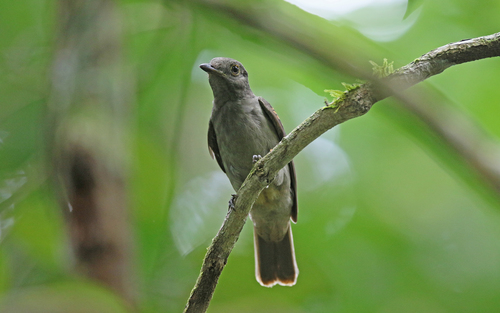

What the Cinereous Mourner sounds like


ID tip
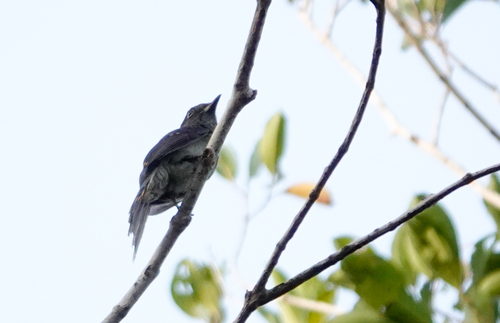
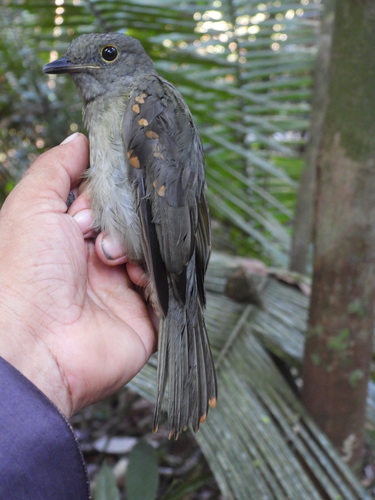
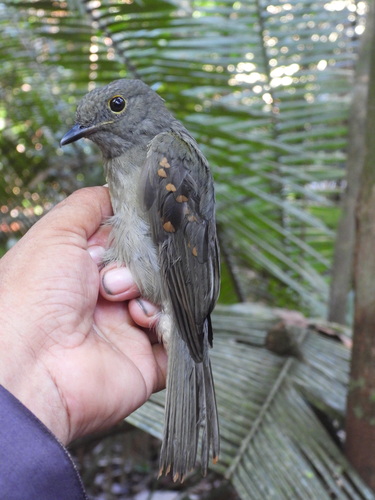
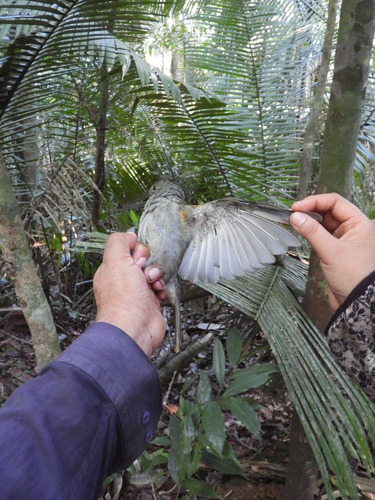
The cinereous mourner is 20 to 21 cm (7.9 to 8.3 in) long and weighs 41 to 51 g (1.4 to 1.8 oz). The sexes have the same plumage. Adults have a thin orange ring around the eye. The rest of their head, upperparts, wings, and tail are mostly gray. Their primaries have a brown tinge and two rows of cinnamon spots that show as broken wing bars. Their tertials and the tips of their tail feathers have smaller cinnamon spots. Their underparts are a slightly paler gray than their upperparts. Their breast and crissum sometimes have black-tipped orange spots. Voice: The cinereous mourner's song is "a series of 10–15 very high-pitched, thin, drowsy and slurred tee-o-weeét whistles, first whistle often longer cheeeeee-a-wee". It is ventrioquial, insect-like, and carries a great distance. The bird makes long pauses between song bouts. It also makes a "series of 3–4 plaintive teeéuw whistles and a repeated weet-jeh shriek".
Text from Wikipedia, licensed CC BY-SA 4.0.
When to see the Cinereous Mourner
One bar for each month. Filled bars are the 11 months with records; pale bars are months with none. The wide bar is July, the month with the most records.
Where to see the Cinereous Mourner
The map shades 9 countries with regular records. Everything unshaded has no records. Countries are listed below the map.
About the Cinereous Mourner
The cinereous mourner is a species of bird in the family Tityridae, the tityras, becards, and allies. It is found in every mainland South American country except Argentina, Chile, Paraguay, and Uruguay.
Text adapted from Wikipedia, licensed CC BY-SA 4.0.
Easily confused with
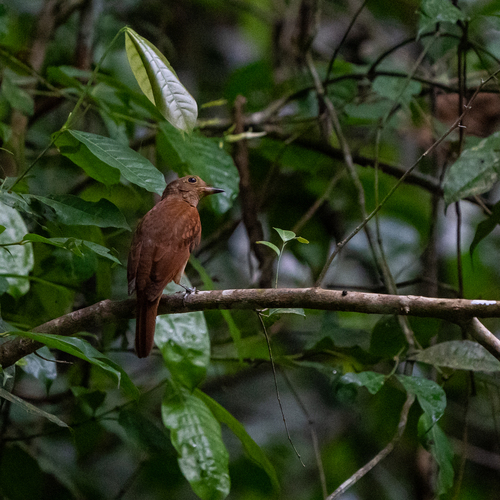
Side by side: Cinereous Mourner vs White-naped Xenopsaris
Learn the Cinereous Mourner in the BeakBrain App
Photo and call practice. Coming soon to iPhone and Android.
Play today's Daily BirdEvery photo and recording on this page is credited to its author under the licence shown. Spotted a problem with this page, or have a better photo? Contribute.