Learn what every symbol on the card means.Full credits and sources at beakbrain.com/symbols
 CoastalPlatform nestLarge · 462 g



ID tip
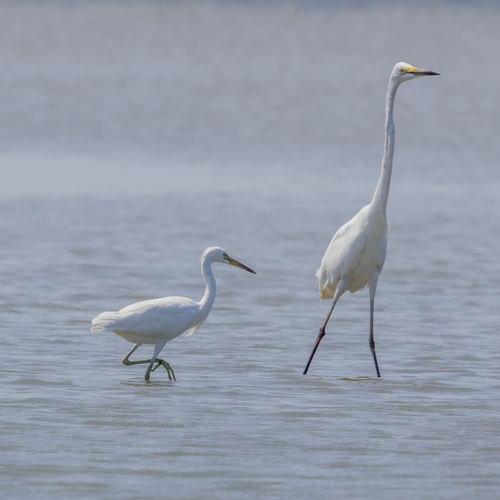
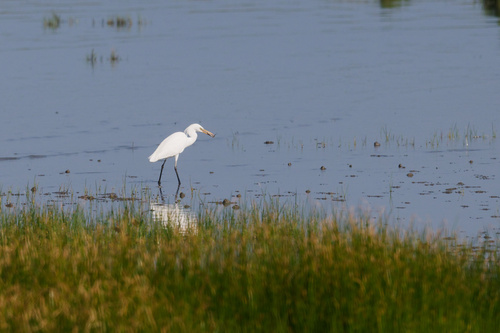
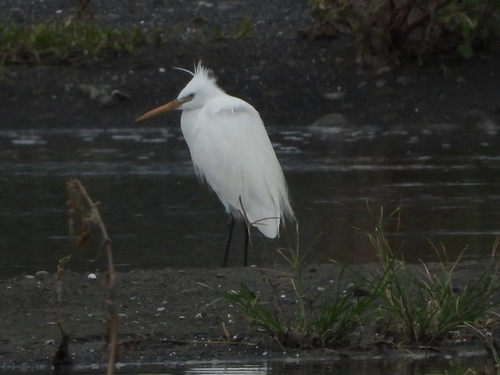
The Chinese egret averages 68 cm in height. The plumage is white throughout the bird's life and resembles the little egret (Egretta garzetta). Outside the breeding season the bill is dusky with the basal portion being tannish peach and the lores and legs yellow green, while the iris is yellow. All individuals are similar in this season. In the breeding season the adults develop a luxuriant crest which is sometimes over 11 cm long. It also develops long lanceolate plumes on its breast and dorsal plumes extending beyond the tail, called aigrettes and similar to those of little egret.
Text from Wikipedia, licensed CC BY-SA 4.0.
When to see the Chinese Egret
One bar for each month. Filled bars are the 11 months with records; pale bars are months with none. The wide bar is May, the month with the most records.
Where to see the Chinese Egret
The map shades 15 countries with regular records, and 1 more in a lighter tone where the bird turns up only as a stray. Everything unshaded has no records. Countries are listed below the map.
Recorded as a rare visitor in India.
About the Chinese Egret
The Chinese egret or Swinhoe's egret is a threatened species of egret from east Asia, first described by Robert Swinhoe in 1860.
Text adapted from Wikipedia, licensed CC BY-SA 4.0.
Easily confused with
 Pied HeronEgretta picataIt is a small heron, 43–55 cm (17–22 in) long, with dark slaty wings, body, and crested head, with a white throat and neck.
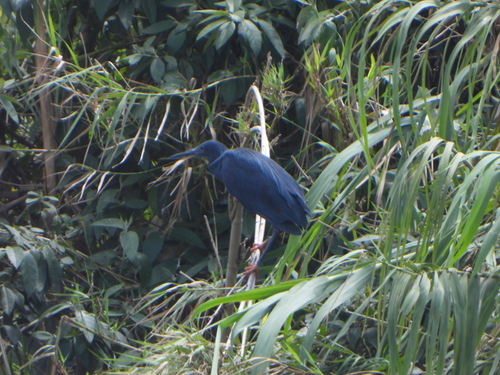 Black HeronEgretta ardesiacaThe black heron is a medium-sized bird, with a typical height range of 42.5 to 66 cm (16.7 to 26.0 in).
 Slaty EgretEgretta vinaceigulaUntil 1971, the slaty egret and more widespread black egret Egretta ardesiaca were thought to be colour morphs of the same species but the slaty egret shows consistent features which separate it from the black egret.
Side by side: Black Heron vs Chinese Egret · Chinese Egret vs Pied Heron
Learn the Chinese Egret in the BeakBrain App
Photo and call practice. Coming soon to iPhone and Android.
Play today's Daily BirdEvery photo and recording on this page is credited to its author under the licence shown. Spotted a problem with this page, or have a better photo? Contribute.