Learn what every symbol on the card means.Full credits and sources at beakbrain.com/symbols
 ShrublandTiny · 4 g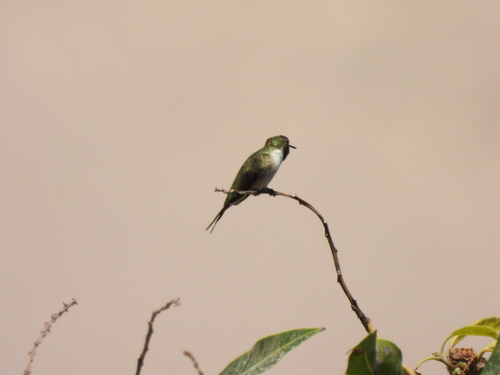
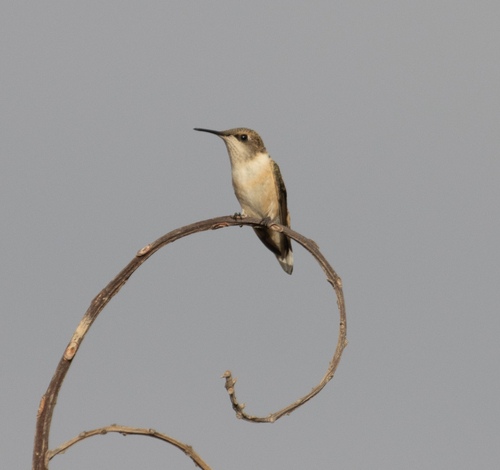
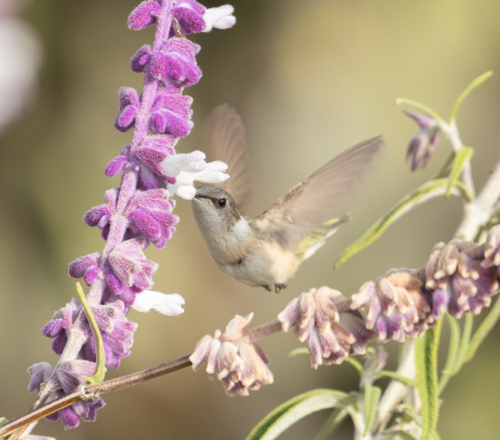
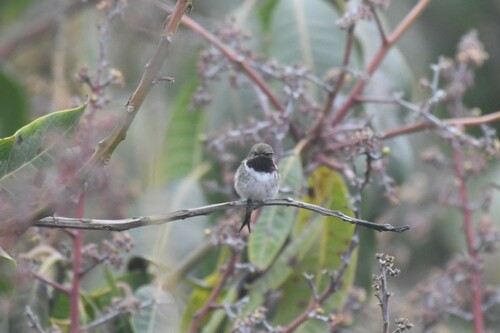
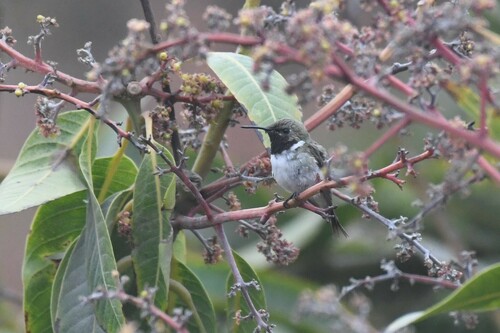
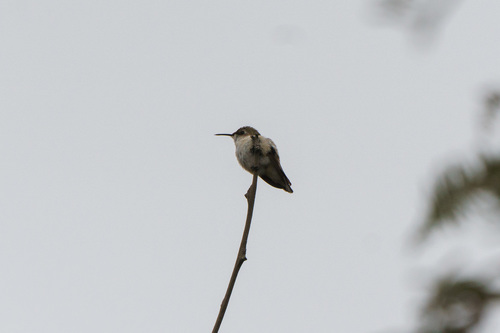
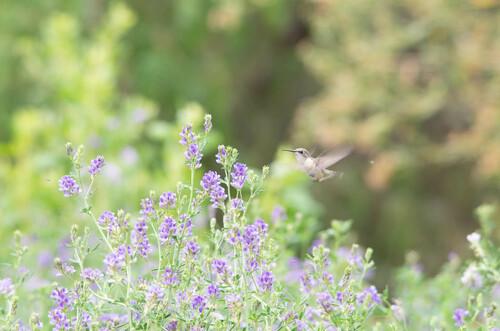
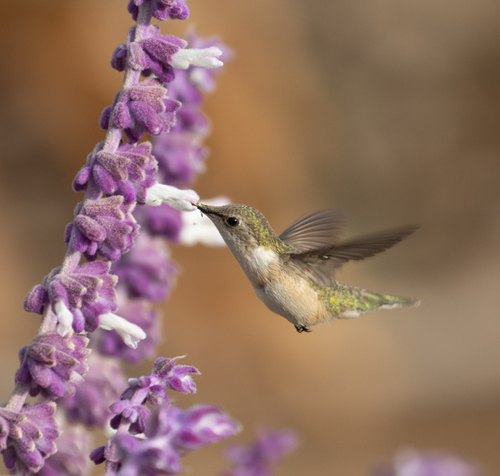
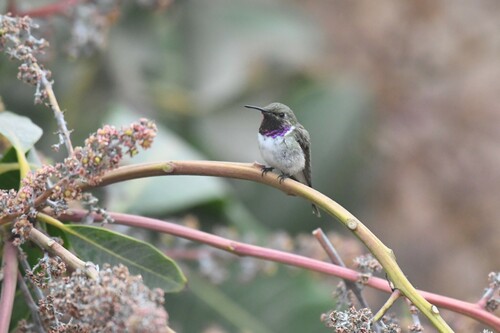
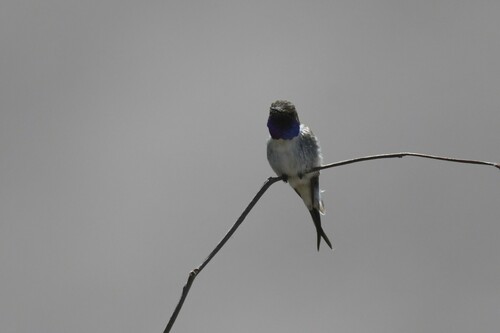
ID tip
The Chilean woodstar is 7.5 to 8.0 cm (3.0 to 3.1 in) long and weighs 2.3 to 2.6 g (0.081 to 0.092 oz). It is the smallest bird in Chile. Both sexes have a short black bill. The adult male is iridescent olive green above and white below. Its gorget is reddish-purple and blue, but often appears blackish. The central tail feathers are very short and green; the outer ones are longer, blackish brown, and curve inwards. Females are also olive green above but are mostly very pale buff below, darkest on the belly and thighs. Voice: The Chilean woodstar's call is a series of rasping "tsick" notes, quieter and "less musical" than the call of the Peruvian sheartail. The male has a high-pitched, buzzing "zrrrrrrr" display call.
Text from Wikipedia, licensed CC BY-SA 4.0.
When to see the Chilean Woodstar
One bar for each month. Filled bars are the 4 months with records; pale bars are months with none. The wide bar is October, the month with the most records.
Where to see the Chilean Woodstar
The map shades 1 country with regular records. Everything unshaded has no records. Countries are listed below the map.
About the Chilean Woodstar
The Chilean woodstar is a Critically Endangered species of hummingbird in tribe Mellisugini of subfamily Trochilinae, the "bee hummingbirds". It is the only species placed in the genus Eulidia. It is endemic to Chile though there are unconfirmed reports from southern Peru. The species' name commemorates the English naturalist William Yarrell.
Text adapted from Wikipedia, licensed CC BY-SA 4.0.
Easily confused with
 Sooty BarbthroatThrenetes nigerThe sooty barbthroat is 10 to 12 cm (3.9 to 4.7 in) long.
Scissor-tailed HummingbirdHylonympha macrocercaThe scissor-tailed hummingbird male is about 19 cm (7.5 in) long including its 9 to 10 cm (3.5 to 3.9 in) tail and weighs 7 to 7.5 g (0.25 to 0.26 oz).
Chiribiquete EmeraldChlorostilbon olivaresiThe Chiribiquete emerald is 8.5 to 9 cm (3.3 to 3.5 in) long.
Sooty BarbthroatThrenetes nigerThe sooty barbthroat is 10 to 12 cm (3.9 to 4.7 in) long.
Scissor-tailed HummingbirdHylonympha macrocercaThe scissor-tailed hummingbird male is about 19 cm (7.5 in) long including its 9 to 10 cm (3.5 to 3.9 in) tail and weighs 7 to 7.5 g (0.25 to 0.26 oz).
Chiribiquete EmeraldChlorostilbon olivaresiThe Chiribiquete emerald is 8.5 to 9 cm (3.3 to 3.5 in) long.
Learn the Chilean Woodstar in the BeakBrain App
Photo and call practice. Coming soon to iPhone and Android.
Play today's Daily BirdEvery photo and recording on this page is credited to its author under the licence shown. Spotted a problem with this page, or have a better photo? Contribute.