Learn what every symbol on the card means.Full credits and sources at beakbrain.com/symbols
 ForestCavity nestTiny · 15 g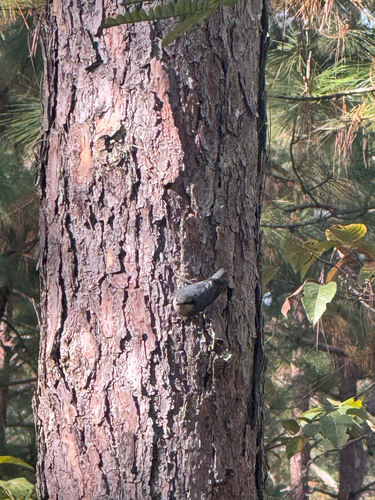
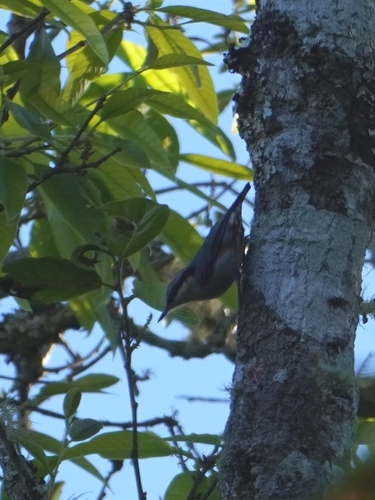
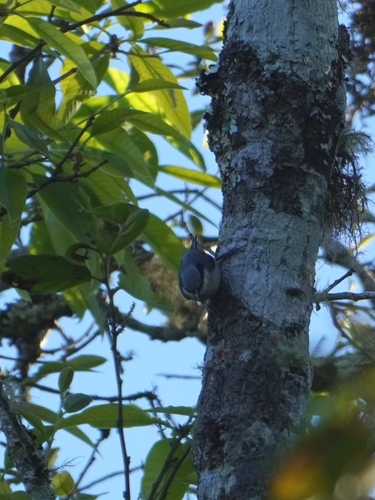
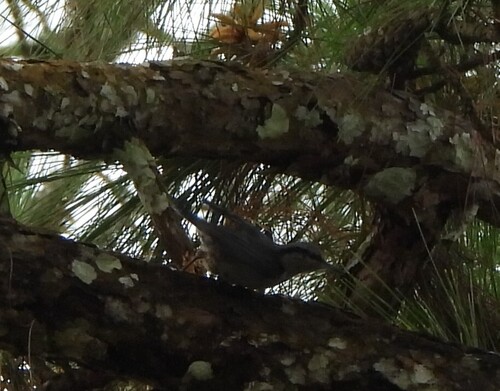
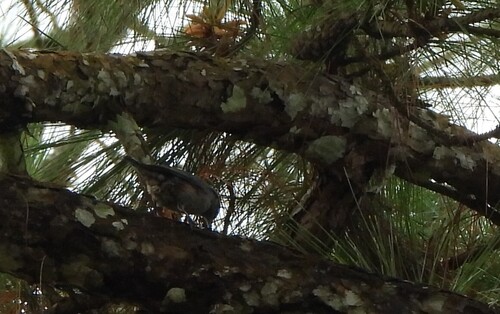


ID tip
The range of the chestnut-vented nuthatch overlaps with that of the Burmese nuthatch (S. neglecta). However, the chestnut-vented nuthatch is easily distinguished by the colour of its underparts, and the lack of contrast between the sides of the head and the throat, whereas the other species has white chins, cheeks, and parotid region contrasting with brick-red to orange-brown underparts. However, in the chestnut-vented nuthatch, some individuals in fresh plumage (especially in S. n. montium) may have underparts almost as buff as some Burmese nuthatch females or juveniles. Voice: The chestnut-vented nuthatch's calls are varied, with squeaky sit or sit-sit sounds, repeated more or less rapidly with various inflections and in irregular series. Similar but drier tchip or tchit sounds are sometimes made, often in a trill reminiscent of the alarm of a Eurasian wren (Troglodytes troglodytes).
Text from Wikipedia, licensed CC BY-SA 4.0.
When to see the Chestnut-vented Nuthatch
One bar for each month. Filled bars are the 7 months with records; pale bars are months with none. The wide bar is February, the month with the most records.
Where to see the Chestnut-vented Nuthatch
The map shades 6 countries with regular records. Everything unshaded has no records. Countries are listed below the map.
About the Chestnut-vented Nuthatch
The chestnut-vented nuthatch is a species of bird in the nuthatch family Sittidae. It is a medium-sized nuthatch, measuring 12.5–14 cm (4.9–5.5 in) in length. The upperparts are a solid grey-blue, with a markedly black loral stripe. The underparts are uniform grey to buff from the throat to belly, with brick red on the flanks. The undertail is white with a rufous border. The chestnut-vented nuthatch utters different kinds of calls, which can sometimes sound like a wren alarm, and its song is a monotonous, stereotypical crackle, typically chichichichi. Its ecology is poorly known, but it probably feeds on small arthropods and seeds, and the breeding season begins between March and May.
Text adapted from Wikipedia, licensed CC BY-SA 4.0.
Easily confused with
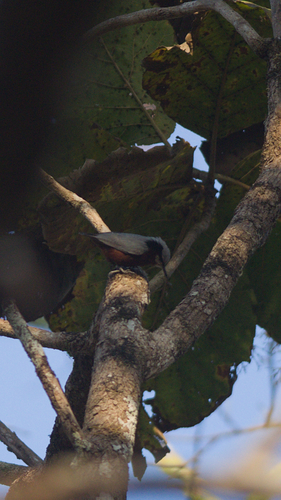 Indian NuthatchSitta castaneaThe Indian nuthatch is a species of bird in the family Sittidae.
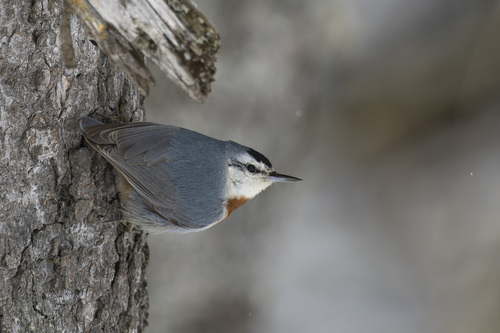 Krüper's NuthatchSitta krueperiThe Krüper's nuthatch is a small to medium-sized nuthatch, measuring 12.5 centimetres (4.9 in) in length.
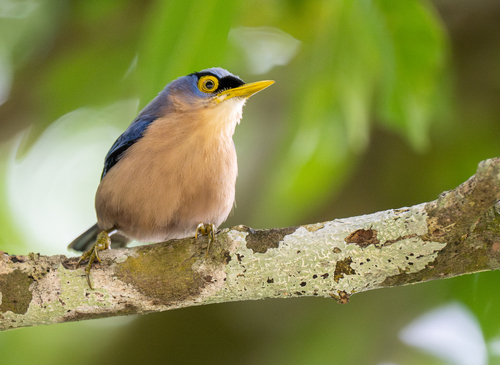 Sulphur-billed NuthatchSitta oenochlamysThe sulphur-billed nuthatch is a species of bird in the family Sittidae.
Side by side: Chestnut-vented Nuthatch vs Krüper's Nuthatch
Learn the Chestnut-vented Nuthatch in the BeakBrain App
Photo and call practice. Coming soon to iPhone and Android.
Play today's Daily BirdEvery photo and recording on this page is credited to its author under the licence shown. Spotted a problem with this page, or have a better photo? Contribute.