Learn what every symbol on the card means.Full credits and sources at beakbrain.com/symbols
 RiverineMedium · 126 g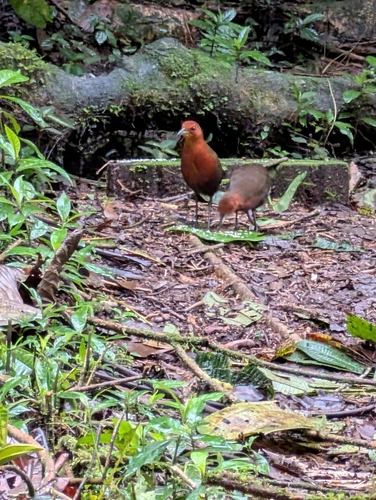

ID tip
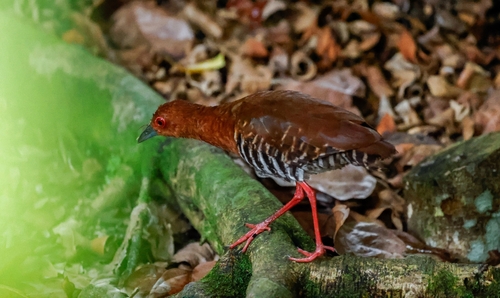
The chestnut-headed crake is 19 to 21.5 cm (7.5 to 8.5 in) long. One female weighed 126 g (4.4 oz). The sexes are alike. Adults' bills have a mostly black maxilla that is greenish below the nostrils and a greenish mandible with a black tip. The nominate subspecies' forecrown, sides of the head and neck, and breast are bright rufous. Their throat is orange-rufous or light buff. Their crown, back, rump, wing coverts, belly, and vent area are brownish olive. Their legs and feet are dull brown or olivaceous. Voice: The chestnut-headed crake has a loud melodic song described by one author as "a long (lasting up to 5 min) series of tri- or bisyllabic whistles: wee-hoohoo wee-hoohoo wee-hoohoo ...". Its aggressive call is "a quiet puttering sound".
Text from Wikipedia, licensed CC BY-SA 4.0.
When to see the Chestnut-headed Crake
One bar for each month, and every month is filled: this bird is recorded here in all twelve. The wide bar is October, the month with the most records.
Where to see the Chestnut-headed Crake
The map shades 5 countries with regular records. Everything unshaded has no records. Countries are listed below the map.
About the Chestnut-headed Crake
The chestnut-headed crake is a species of bird in subfamily Rallinae of family Rallidae, the rails, gallinules, and coots. It is the only species placed in the genus Anurolimnas. It is found in Bolivia, Brazil, Colombia, Ecuador, and Peru.
Text adapted from Wikipedia, licensed CC BY-SA 4.0.
Easily confused with


Learn the Chestnut-headed Crake in the BeakBrain App
Photo and call practice. Coming soon to iPhone and Android.
Play today's Daily BirdEvery photo and recording on this page is credited to its author under the licence shown. Spotted a problem with this page, or have a better photo? Contribute.