Learn what every symbol on the card means.Full credits and sources at beakbrain.com/symbols
 ForestSmall · 33 g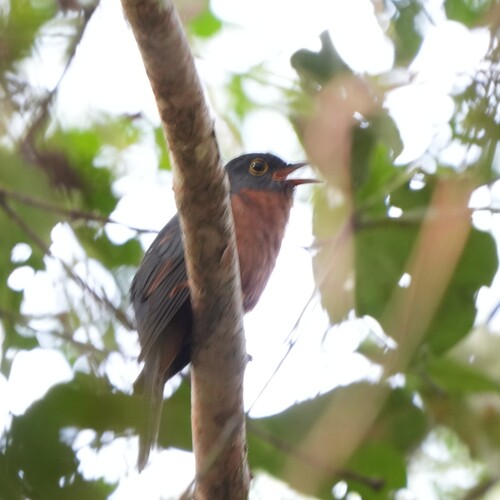
ID tip
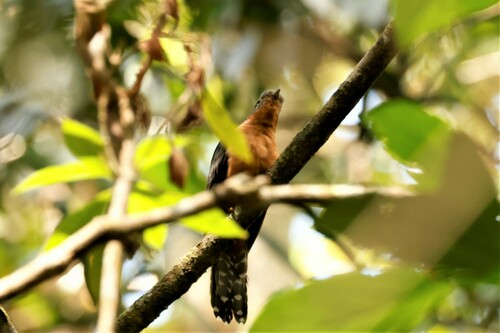
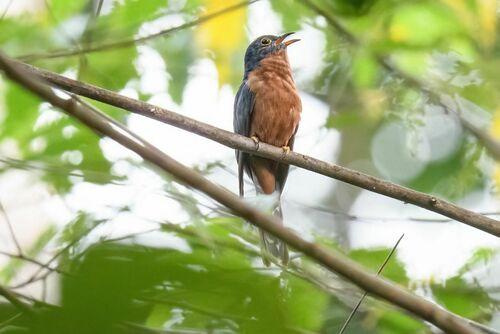
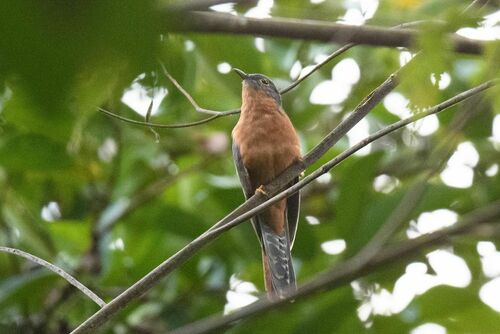
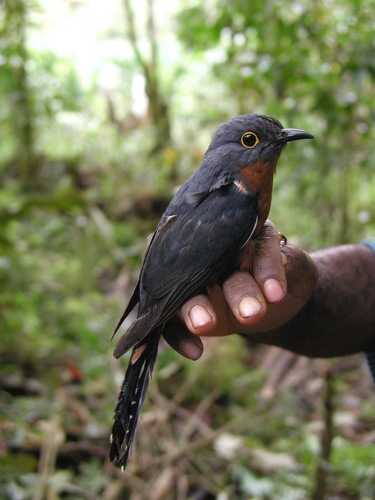
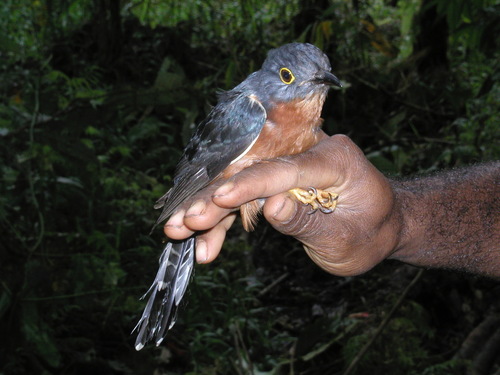
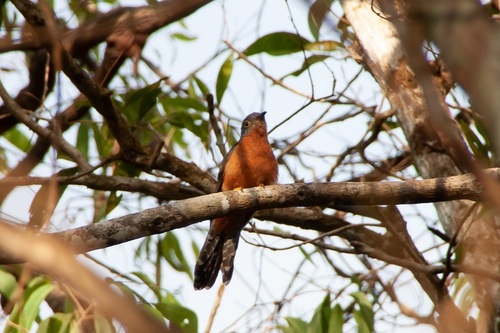
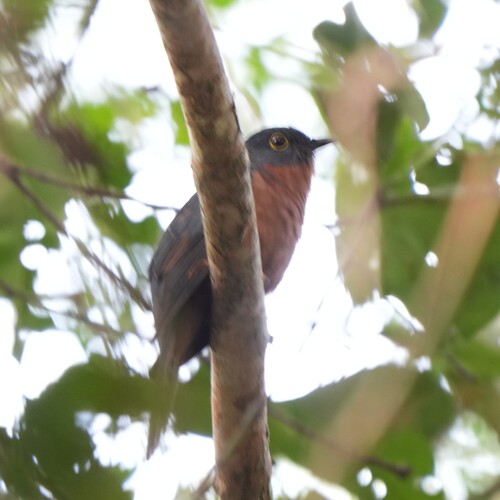
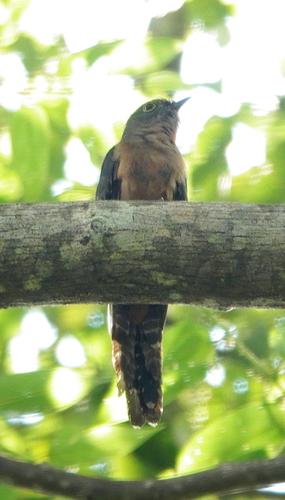
The chestnut-breasted cuckoo is about 22–25 centimetres (8.7–9.8 in) long. Adults have a dark slaty grey-blue head, back and wings, deep rufous breast and underparts and barred black and white tail. Immatures are dull greyish cinnamon on the head and wings, grading to dull mid brown on the outer parts of the wings, and pale buff or cinnamon on the breast and underparts. The tail is barred mid brown and white. Both adults and immatures have a yellow orbital eye ring.
Text from Wikipedia, licensed CC BY-SA 4.0.
When to see the Chestnut-breasted Cuckoo
One bar for each month, and every month is filled: this bird is recorded here in all twelve. The wide bar is July, the month with the most records.
Where to see the Chestnut-breasted Cuckoo
The map shades 3 countries with regular records. Everything unshaded has no records. Countries are listed below the map.
About the Chestnut-breasted Cuckoo
The chestnut-breasted cuckoo is a species of cuckoo in the family Cuculidae. It is found in Australia, Indonesia, and Papua New Guinea. Its natural habitats are subtropical or tropical dry forests and subtropical or tropical mangrove forests.
Text adapted from Wikipedia, licensed CC BY-SA 4.0.
Easily confused with
 Moluccan Brush CuckooCacomantis aeruginosusThe Moluccan brush cuckoo, formerly known as the Moluccan cuckoo, is a species of cuckoo in the family Cuculidae.
Solomons Brush CuckooCacomantis addendusThe Solomons brush cuckoo is a species of cuckoo in the family Cuculidae.
Manus Brush CuckooCacomantis blandusThe Manus brush cuckoo is a species of cuckoo in the family Cuculidae.
Moluccan Brush CuckooCacomantis aeruginosusThe Moluccan brush cuckoo, formerly known as the Moluccan cuckoo, is a species of cuckoo in the family Cuculidae.
Solomons Brush CuckooCacomantis addendusThe Solomons brush cuckoo is a species of cuckoo in the family Cuculidae.
Manus Brush CuckooCacomantis blandusThe Manus brush cuckoo is a species of cuckoo in the family Cuculidae.
Learn the Chestnut-breasted Cuckoo in the BeakBrain App
Photo and call practice. Coming soon to iPhone and Android.
Play today's Daily BirdEvery photo and recording on this page is credited to its author under the licence shown. Spotted a problem with this page, or have a better photo? Contribute.