Learn what every symbol on the card means.Full credits and sources at beakbrain.com/symbols
 ShrublandTiny · 14 g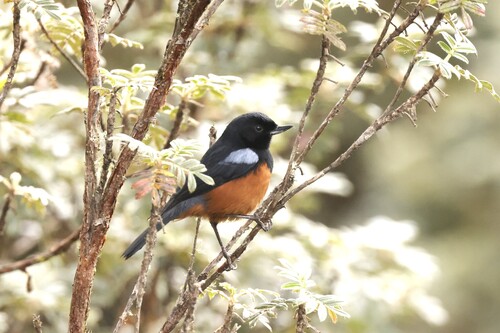
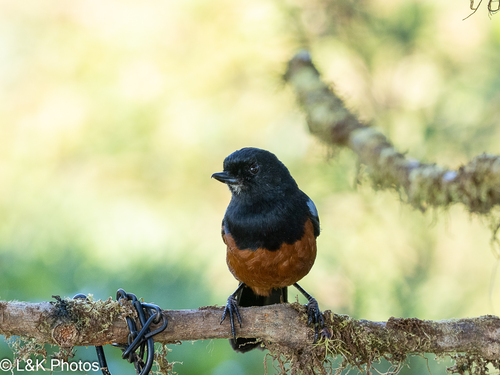
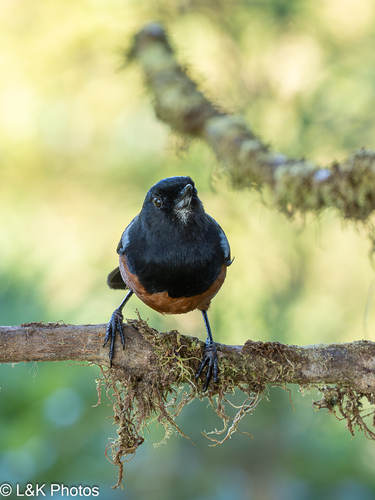
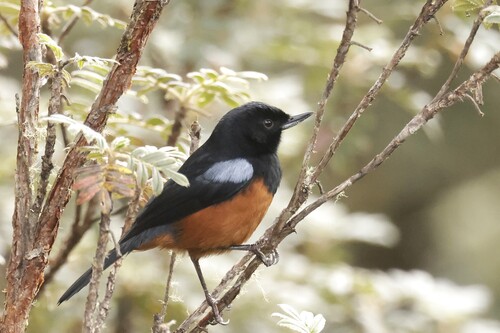
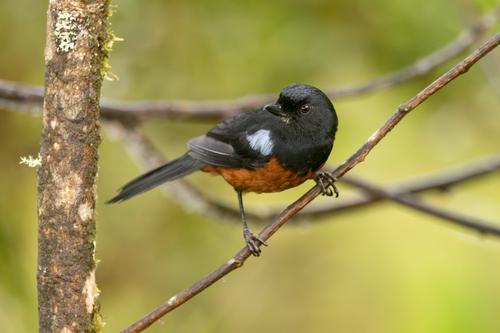
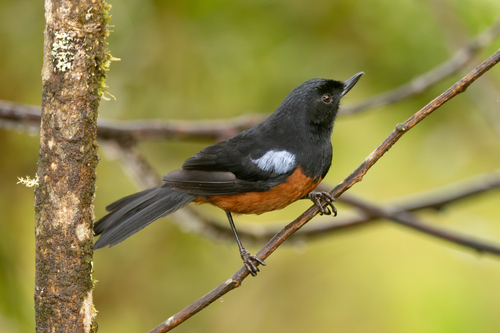
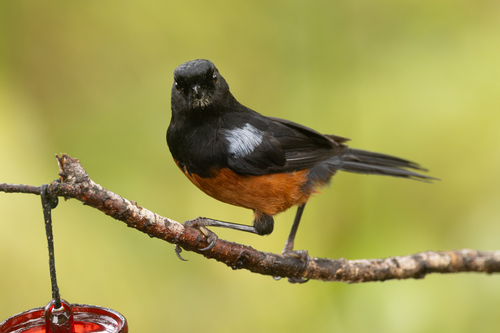
ID tip
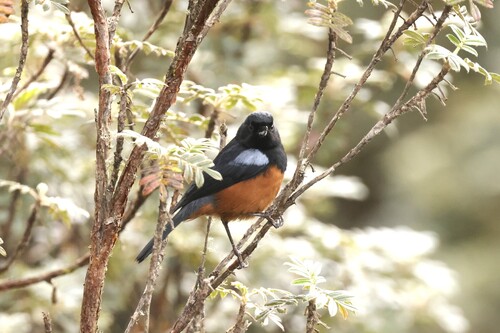
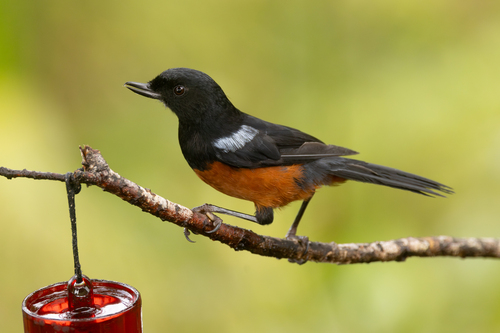
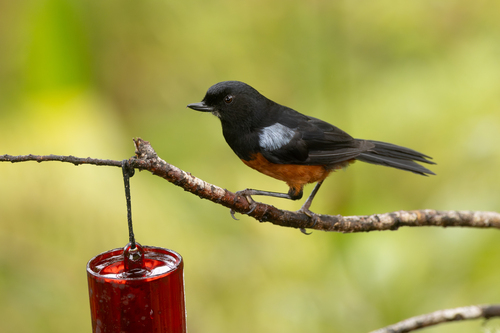
Chestnut-bellied flowerpiercers, like the other birds in the genus Diglossa, are small montane tanagers. Their slender upturned bills are used to pierce flowers at the base to obtain nectar. Size: 14-15cm in length. Wingspan is 75mm (male), 70mm (female). Adult Male: The head, upper breast, nape, back, wings and tail are deep glossy black. The lesser wing-coverts are bluish-grey and there is a wash of this colour on the rump. The lower breast, belly and vent are deep rufous-chestnut with black markings on the flanks. The undertail coverts are black.
Text from Wikipedia, licensed CC BY-SA 4.0.
When to see the Chestnut-bellied Flowerpiercer
One bar for each month, and every month is filled: this bird is recorded here in all twelve. The wide bar is February, the month with the most records.
Where to see the Chestnut-bellied Flowerpiercer
The map shades 1 country with regular records. Everything unshaded has no records. Countries are listed below the map.
About the Chestnut-bellied Flowerpiercer
The chestnut-bellied flowerpiercer is a species of bird in the family Thraupidae. It is endemic to Colombia.
Text adapted from Wikipedia, licensed CC BY-SA 4.0.
Easily confused with
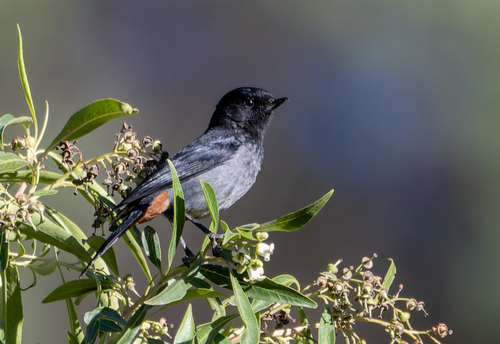 Grey-bellied FlowerpiercerDiglossa carbonariaThe grey-bellied flowerpiercer is a species of bird in the family Thraupidae.
 Merida FlowerpiercerDiglossa gloriosaThe Mérida flowerpiercer is a species of bird in the family Thraupidae.
 Moustached FlowerpiercerDiglossa mystacalisThe moustached flowerpiercer is a species of bird in the family Thraupidae.
Learn the Chestnut-bellied Flowerpiercer in the BeakBrain App
Photo and call practice. Coming soon to iPhone and Android.
Play today's Daily BirdEvery photo and recording on this page is credited to its author under the licence shown. Spotted a problem with this page, or have a better photo? Contribute.