Learn what every symbol on the card means.Full credits and sources at beakbrain.com/symbols
 ForestPlatform nestLarge · 1.5 kg
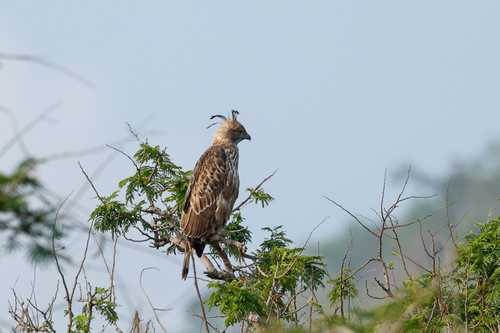
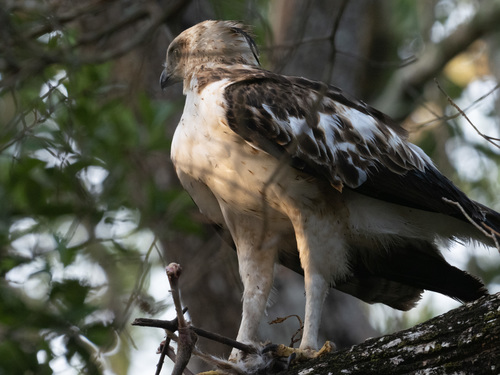
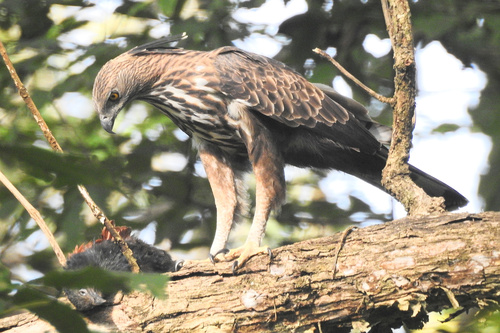
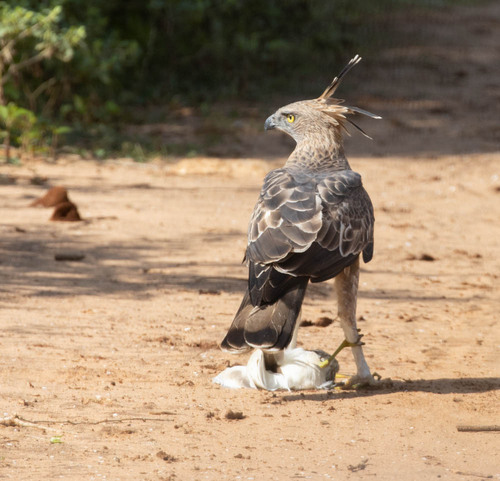
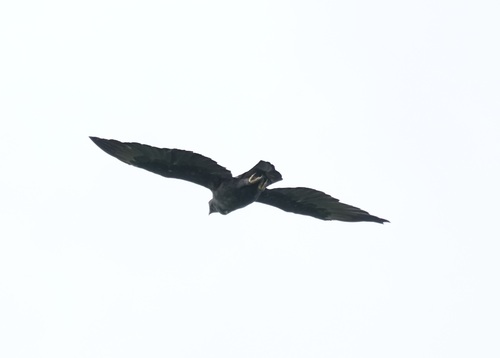
What the Changeable Hawk-Eagle sounds like

ID tip
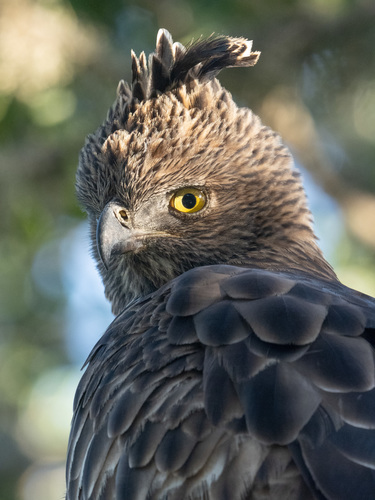
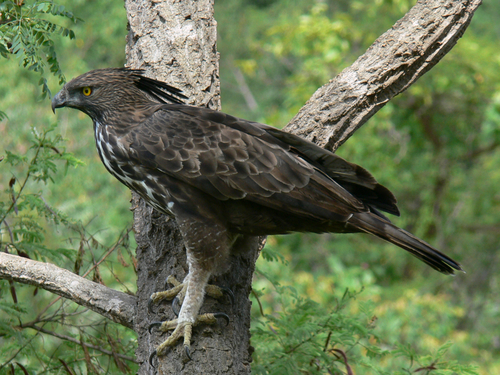
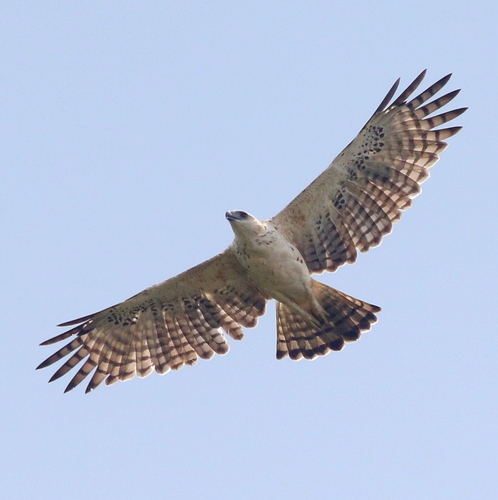
The changeable hawk-eagle is a largish but slender eagle. They fall near the middle of sizes among the currently accepted species in the genus Nisaetus. As in most birds of prey, females are larger than males with an average overall size difference of 7% but this can individually range to an 18-22% difference, with island races apparently thought to be less dimorphic on average. Voice: The changeable hawk-eagle is often largely silent but in breeding season it may readily call, both from their perch or on the wing. Like many diurnal raptors, their calls are a form of high-pitched scream.
Text from Wikipedia, licensed CC BY-SA 4.0.
When to see the Changeable Hawk-Eagle
One bar for each month, and every month is filled: this bird is recorded here in all twelve. The wide bar is February, the month with the most records.
Where to see the Changeable Hawk-Eagle
The map shades 15 countries with regular records. Everything unshaded has no records. Countries are listed below the map.
About the Changeable Hawk-Eagle
The changeable hawk-eagle (Nisaetus cirrhatus) or crested hawk-eagle is a large bird of prey species of the family Accipitridae. More informal or antiquated English common names include the marsh hawk-eagle or Indian crested hawk-eagle. It is a member of the subfamily Aquilinae, with signature feathers, absent in tropical raptors from outside this subfamily, covering the tarsus. It was formerly placed in the genus Spizaetus, but studies pointed to the group being paraphyletic resulting in the Old World members being placed in Nisaetus and separated from the New World species.
Text adapted from Wikipedia, licensed CC BY-SA 4.0.
Easily confused with
 Mountain Hawk-EagleNisaetus nipalensisVoice: Mountain hawk-eagles are silent apart from their breeding season.
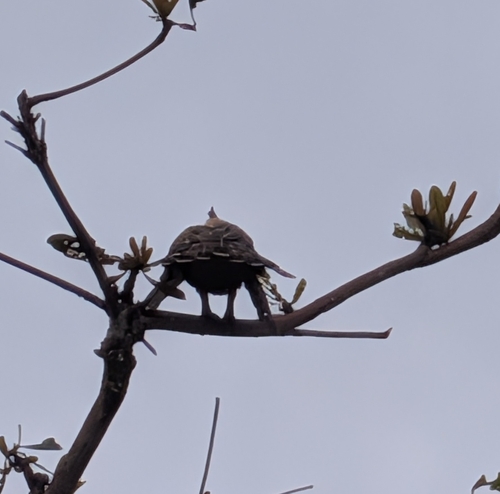 Wallace's Hawk-EagleNisaetus nanusWallace's hawk-eagle is a species of bird of prey in the family Accipitridae.
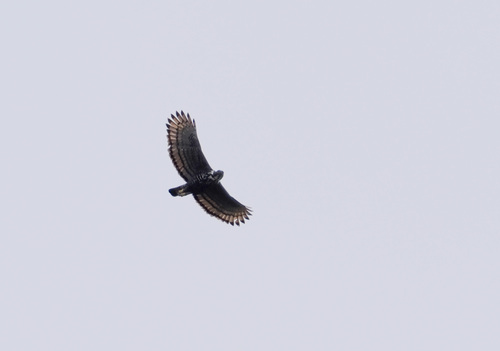 Blyth's Hawk-EagleNisaetus albonigerBlyth's hawk-eagle is a medium-sized bird of prey.
Side by side: Changeable Hawk-Eagle vs Mountain Hawk-Eagle
Learn the Changeable Hawk-Eagle in the BeakBrain App
Photo and call practice. Coming soon to iPhone and Android.
Play today's Daily BirdEvery photo and recording on this page is credited to its author under the licence shown. Spotted a problem with this page, or have a better photo? Contribute.