Learn what every symbol on the card means.Full credits and sources at beakbrain.com/symbols
 WoodlandCup nestSmall · 22 g


ID tip
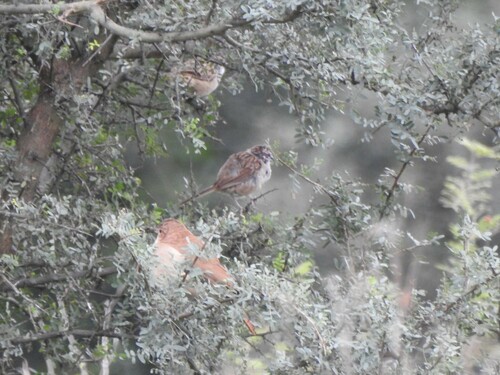
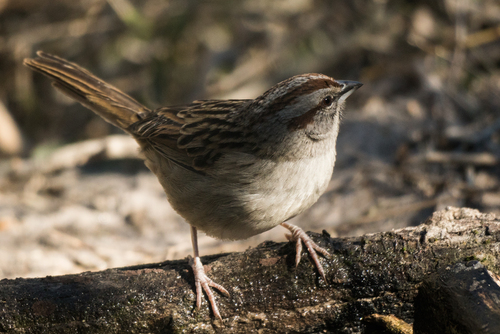
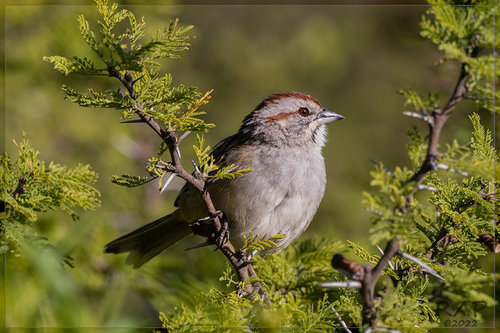
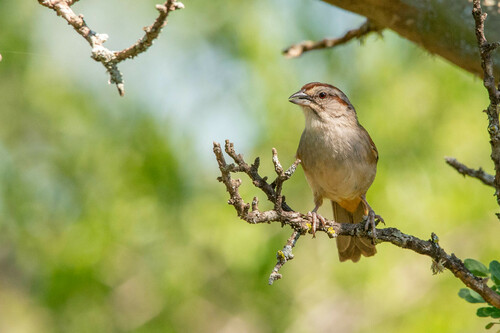
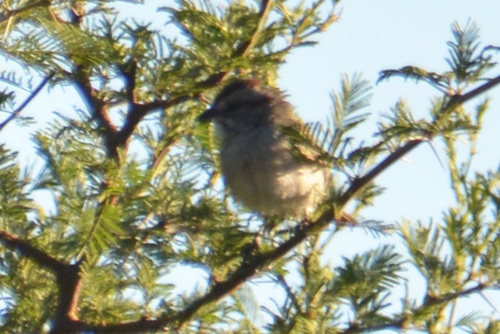
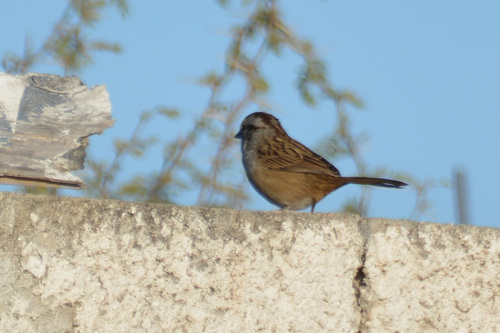
The Chaco sparrow is the smaller of the two former subspecies that were split. Its upper parts are light brown with darker streaks and varying amounts of rust and gray. It is pale gray below blending to buff on the flanks. The head is gray with cinnamon crown and postocular stripes, pale lores, and a black moustachial stripe. Voice: The Chaco sparrow's song is complex trills that contrast with the Yungas sparrow's series of chirps.
Text from Wikipedia, licensed CC BY-SA 4.0.
When to see the Chaco Sparrow
One bar for each month, and every month is filled: this bird is recorded here in all twelve. The wide bar is October, the month with the most records.
Where to see the Chaco Sparrow
The map shades 3 countries with regular records. Everything unshaded has no records. Countries are listed below the map.
About the Chaco Sparrow
The Chaco sparrow, formerly known as the stripe-capped sparrow, is a species of bird in the family Passerellidae. It is found in Argentina and Paraguay.
Text adapted from Wikipedia, licensed CC BY-SA 4.0.
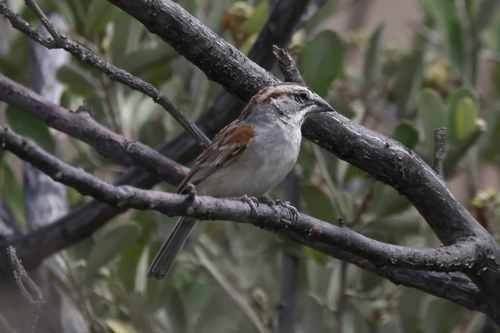
Easily confused with
Learn the Chaco Sparrow in the BeakBrain App
Photo and call practice. Coming soon to iPhone and Android.
Play today's Daily BirdEvery photo and recording on this page is credited to its author under the licence shown. Spotted a problem with this page, or have a better photo? Contribute.