Learn what every symbol on the card means.Full credits and sources at beakbrain.com/symbols
 ForestCup nestSmall · 20 g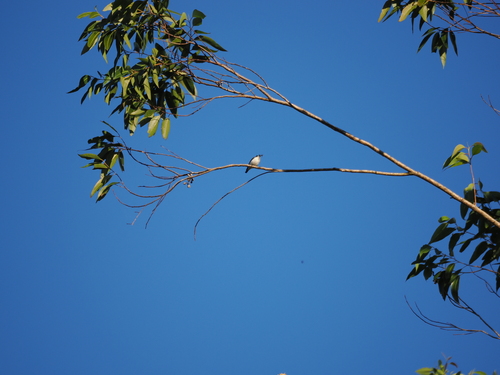


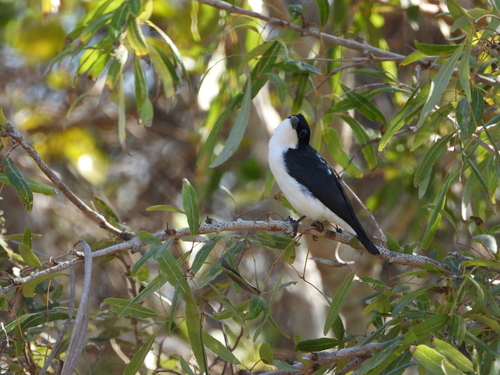
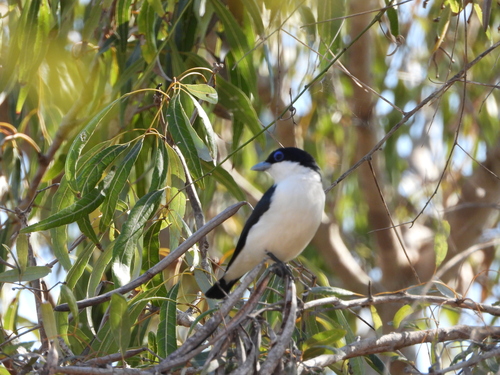
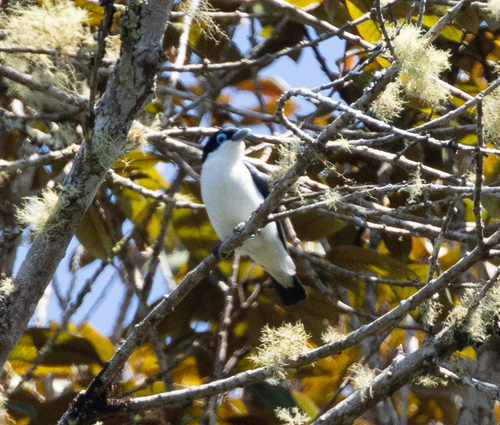
ID tip
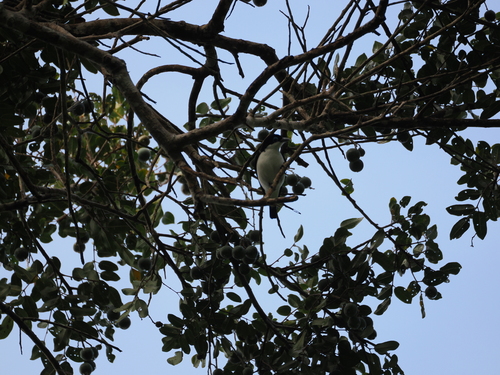
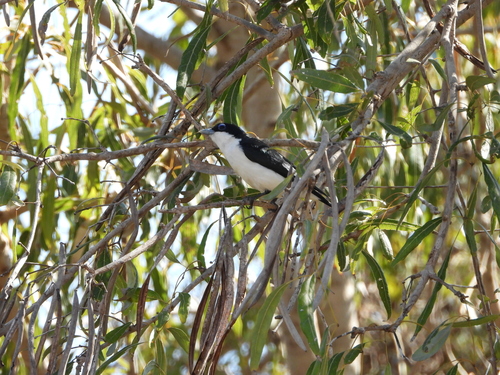
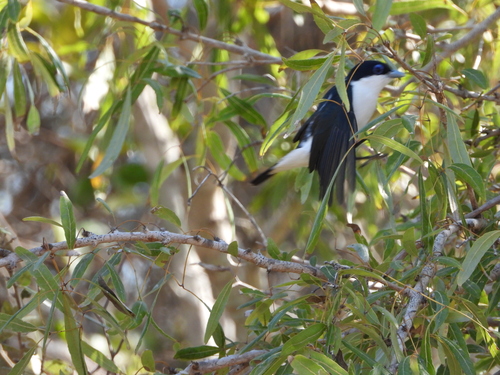
The cabaret vanga only possess two colors, black and white. Their head and wings are a dark black. However, due to the sun, this black can often be seen as having a shiny blue tint to it. Their underparts are white like their chin and belly. The color of their tails differ from where they originate. If they are located in the southwest, the tail of the chabert vanga has a white patch at the base of the tail. If they are from anywhere else in the world, the whole entire tail of the chabert vanga is known to be black. Voice: The chabert vanga's name comes from a rendition of its call. Their calls tend to repeat every two to three seconds making the sound "teedee" or a "tse tse tse" when trying to communicate.
Text from Wikipedia, licensed CC BY-SA 4.0.
When to see the Chabert Vanga
One bar for each month. Filled bars are the 6 months with records; pale bars are months with none. The wide bar is November, the month with the most records.
Where to see the Chabert Vanga
The map shades 1 country with regular records. Everything unshaded has no records. Countries are listed below the map.
About the Chabert Vanga
The chabert vanga, also erroneously called "Chabert's vanga", is a species of bird in the family Vangidae. It is monotypic within the genus Leptopterus. The chabert vanga is the smallest bird in the vanga family when compared to the white-headed vanga and the blue vanga. Their biometrics are typically 14 centimeters in length and their weight ranges from 17 to 26.5 grams.
Text adapted from Wikipedia, licensed CC BY-SA 4.0.
Easily confused with
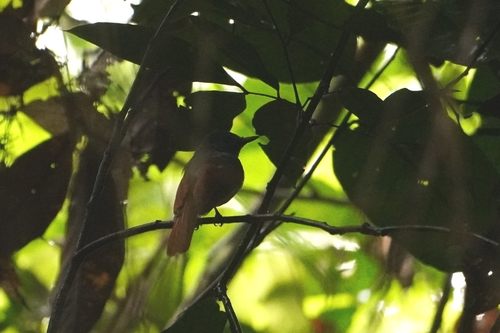 Rufous-winged PhilentomaPhilentoma pyrhopteraThe rufous-winged philentoma is a bird species.
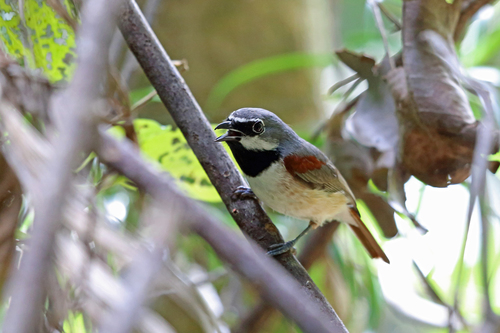 Red-tailed VangaCalicalicus madagascariensisThe red-tailed vanga is a species of bird in the family Vangidae.
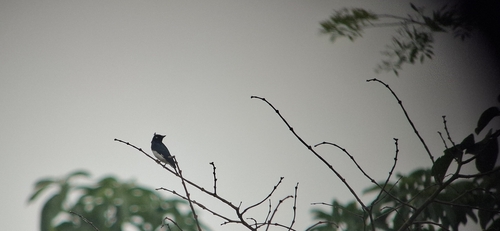 Black-and-white Shrike-flycatcherBias musicusThe black-and-white shrike-flycatcher, also known as the black-and-white flycatcher or vanga flycatcher, is a species of passerine bird found in Africa.
Learn the Chabert Vanga in the BeakBrain App
Photo and call practice. Coming soon to iPhone and Android.
Play today's Daily BirdEvery photo and recording on this page is credited to its author under the licence shown. Spotted a problem with this page, or have a better photo? Contribute.