Learn what every symbol on the card means.Full credits and sources at beakbrain.com/symbols
 ShrublandCup nestMedium · 175 g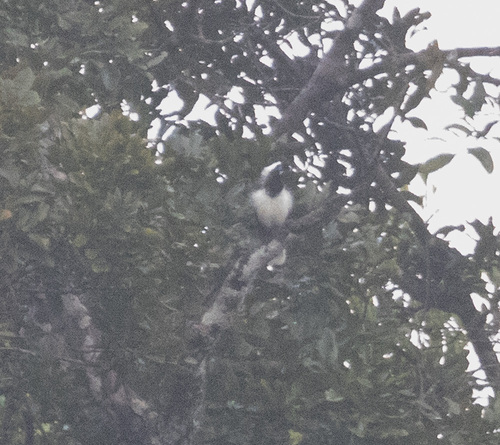
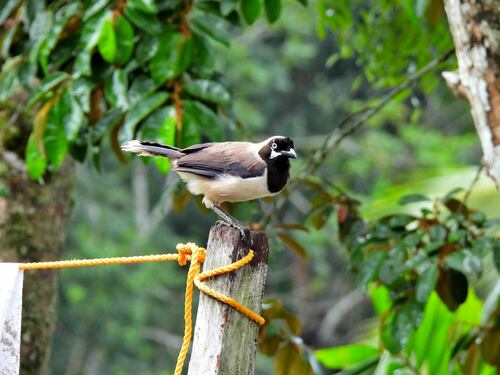
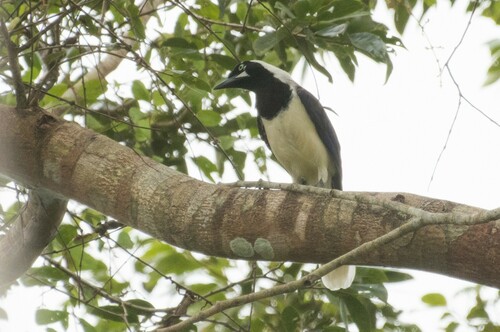
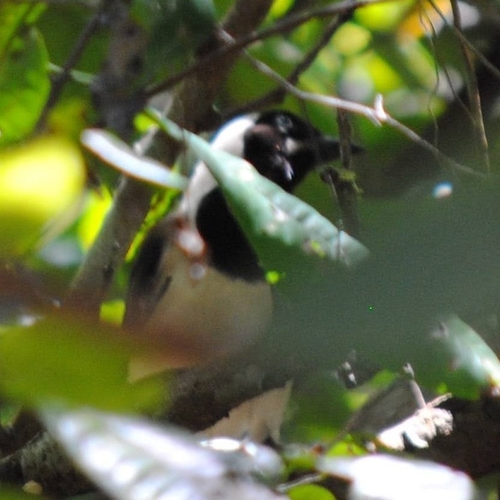


ID tip
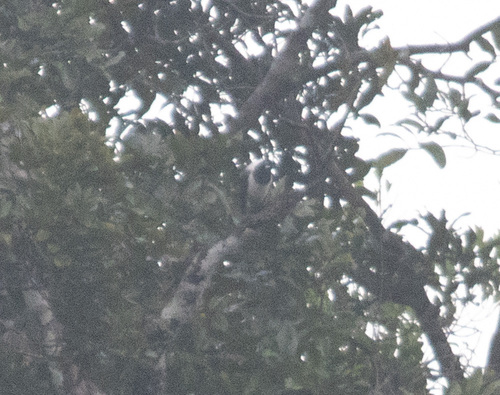
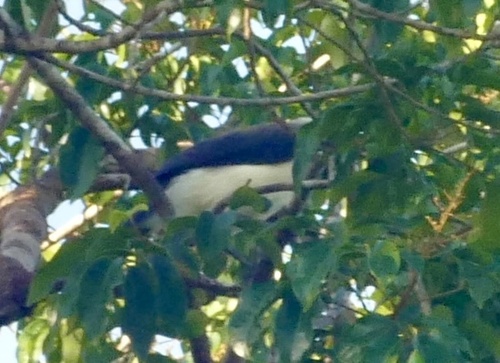
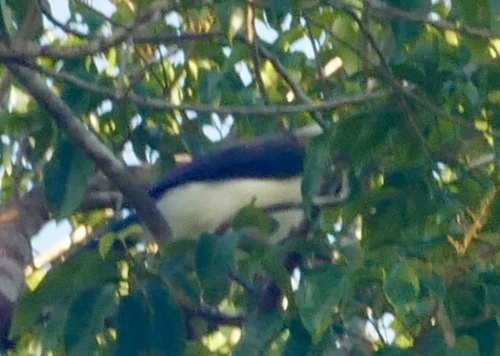
The cayenne jay is a medium sized jay, roughly 33 cm (13 in) long. It has a generally purplish back with white undersides. Its back and tail are a purplish-brown, with a white tail-tip. Its wings fade from the purplish-brown of the back to a darker purplish-blue. Its neck is a sooty grey, fading to white on its undersides. Its face and throat are generally black, with white spots above and below the eye, and along the malar. The edges of these white spots fade to a mauve colour. It has a short black crest on the top of its head.
Text from Wikipedia, licensed CC BY-SA 4.0.
When to see the Cayenne Jay
One bar for each month. Filled bars are the 11 months with records; pale bars are months with none. The wide bar is February, the month with the most records.
Where to see the Cayenne Jay
The map shades 5 countries with regular records. Everything unshaded has no records. Countries are listed below the map.
About the Cayenne Jay
The Cayenne jay is a species of bird in the family Corvidae. It is found in Brazil, French Guiana, Guyana, Suriname, and Venezuela. Its natural habitats are subtropical or tropical moist lowland forest, subtropical or tropical dry shrubland, and heavily degraded former forest.
Text adapted from Wikipedia, licensed CC BY-SA 4.0.
Easily confused with
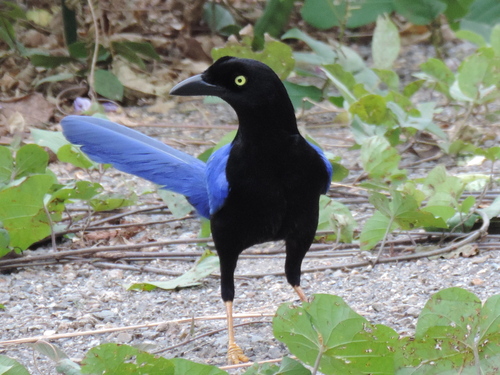 Purplish-backed JayCyanocorax beecheiiThe purplish-backed jay is a purple and black bird with a powerful bill and a long tail.
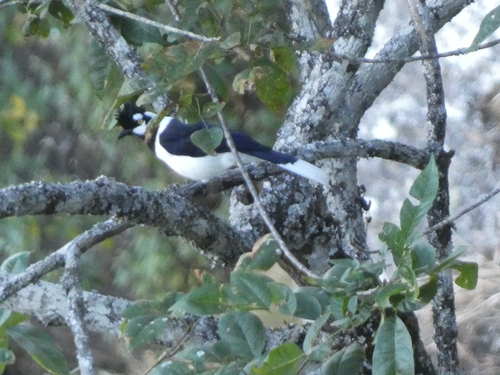 Tufted JayCyanocorax dickeyiThe tufted jay is a distinctive bird within its range.
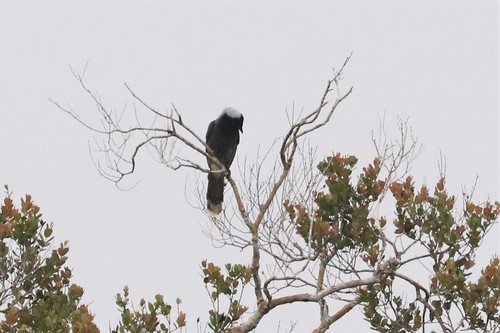 Azure-naped JayCyanocorax heilpriniThe back is dark brown, as are the upper sides of the wings and tail.
Learn the Cayenne Jay in the BeakBrain App
Photo and call practice. Coming soon to iPhone and Android.
Play today's Daily BirdEvery photo and recording on this page is credited to its author under the licence shown. Spotted a problem with this page, or have a better photo? Contribute.