Learn what every symbol on the card means.Full credits and sources at beakbrain.com/symbols
 WetlandPlatform nestLarge · 569 g




ID tip
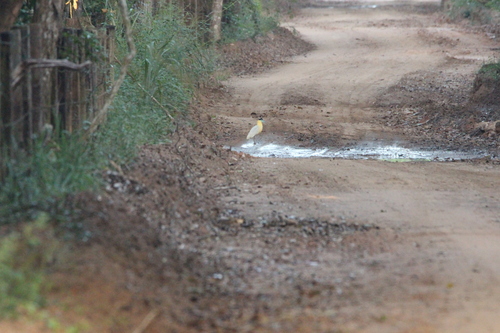
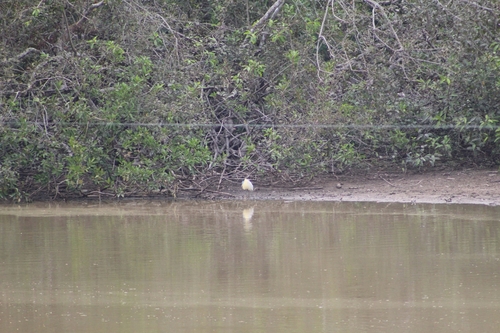
This species is very distinct from other herons, being the only one with a blue beak and face, and a black crown. The belly, chest, and neck are covered with yellowish-white or light-cream feathers. The wings and back are covered with white feathers. Three to four white long feathers extend from the black crown. No sexual dimorphism in color or brightness has been noted. The body length of an adult varies between 510 and 590 mm, the wing chords between 263 and 280 mm, the tail between 95 and 103 mm, and the tarsus between 92 and 99 mm. The weight of an adult varies between 444 and 632 g.
Text from Wikipedia, licensed CC BY-SA 4.0.
When to see the Capped Heron
One bar for each month, and every month is filled: this bird is recorded here in all twelve. The wide bar is July, the month with the most records.
Where to see the Capped Heron
The map shades 12 countries with regular records. Everything unshaded has no records. Countries are listed below the map.
About the Capped Heron
The capped heron is a water bird endemic to the neotropics, inhabiting rainforest from the center of Panama to the south of Brazil. It is the only species of the genus Pilherodius, and one of the least known of the heron family, Ardeidae. It is superficially similar to the group of the night herons, but is active during daytime or at twilight.
Text adapted from Wikipedia, licensed CC BY-SA 4.0.
Easily confused with
 Javan Pond HeronArdeola speciosaThe Javan pond heron is a wading bird of the heron family, found in shallow fresh and salt-water wetlands in Southeast Asia.
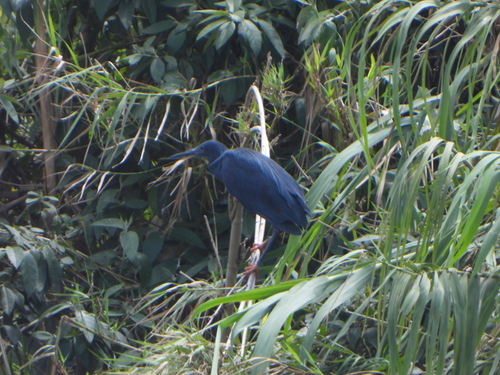 Black HeronEgretta ardesiacaThe black heron is a medium-sized bird, with a typical height range of 42.5 to 66 cm (16.7 to 26.0 in).
 Fasciated Tiger HeronTigrisoma fasciatumAt 23–25 in (58–64 cm) in length, the fasciated tiger heron is the smallest of the three tiger herons.
Side by side: Black Heron vs Capped Heron · Capped Heron vs Fasciated Tiger Heron
Learn the Capped Heron in the BeakBrain App
Photo and call practice. Coming soon to iPhone and Android.
Play today's Daily BirdEvery photo and recording on this page is credited to its author under the licence shown. Spotted a problem with this page, or have a better photo? Contribute.