Learn what every symbol on the card means.Full credits and sources at beakbrain.com/symbols
 WetlandScrapeLarge · 402 g


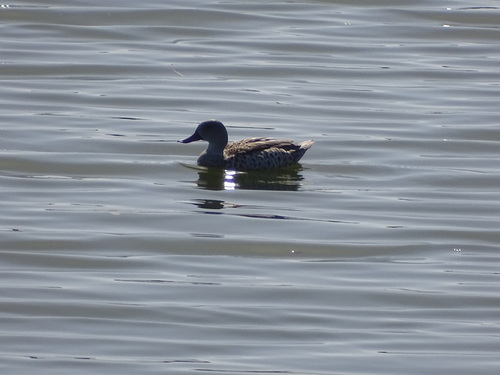
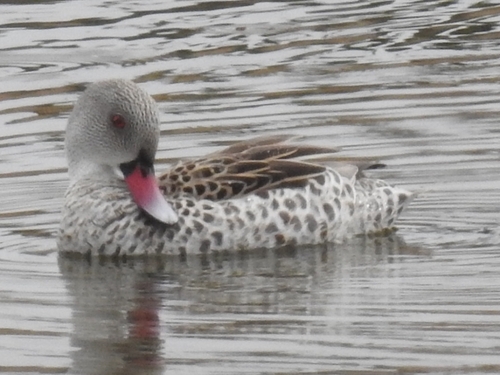
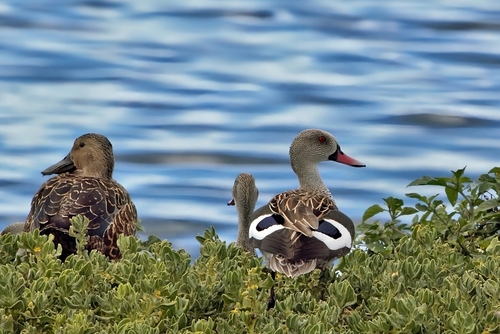
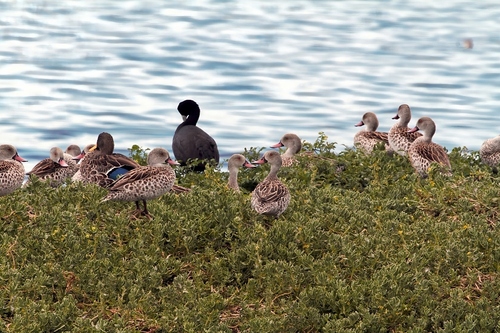
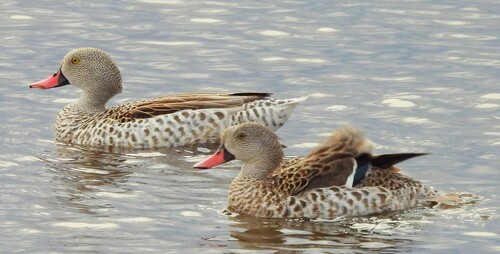
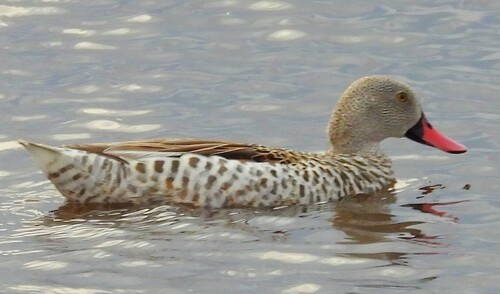
ID tip
Like many southern ducks, the sexes are similar. It is very pale and mainly grey, with a browner back and pink on the bill (young birds lack the pink). This is a generally quiet species, except during mating displays. The breeding male has a clear whistle, whereas the female has a feeble "quack". The Cape teal cannot be confused with any other duck in its range. This species is essentially non-migratory, although it moves opportunistically with the rains. It is a thinly distributed but widespread duck, rarely seen in large groups except the moulting flocks, which may number up to 2000.
Text from Wikipedia, licensed CC BY-SA 4.0.
When to see the Cape Teal
One bar for each month, and every month is filled: this bird is recorded here in all twelve. The wide bar is September, the month with the most records.
Where to see the Cape Teal
The map shades 13 countries with regular records, and 6 more in a lighter tone where the bird turns up only as a stray. Everything unshaded has no records. Countries are listed below the map.
Recorded as a rare visitor in Belgium, Germany, France, Malawi, United Kingdom, Sweden.
About the Cape Teal
The Cape teal also Cape wigeon or Cape widgeon is a 44–46 cm long dabbling duck of open wetlands in sub-Saharan Africa.
Text adapted from Wikipedia, licensed CC BY-SA 4.0.
Easily confused with
 African Black DuckAnas sparsaThe African black duck is a black duck with pronounced white marks on its back, a dark bill, and orange legs and feet.
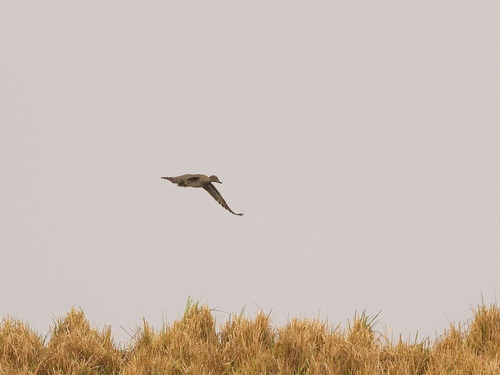 Andean TealAnas andiumThe Andean teal is a South American species of duck.
 Brown TealAnas chlorotisThere are no distinctive differences between a male, female and a juvenile brown teal during non-mating season.
Side by side: African Black Duck vs Cape Teal · Brown Teal vs Cape Teal
Learn the Cape Teal in the BeakBrain App
Photo and call practice. Coming soon to iPhone and Android.
Play today's Daily BirdEvery photo and recording on this page is credited to its author under the licence shown. Spotted a problem with this page, or have a better photo? Contribute.